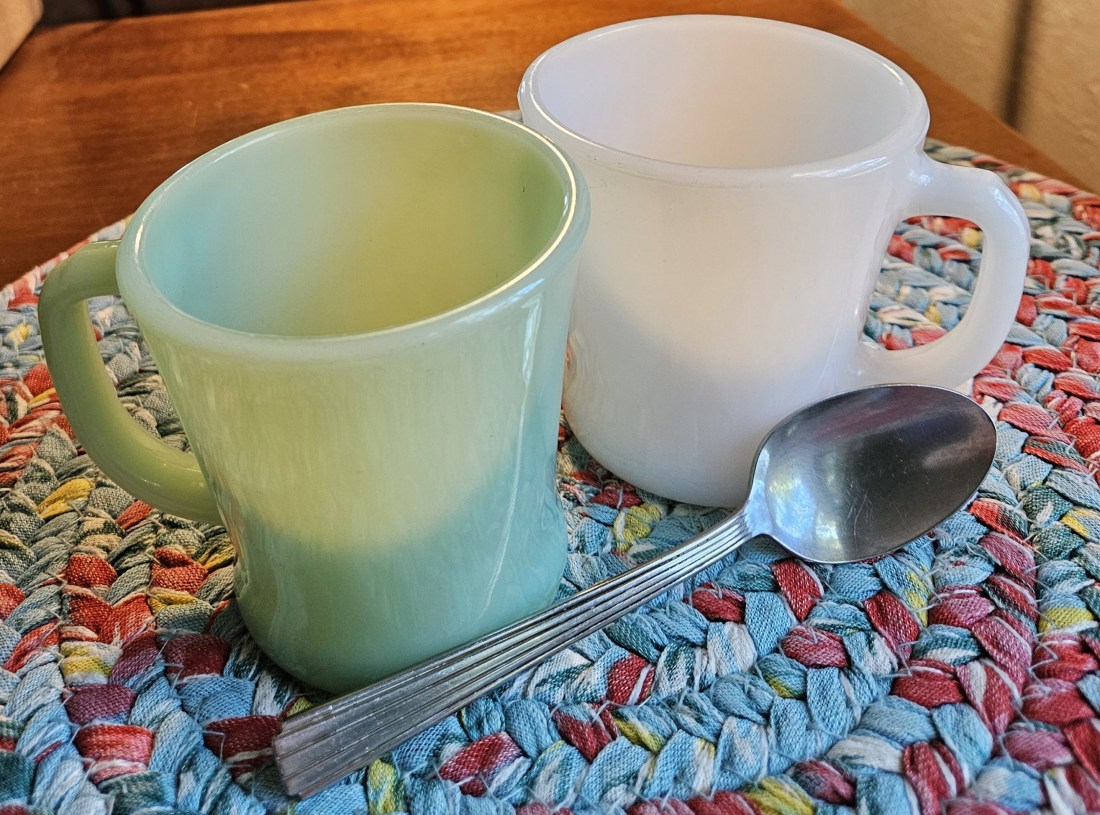
The prompt for May 6th of this year was based on a reading from a book titled The Beauty of Everyday Things by Soetsu Yanagi. In it he discusses mingei, literally a word that means crafts of the masses. He talks about how art, a visual appreciation driven by aristocratic tastes, opposes everyday use, but he asks the question, why? Why should everyday use be merely functional and not also beautiful?
Then he makes the argument that beauty is not just visual, beauty is also defined by function.
Everyday Things – AV Singer 5/6/2024
I wonder if concepts of beauty are universal or if economic status plays a central role in how relationships with everyday things develop. Yes, I have fine china, gorgeous crystal, beautiful linens, but I don’t use them much. I use the hand-me-downs: family objects that have endured time, that are easy to store, easy to wash. I hunt thrift shops for balanced, well-crafted beauty. If a spoon is balanced and well-bowled, I am inclined to use it everyday with appreciation though it is mass-produced from simple stainless steel. I prefer stainless steel to silver. Stainless does not contribute an extra taste to the food the way sterling does and it’s easier to clean, and easier to store. Although I have both, I use the mundane everytime, but I chose it with the eye of someone who appreciates beauty.
I have nice mugs, but the ones I use everyday are green-stamp cups from the 1950’s: one green, one white molded translucent glass. The heft is comfortable even when filled with liquid. The handle is balanced perfectly on the vessel, and because it’s mass produced, both are exactly alike except for color. They are easily cleaned. My finger joints don’t hurt after nursing a cup of coffee.
Utility.
They are like friends. The favorite spoon, the favorite mugs, ones I have lost in the past – mourned like family members. I hunt for new pieces to fill the empty space. I learn to love another chosen piece, cherishing time spent together. This is beauty to me. The fine china, the crystal, and the silver sit in my cupboard, occasionally used for special occasions. I no longer have the linen, which was so hard to care for.
I reach for my shimmering, translucent cup of coffee, take a sip, appreciate the warmth and the comfort of a treasured object. I wonder if my grandmother felt the same about it when she used it. What does that say about me?
My writing sisters understood his words with their own experiences. For the first time I was asked, “Will you share this on your blog?” lI felt so honored.
Betsy Rich Gilon – Clay Bowl
I have a bowl, a simple bowl
Its clay body textured
With undulations of the fingers
That caressed bowl into life.
I hold a bowl between my hands
Bowl beckons for me to touch
As it pleases my heart, bowl lies cupped.
I have a bowl, a simple bowl
Beauty awakens
Shari Anderson – Appreciating Beauty
Appreciating the beauty of everyday things requires time. It requires allowing a spacious
moment in which to notice the weight of a cup in your hand, its shape and texture.
Time – to feel the heat radiating from the luscious Chai within, the steam caressing your chin
and cheek. Time – to smell the cloves, the cinnamon, and sigh with pleasure.
True enjoyment is just that, bringing joy to the moment. With attention, involvement, and
gratitude, our physical, emotional and ethereal senses take in what each moment offers us.
We then experience the blessing.
Dianne Chapman McCleery – The throw away society that we live in.
When did possessions take the place of safety and security? You can buy t-shirts at big box stores for $2.95. How long do they last? Not long, I imagine. I’ve never been a fan of the latest fashions. If I buy something, and it takes on the value of “I really like this” after I wear it several times, I wear it until it falls apart.
A problem would often pop up when I would buy new clothes from stores. After washing, often their shape would change (or mine would). When my kids were little and money was tight, I discovered resale stores. Shirts for $2, pants for $3. And they were already washed and often worn into comfortableness. The major downside was that oh-so-comfortable pair of jeans would wear out sooner than a new pair would, but that was the price I was willing to pay. After all, there were always more at the resale shop.
Lynnea Paxton-Honn – Seeing (experiencing) beauty is not the same as being attached to that which is being seen as beautiful.
I have built my nest slowly through the years, learning what gives me comfort, what fulfills my idea of beauty. In the process of my nest building I have found beauty in the creating. Seeing the beauty in work that others perform with materials: smelting, molding, painting, weaving, the growing of the basics from which the materials are birthed. Scores of farmers, harvesters and craftspeople go into the creating of my home. Because of thrift stores and yard sales I can gather a quality that gives aesthetic comfort. I have my mother’s silverware. It is not super high-end but sweet and special. My house is old, well used, just the right size and shape.
“Just the right size and shape.” We end with Lynnea’s words about aesthetic comfort. Those items we use everyday mean something to us, and therein lies the reason to find those things to use everyday that give us not only pleasure when we use them, but also a sense of beauty, a sense that using them makes our lives richer.


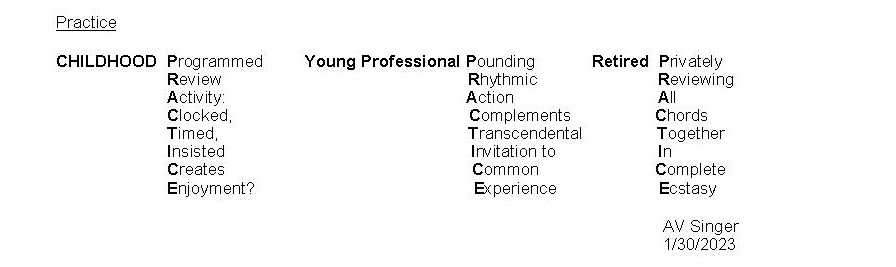

 Connection