What Does It Mean To Have The RIGHT To Vote?

To have a right to something is a loaded term. What is a right?  

Legally considered a privilege, it is a power given by constitution, statute, regulation, or a judiciary precedent. A right to vote is not a command, rather it is a gift of free speech: a golden opportunity. No one is forced to vote, but we are entitled to the act of sharing our individual voices. As a people, we have fought long and hard to gain this ‘right’ for all of us, no matter the gender, the sexuality, the color of skin, the ethnicity, or the religious or political belief, or the absence thereof. At a certain age, ALL Americans have the right to vote.

Why do so many of us let go of that right? 

I don’t know the answer to this. I don’t believe it is laziness, because Americans are not lazy people. We tend to be fighters, fighting for what we believe to be the correct course of action. So why do we sit out elections? California, as well as some other states, have made it ridiculously easy to vote. You can make your choice in the privacy of your own home sitting in your favorite chair. You can seal an envelope and either mail it in, or deliver it by hand. There are allowances to have help doing this. In California, you can track the receiving of your vote and the counting of your vote: (California BallotTrax <updates@caballottrax.com> ) all while sitting in the privacy of your home. 

I hear some folks say, my voice doesn’t matter anyway, why vote? 

Who said that to you? Your voice counts. Your voice adds strength to others’ voices. It doesn’t matter if you are left or right, blue or red, democrat or republican, or independent, or other. Your single voice adds to the strength of others’ voices in our quest to have a good life, liberty, and the pursuit of happiness, however you see that.

I write today to ask all of you to take back your power. Vote in this upcoming special election. What do you feel is the correct course of action? Do we agree with this temporary mandate or do we not? The more of us that use the privilege (right) to vote, the more authentic our vote will reflect the opinions of those living in California. Your voice will add strength to others that hold your viewpoint, even if you don’t win. Democracy is not a matter of winning, it is a matter of speaking out. It is a matter of communicating with others. It is a matter of using the privileges our fore-parents fought so hard to give us, so that we would be a freer people than they were. 

Take back your power. Vote.

A yes vote on Proposition 50 means the State of California will temporarily redistrict in an attempt to create a more even and fair playing field for the nation.

A no vote means you think the State of California is okay as it is.

It’s as basic as that. 

What is my personal thought? Well, that’s the other beauty of this system as it stands now. Each and every one of us is entitled…that’s right, ENTITLED, to our personal viewpoint and we don’t need to explain ourselves to anyone else. It’s a private vote. So, open up that envelope, read the contents. If you don’t understand the contents, ask someone for help, meet up with like-minded friends and discuss it, or read on as I explain what I found important about this ballot request.

********************************************************************

Proposition 50

For me, the most important wording in this proposition appears on page 18 of our Statewide Special Election Official Voter Guide Information, under Text of Proposed Law. Look at the second column, Sec. 4. (a)

It is the policy of the State of California to support the use of fair, independent, and nonpartisan redistricting commissions nationwide. The people of the State of California call on the Congress of the United States to pass federal legislation and propose an amendment of the United States Constitution to require the use of fair, independent, and nonpartisan redistricting commissions….(author use of bold letters) 

A yes vote says, I want every state to have fair, independent, and nonpartisan redistricting commissions. A no vote says everything is fine the way it is. For me, the idea of calling on the Congress of the United States to create a fair system for everyone was more important than choosing temporary districts so I am glad I read the entire booklet otherwise I may not have known this was included within this vote. 

That said, this is how I see the temporary maps at least for my voting area:

We have 58 counties in California. Those counties are grouped and split in an attempt to create equal voting blocs. This has nothing to do with Republican/Democratic/Independent or Other voices. It has to do with the number of actual registered voters in each of the districts despite their political affiliations. Usually this is done every ten years after a national census. 

Where I live, in Northern California, our current maps have 19 of these 52 voices. It often seems in this state that urban areas have more voice than the rural areas, simply because of the numbers of people being represented. We still have 19 out of 52 voices with this temporary redistricting; however, it seems the most extremely rural areas have been given more representation than they had before with this temporary effort. It will be interesting to see if this pans out in the 2030 Census: more people in the extreme rural areas, hence a bigger voice, but independent commissions may not see it that way. I hope voters in extreme rural areas take advantage of this redistricting effort. I know I am taking the time today for my very rural voice to be heard. 

And like I said before, all you have to do is vote in your home and get your ballot to the local post office. You don’t even have to add postage.

Keep your power. Take the time to make your voice heard. That is what democracy is about. 

Works Cited:

Statewide Special Election Official Voter Information Guide
Reality Check

San Francisco – 1978

All ten toes tightly grip the precipice of youthful choice. Across a career chasm, a queue of breasty blondes vie for a chance to become the next Marilyn.

“You could have that and more, Miss Singer. You have one of those rare faces that can be either very young…virginal really, or old and wise. You have what it takes.” 

I nod. All the high school and college experiences are worth something after all. The queue telescopes closer.

He lifts my resume and waves it. “The resume is impressive. You’ve answered all my questions. Do you have any?”

Is it too soon to say, “When do I start?” Instead, I shake my head no. 

He says, “I just need one more thing. Pictures.”

Pictures. The last step before my place in that queue.

“Please remove your clothes.”

What? Do I hear that correctly?

“Ahh. There’s no need to remove your panties, at least not yet.”

Details of the queue, hidden by distance, suddenly crystallize: bruised and tear-stained faces, slipped bra straps hanging from bare shoulders, torn blouses, snagged nylons on too much leg flashing beneath dish towel-length skirts. Eyes filled with hunger, desperation, regret….

Is this what it takes? I lift one foot and –

– step back. “No sir. I will not be doing that.”

“I misunderstood. I thought you were hungry. Everyone who is anyone has gone through this.” Disappointment in my choice taints his words, colors his features. 

I bow my thanks and back up to the door. Shaking, I grab the doorknob. It turns easily. I escape into the dank hallway. 

Funny. 

I didn’t notice the squalor upon entering.

I fly from the building and slam into sunshine. San Francisco is warm today. 

“Did-I-do-the-right-thing?” quickly dissipates in the golden light. 

The Reluctant Gardener

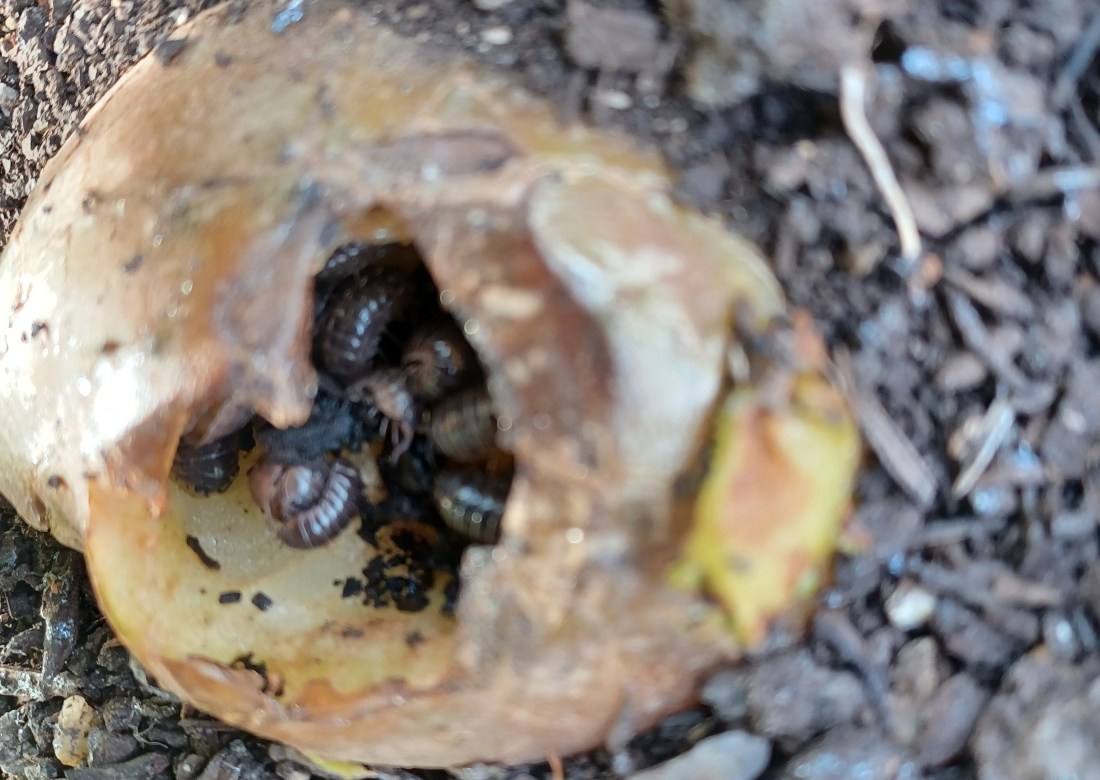
Armadillidiidae (photo by Lisa DeRosa)

Wee boy
Flipped a rock
Found a crawly
Picked it up
Watched it curl
Perfect ball
Rolling on his palm.
What a wonder.
Did you pop it
Into your nose
To keep it safe
To keep it close?

While I discourage this behavior, especially after a trip to the doctor to remove the little beastie, it did prove that Armadillidium vulgare, a terrestrial crustacean, can live quite happily in a dark, moist environment. (Yes, it was still alive when the doctor removed it.)

It was difficult to research A. vulgare. They are not considered agricultural pests. They are so common in our country that people take them for granted and mostly ignore them. They did not originate here though. Possibly as early as two-hundred million years ago,
sometime after the end of the Triassic period, tiny, gill-breathing crustaceans
crawled onto what would now be considered European shores and adapted to stay
land-bound. The species found in California, Armadillidium vulgare, is usually
bluish gray with plates that allow them to conglobate, or curl into a ball,
which they do for protection and water conservation. This species was
introduced to New England from mediterranean regions sometime during the
1800’s. I could not find any documentation about how they arrived in California.
Maybe they came during the Gold Rush.

Here's what we do know about them. They are nocturnal, and like dark moist places. They breathe with a gill system. Apparently, the hind-most set of their seven pairs of legs adapted to become air tubes that feed into a gill system on the underside of their body. They
roll into a ball to conserve moisture, because gills need wet surfaces to stay
healthy. One usually finds them under rocks, or leaf litter on moist ground, but
if you are a pet-keeper, it is a good idea to create some dry, warm places as
well, because they need an outside source of heat to regulate body temperature.
 

Pill bugs, or as they are commonly known in my area, roly-polies, are detritivores, consuming decomposing plants and animals. In terrarium conditions, they are helpful as they will also clean-up their own shed exoskeletons and any mold or fungus that grows in an enclosed, moist habitat.

Though not a pest, they will consume young plants. I learned the hard way that using leaf litter as a mulch only attracts them…By. The. Thousands. (Okay, maybe hundreds.) My point is nothing has a chance to grow with a large population of hungry decomposers who eat seedlings as dessert.

There have been some recent studies that claim that because they also eat fungi they help with global warming. Fungi release CO2 into the atmosphere as they perform decomposition
tasks. Armadillidiidae keep fungi populations in check, mitigating CO2 production.
Every little bit helps.

Another fun fact is that when they are cleaning up, they eat trace amounts of heavy metals, thereby preventing food plants from absorbing them. The more I learn about these little treasures, the more I am tempted to create attractions for them in my garden on purpose
instead of by accident.

Roly-polies are hatched about a week after fertilization into a brood sack on the underside of an adult female. Yes, they are marsupials. I was so thrilled to learn that. I now know that I have mammalian and crustaceous marsupials in my backyard. Yay!

The babies stay in the marsupial pouch for about two weeks. Upon exiting the pouch, these young ones molt every two weeks for about four and a half months, at which point they are considered adults. (I think. No source actually said that.) Females can store deposited sperm
for up to a year, picking the prime time for survival. This may be why some
sites claim the females can reproduce asexually. However, in my opinion, the
male courting dance seems quite elaborate: males wave their antennae at the
females to get their attention. Once they get it, they choose a mate. They then
lick and tap her to convey intention. In my mind, that refutes the notion that
females can reproduce asexually. It just seems that the male roly-poly uses a
lot of energy to get the female to like him. Why would she put up with that if she
could do it without him?

Even though I could not find much scientific research about them, because roly-polies are not agricultural pests, I had a great time researching pet sites on YouTube. Did you know they live three to five years? That’s plenty of time to form relationships with these
tiny creatures.

If you want to attract roly-polies, pile up some fallen leaves, or place a corn cob, half of a cantaloupe, or even a rotting potato outside in the shade. Leave whatever you have chosen in place for a few days, then move the waste along with scores of attracted pill bugs. I
have included links to videos that show how to set up a house for your newly
adopted pets.

Or, you can just let them mind your garden, knowing that this gift from the sea is protecting your land.

Sources Cited
https://entnemdept.ufl.edu/creatures/MISC/Armadillidium_vulgare.htm
https://www.pbs.org/newshour/science/pill-bugs-emerged-sea-conquer-earth
https://www.treehugger.com/roly-poly-pill-bug-facts-important-environment-4864410
https://en.wikipedia.org/wiki/Armadillidiidae
https://en.wikipedia.org/wiki/Armadillidium_vulgare

Videos
https://www.youtube.com/watch?v=Ij7VDu6iWCg
https://www.youtube.com/watch?v=9oUkDOI_QmI
https://www.youtube.com/watch?v=p-dTokDjn14   
(This is about A. vulgare in particular)

Stuck in a Box

From a very young age, we look at the reflection of ourselves in others’ eyes. If someone takes the time to see who we really are, we know ourselves. We learn to trust and love our core being. Instead, I fear, most of us see how others measure us against cultural standards, especially women in my generation, the first generation to deal with contrived image saturation in visual media. 

Recently, I went with friends and family to see Barbie, a movie about a doll designed to perfectly depict a contrived image of beauty that saturates television, magazines, book covers, and advertisements. We all expected fantasy, a perfect woman in a perfect world gone awry. What I didn’t expect was a profound statement about the way each of us as women see ourselves. We need to sit up and take a look at this.

As the movie progressed, Weird Barbie was introduced. Just the mention of her made me sit up. When I saw her I thought, “My God. This is the first time I have seen myself depicted in the media.” I can’t say it’s the equivalent of the reaction that women or men of color have, but it certainly was a reaction that I couldn’t ignore. 

I saw myself. 

Weird Barbie. 

Huh. 

This set off a chain reaction. I started to remember and notice things I never had before.

As a young prepubescent woman, I didn’t hear sex ed in school, nor did I hear it from my mother. She never spoke of such things. I believe my father worried about me because my self-esteem was poor. He taught me how to be a woman with his Playboy magazines as examples. 

He loved me, but that was not the right approach for a little tomboy that developed quickly into a BIG girl at age ten.  

To say I wasn’t ready is a gross understatement. I loved climbing trees, riding horses, playing imaginary games of hunt, shoot, and capture, playing the saxophone in marching band, swimming, tennis, jumping (I loved to jump off roofs and balconies). You name it, my blossoming got in the way of all I loved to do. Big breasts were the bane of my existence.

Later, when I was old enough to have crushes, I learned from magazines that men liked big-bosomed women. 

Why didn’t they like mine?

What turned them off? My legs? My teeth? My hair? My eyes, hands, feet, intellect (I was a smart girl.) Was it because I didn’t do girly things? I didn’t play with dolls or other girly toys. I felt uncomfortable in dresses.I found lizards and brought them home. I had a pet crawdad. Once, I had a pet fly. I continued to ride horses, to play tennis, to swim with a team, and chuck hay bales out of a barn. I talked to frogs.

I was weird. 

I wanted to fit in. I wanted to be the stereotypical girl that boys sought. I had breasts, dammit. 

As a teenager I felt comforted by The Velveteen Rabbit. It wasn’t  because I loved soft, worn things. Rather, it was because I felt pitted against my culture’s vision of ‘ideal woman’ and didn’t believe I fit it. I thought if I could allow myself to be loved, to get shabby with attending to others’ needs, it would prove I was worthy. 

It turns out, life doesn’t work that way. 

I practiced yoga to keep perfect proportions. As I aged, I found it was more meditative for me. Recently, I learned a new way for me to practice meditation. I found it in a book called, belonging here: A Guide for the Spiritually Sensitive Person, by Dr. Judith Blackstone. In it, she teaches a technique to fully inhabit one’s body. During it, one focuses breath in the feet. I couldn’t do it. 

I didn’t acknowledge my feet. 

I really only noticed them when they hurt. 

As I moved my breath into my ankles, it was easier to focus, though I worried I didn’t have the delicate ankles I was supposed to have.

Then I moved breath into my legs. 

With devastating clarity, I realized I saw my legs as objects – not part of self – objects! 

Did I classify other parts of self as objects? My hair? My hands, my eyes, my breasts, hips, belly? OMG! My neck, my chin, my nose? Is there anything about my person that wasn’t an object to be presented and judged as worthy, or in my case, not?

Then it occurred to me. If I have this problem, do other women my age suffer this way? How about men? Do men suffer this way? 

I suddenly resented Mattel for not giving us Weird Barbie before this, because now I am old and can never become stereotypical again. 

My daughter asks, “Why would you want to be?” 

That’s an excellent question. I can only answer that I have spent a lifetime worrying about it. Am I good enough? Am I thin enough? Am I desirable? Are my breasts big enough? Are they too big?(Yes, dammit.) Do I meet the code that others impose upon me?

Why, indeed, should I worry about this?

I fear I am not the only one with such self-conscious judgment. What can be done?

For me, seeing Weird Barbie has been a god-send. 

While I resent Mattel for not presenting her earlier, I am also grateful she has finally made her appearance. After meeting her, I am beginning to see my own body as the finely tuned instrument it is. Without it, I could not produce the tone I have when I sing. Without it, I could not have birthed my babies. Without it, I could not have fed them for as long as they needed. Without it, I could not have jumped off roofs, or out of trees and felt that exquisite moment of flight. Without it I wouldn’t feel the pain of a stubbed toe, or the caress of ocean waves. Without it, the cool evening breezes wouldn’t thrill me as they have. Without it, I wouldn’t remember what it is like to touch another human, or pet my favorite cat, or feel the earth beneath my bare feet. Without it, I couldn’t smell the deliciousness of Spring or see the vibrating color of a bright orange rose.

When I asked my daughter if she remembered her Barbies, she said, “No. I didn’t have Barbies.”

Trust me. She did. I know. I spent hours making clothing for them. 

As we talked more, she did mention she had dolls that rode her Breyer horses. I looked it up. The Barbies in her day had knees that bent. 

She had Barbies. How Barbie looked did not define my daughter’s self-image. If anything about Barbie defined something for my daughter it was what she did. 

Barbie rode her horses. Nothing more. 

Nothing less.

Looking back, I don’t think boys turned away from me. I am fairly certain I turned away from them because I didn’t believe I was stereotypical enough. Physically, I may have been, (I have breasts, dammit) but, psychologically, I am Weird Barbie. I don’t claim that proudly, I just am. I always have been. The image I see in a mirror does not define me. 

The Barbie movie says it best. If you get a chance, watch it. I’d be interested to hear about any awakening you might have had after the experience. Now, wouldn’t it be wonderful if someone were to design an Old Weird Barbie with saggy bits? And a Ken to adore her?

Fig Leaf

My neighbor worried that my fig tree was giving up. There were several reasons: I cut her back so she doesn’t have to work so hard while Californians ration water.  She lost the shade to which she was accustomed when the large companion tree that sheltered her was trimmed. As a reluctant gardener, my plants fend for themselves. I am not heartless, instead I am desperate to help conserve our water supply, so I wait and watch wondering what grows here naturally, and hoping some of it will be good to eat.  

Who will survive the new, harsher conditions? 

My Black Mission fig leafed earliest. The first inflorescences began to bud late this Spring. 

What makes her so successful? 

Figs have fed hominids and others throughout history. Uniquely adapted for harsh conditions, it grows where other plants fail. Technically, that which we call a fruit is actually an enclosed collection of flowers. Stem growth forms a bulb within which this cluster of flowers develops. Each blossom is destined to become a single, tiny drupelet. Encased within a protective womb, they do not need to fight heat or dry conditions. Some species, forming both male and female flowers, do not need assisted pollination. Others invite a miniscule female wasp into their chambers to spread pollen while she lays her eggs. These flowers then grow into a cluster of drupes, all encased within their pristine environment. (No worries, the babies escape before we eat the figs.)    

This year, a few flowers ripened early, oh so sweet. I await the others. My fig  thrives in this hot, dry climate and can live a century. Planted during my lifetime, she will be my companion as long as I am here. 

On Monday July 17th, Shari, one of the members of the writing group to which I belong, threw us this prompt: fig leaf.  A short ten minutes later, we had the following offerings. I am thrilled to present my writing sisters and their responses to her prompt.

Fig Leaf – Shari Anderson 

When I was a young child, my father planted a grapevine and a fig tree in our backyard. It was

biblical 

“Every man under his vine and his fig tree” 

inspired. 

I don’t remember the grapes –

maybe they never fruited, but the figs were juicy and delicious. The leaves of that tree were 

wonderful, 

unusually shaped with lots of rounded edges, sensual, with female curves.

Why a man, under his fig tree? Why not a woman? Why not just the fig tree itself, shapely,

verdant, simply divine?!

But, my favorite backyard plant was a wild cherry bush, which we used as a hideout, gorging ourselves with fruit while fighting off attacking pirates.

Fig Leaf – Dianne McCleery 

The other day, I had to duck under fig leaves to reach Valarie’s front door. And I loved it. I love the hugeness of fig leaves. I love their shape. And, of course, I love to eat figs, especially since they are really flowers, not fruit. I’ve always appreciated adding pansies or nasturtiums to salads, but their tastes are “eh,” not like the deep deliciousness of figs. Yes, I am a fan.

Fig Leaf – Joyce Campbell 

The fig leaf reminds me of an outstretched hand

Welcoming and offering a space to land.

Winged beings pause there, some large and some small,

And those with vibrations I can’t see at all.

Hidden below in the cool of the shade

Sprout tiny green nuggets, a prize for their fame.

Soon to be wrinkled and golden with age,

Dried to perfection a treat with no shame.

Fig Leaf – Anne Jeffries

As far as I’m concerned,

Eve’s “transgression” freed humanity 

From an unconscious tunnel of an existence.

Imagine Utopia:

Yours different than mine, I suppose

But however that flowered garden is laid out before you

Without the snake

Slithering it’s SINewy offerings

There is no Will

No humanness at all:

Our choices and failings, our triumphs and joys, our sufferings and lessons.

Eve took us, perhaps out of our pure animal nature.

She gave way for the fig leaf of shame

To eventually free us from innocence

Fig Leaf – Amel Tafsout

Covered with a gentle morning frost.

Stretching your fingers to many directions

The lines of your open palm

Go back to the beginning of creation.

Your soft green color soothes the sight

Attached to the blessed tree.

You share shade generously.

You hold your sweet biblical fruit with care.

Then leave with the wind.

Blowing to a new world

Moving with lightness

Dancing your way freely

Ending on Adam’s private part

Covering up Humankind

Living in the complexity of reality.

Afternoon Delight – Barbara S Thompson

Do you remember the scene from

A Woman In Love

When the meal slowly unfolds 

at the garden table

like luscious lovemaking?

As guests

caress and stroke

kiss and swallow plump red grapes,

black olives and

cheeses, soft and hard.

In slow, sultry nibbles.  

Alan Bates leans back in his chair

with heavy lidded eyes

 preparing to explain 

the proper way to eat a fig,

It is an English garden after all.

When Eleanor Bron selects a smallish fig

piercing it’s base with one long, elegant finger

splitting it open to reveal the pale purple fruit within

Heavy with seed and fragrance

Slowly she opens her mouth 

biting into the flesh 

her soft moan echoing around the table.

Fig Tales – Betsy Rich Gilon

Ancient one, your leaves flutter,

The desert wind  murmurs,

Camels leave footprints.

Would I have felt

The stories you tell,

Had I bitten into your flesh

Fig Leaf – Symbol of Shame? – AV Singer

Protection from sun

Invitation to hunt

hidden treasures,

Oh, fig leaf,

Why you?

           ∞

Fingers of mercy

on palm so large, 

how long

must you

hide me?

           ∞

Figs ripen

hidden behind

green curtain.

Why is this 

forbidden?

Please connect in the comments, or by clicking on the Like button. For more information about figs, follow these sources:

Sources:

https://journals.ashs.org/hortsci/view/journals/hortsci/42/5/article-p1083.xml

https://www.thespruceeats.com/history-of-figs-1807598

Bad Boy Bugs?

Ant Herders WIth Their Herd
Healthy Plants

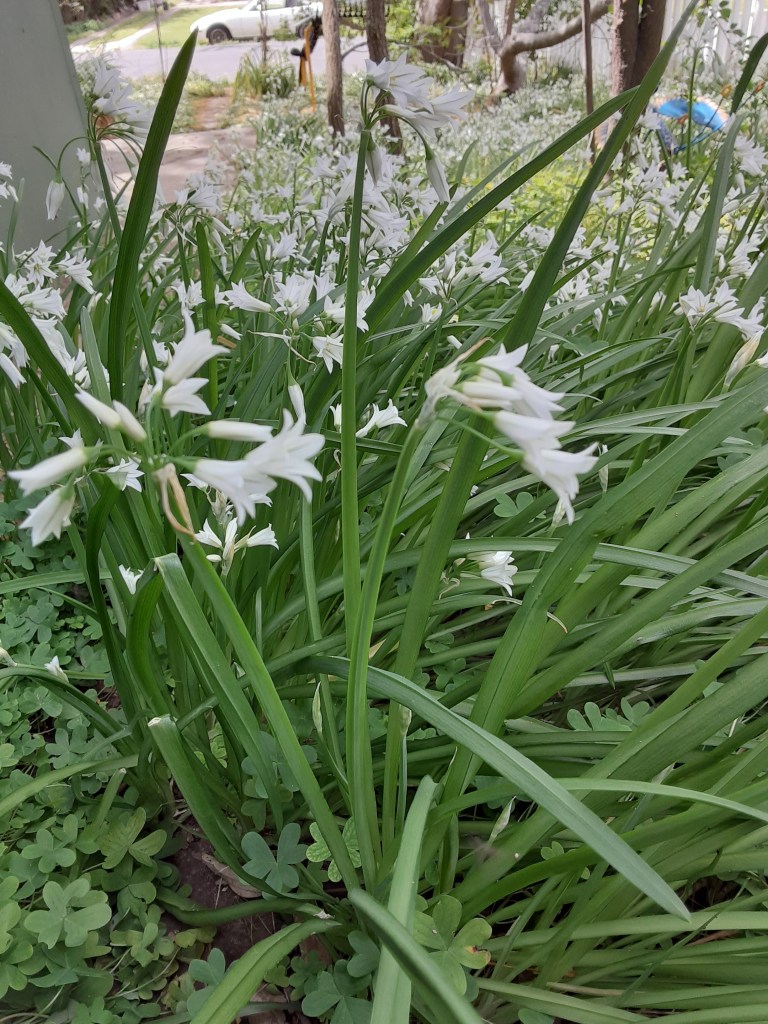
I don’t believe in lawns. I don’t like wasting water. I certainly don’t like mowing a swath of grass that has no purpose except to use water to stay green. I do appreciate a plant that resembles a lawn in the springtime: three-cornered leeks (Allium triquetrum), commonly known as Snowbells.

They are not natives to California. Settlers brought these Mediterranean beauties with them when they settled here during the Gold Rush. Considered an invasive plant, and by some folks, noxious weeds, I love them. As a reluctant gardener, I am always happy when plants, especially edible plants, invite themselves into my yard. I especially love the plants that grow prolifically because they crowd out any Bermuda Grass, which I consider a noxious weed. My entire yard supports them.

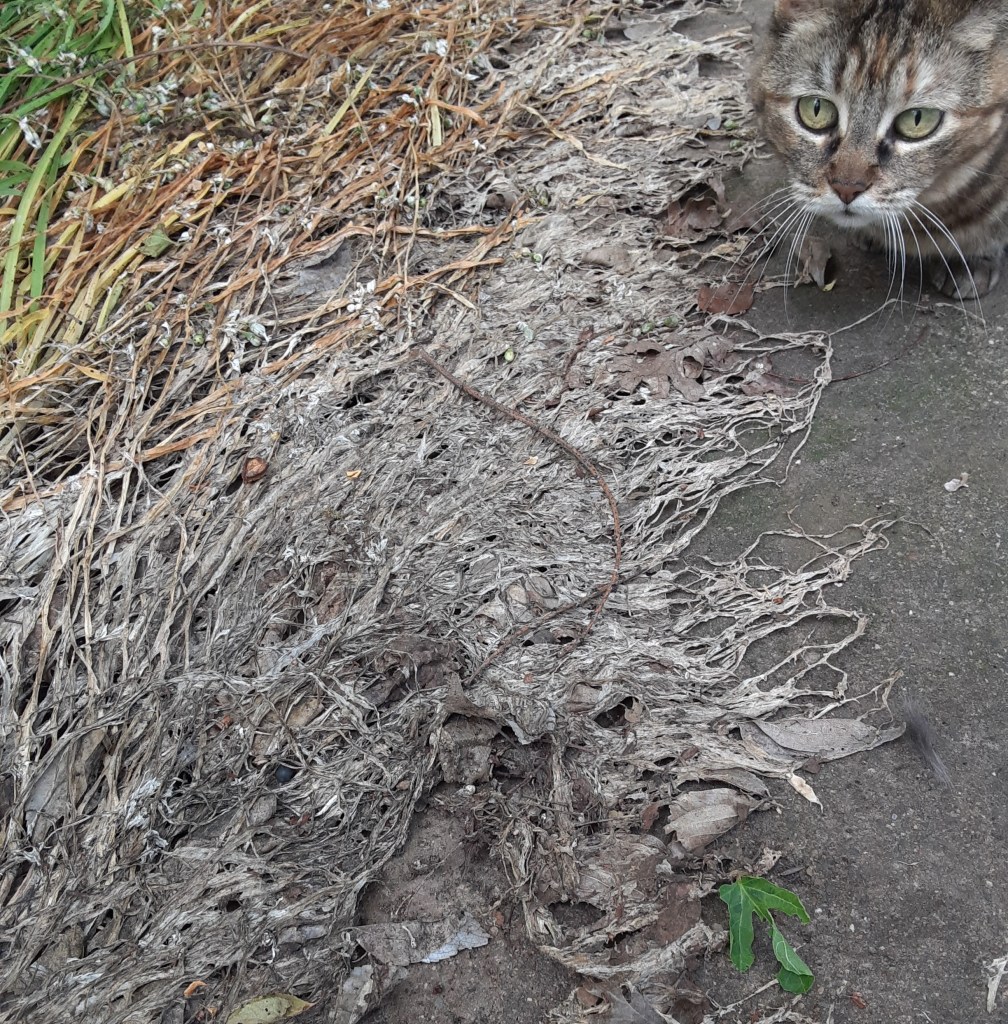
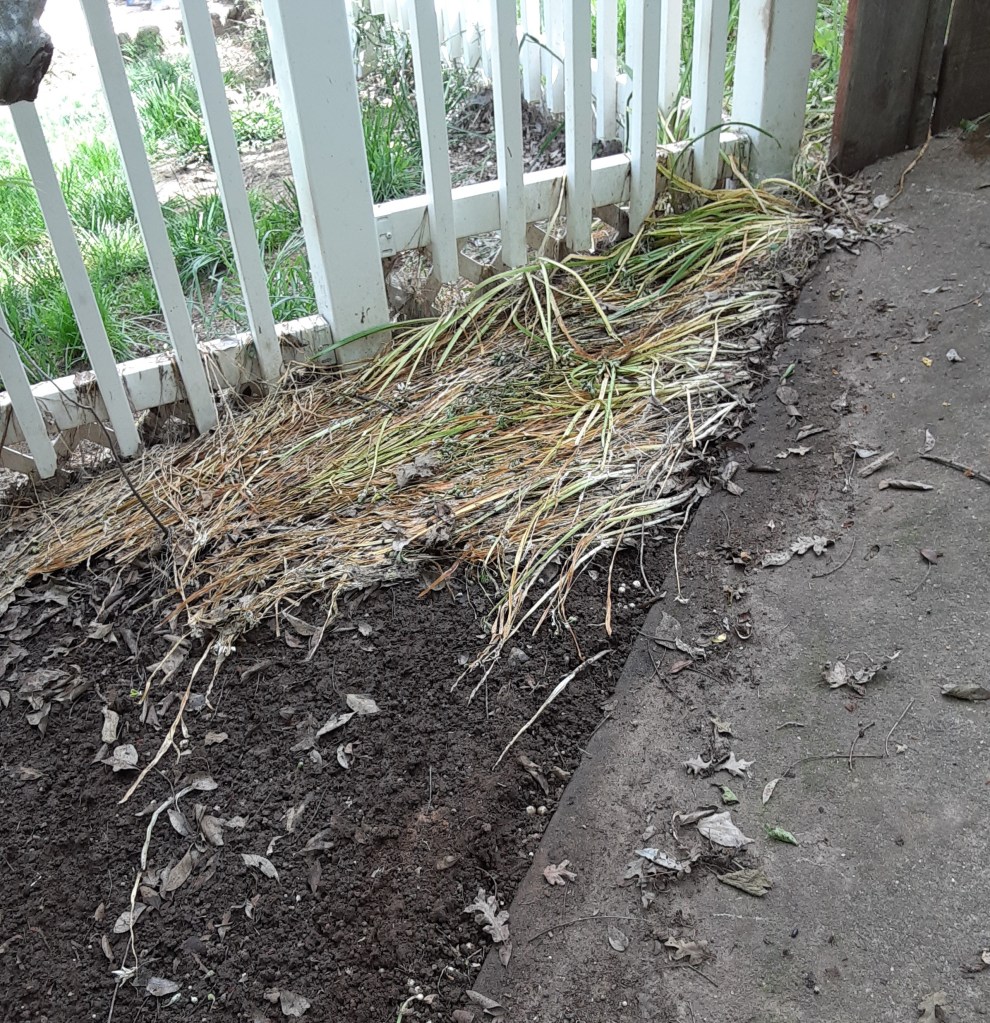
I use them in place of onions and garlic. The entire plant is edible with a very mild taste. They grow in the spring and die in the summer. When they die off in the summer, they form mats on the ground, which rake up easily, but also provide a perfect mulch for holding moisture in the soil. I’ve always been impressed by how the stems and leaves line up directionally, like hair that has been combed down the sides of my yard spaces. I never questioned why.

This is my year for noticing things. It’s the first year since retirement that I have spent anytime practicing the art of Being instead constantly staying busy. There is good reason to be a reluctant gardener, to sit, observe, and learn how the environment is adapting to the changing global climate patterns. It became really clear during the quarantine that Earth recovers quickly when mankind is not out and about. It also has become clear that to continue growing as we have is not sustainable.

In my mind, I think we need to work with the change and with Earth if we want to continue to feed ourselves in agrarian societies. So, I sit and watch. My yard is not the same yard it was when I first acquired this property. The angle of the sun is different, tree cover is different, temperatures are different. Plants do not respond the way they used to. So how does it work? That’s what I hope to find out.

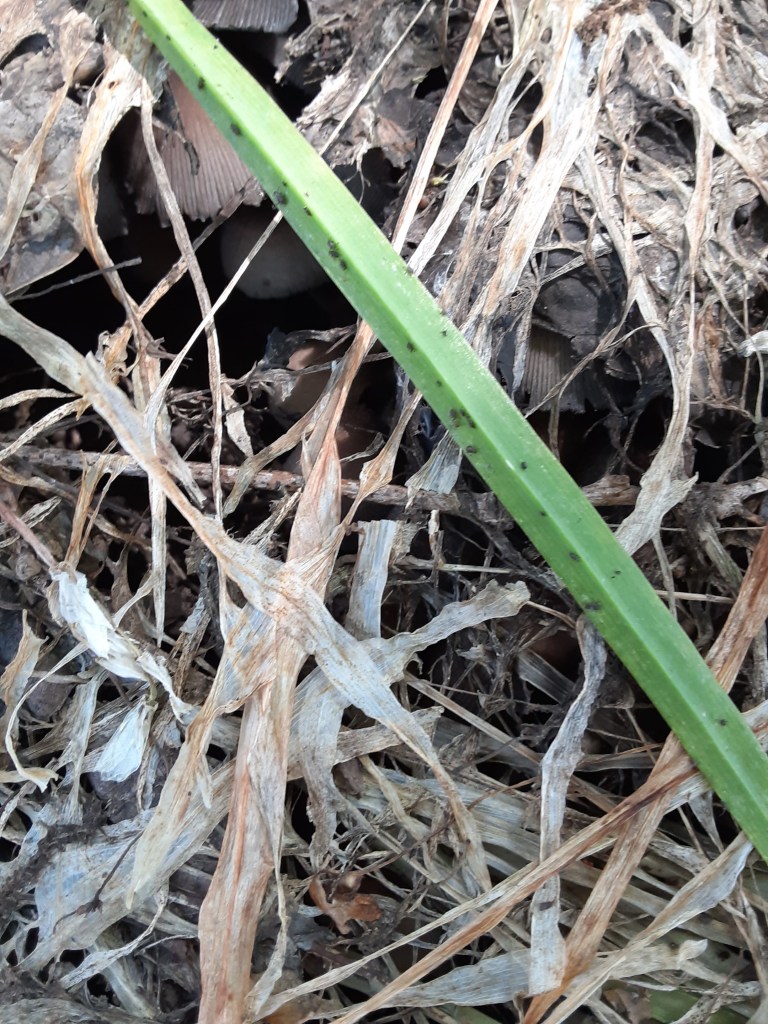
Along with reassurance that I still had massive amounts of three-cornered leeks, I also discovered another form of life that I had not observed before retirement. The first time I noticed it, I thought my plants were growing moldy. I wondered how to treat them for mold. Then I noticed the mold writhe across the blades and stems. OMG! I looked more closely. Black aphids. I had never heard of black aphids. (Hey! The juice from these plants is supposed to be a fabulous insecticide. Pssht. Not for these tiny creepers!)

280 million years ago aphids sucked plants dry. Since then, over 5,000 variations of this amazing insect have developed special appetites for the plants of the world, especially in temperate zones. The trouble with this appetite is that they are sipping sucrose, which they cannot digest. Why do they do it? It seems that sap is the ultimate addiction.

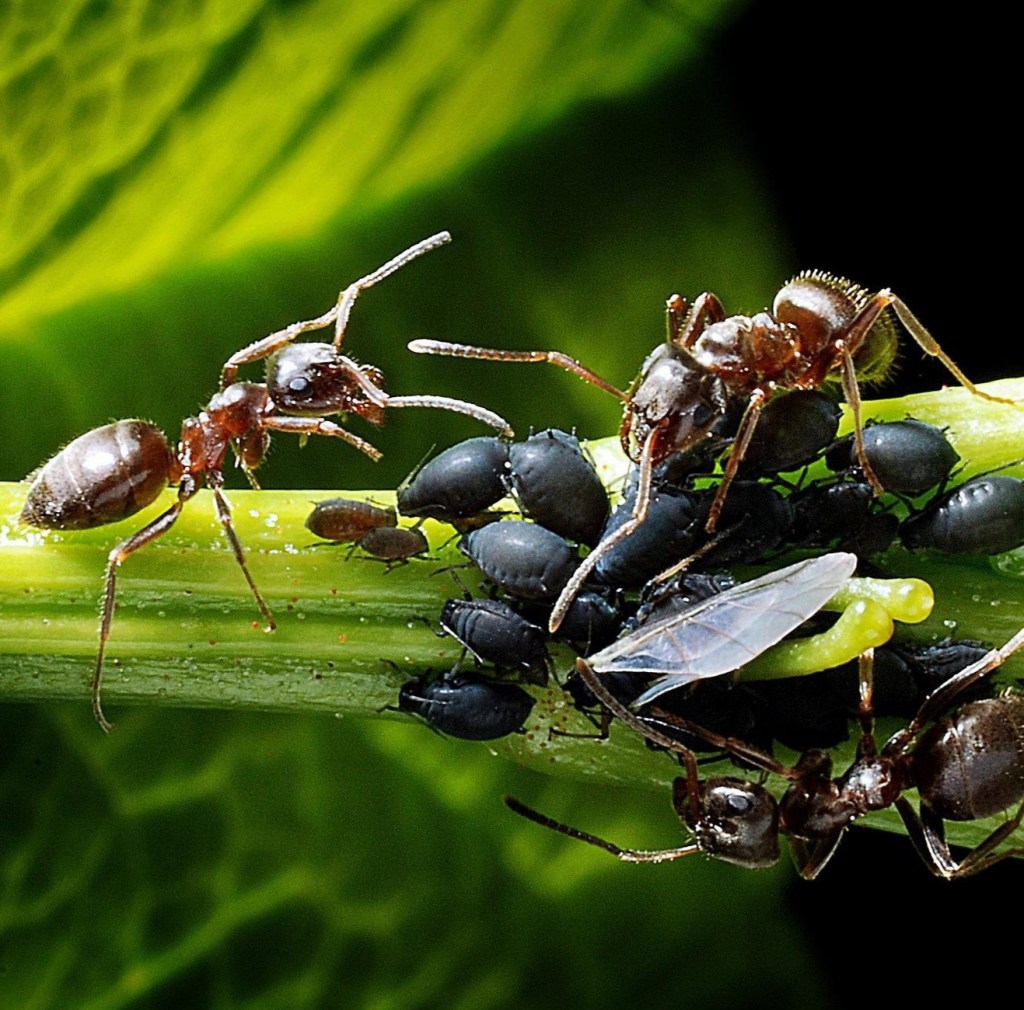
Their inability to process this food source makes them tasty for predators such as ladybugs, hover fly larvae, sparrows and the American goldfinch. Crab spiders are quite fond of them. Ants, acting very co-dependent to this addiction, go to great lengths to herd, protect, and propagate the little beasties because they cannot get enough of the sucrose secreted from their bodies in the form of droplets of waste, called honeydew. Ants eagerly milk this nectar from the aphids’ miniscule bodies. Even bees claim herds of aphids as their own to delight in this particular habit.

To get around this inability to digest their main food source they have developed interesting tricks and relationships. Aphids harbor bacterial endosymbionts who recycle glutamate, the metabolic waste produced while aphids try to digest plant sap. The bacterial endosymbionts turn the waste into essential amino acids. Some aphids synthesize red carotenoids using horizontal gene transfers. The way I understand this is they use the genetic material from plants, add the coding to their own, which then enables them to absorb sunlight as a food source. I guess if you have been around since the Early Permian Period, you acquire these talents.

Aphids are bad boys. Or are they?

My yard is a refuge of divine feminine it seems, for the aphid army you see on your plants is entirely female. (see: Reluctant Gardener post 2 for more information about female armies: https://avsingerauthor.com/2022/01/19/post-2-reluctant-gardener/ ) As the weather cools in autumn, males with wings and winged females mate. The males die off, their job done. Winged females lay the eggs. The eggs overwinter and hatch the first generation of a parthenogenetic army. The babies are born pregnant, and soon birth live and pregnant female offspring, who in turn birth live, pregnant offspring and so it goes. There can be as many as forty-one generations a season for each female who births another clutch of live, pregnant females every few days. These females are of course voracious in an attempt to create this army. My three-cornered leeks didn’t have a chance.

If you rid your garden of their food sources, some females grow wings and produce a generation of males in preparation to migrate. They fly as high as 600 meters to catch winds that can carry them where they need to go.

So for you, my dear friends, I have left swatches of aphids to their task. I’m not worried. My leeks appear to go through this process every year. I just haven’t been quiet or observant enough to see this before. They will be back next year for me to happily eat and share them with anyone who asks for them.

And so will the bad girls of this neighborhood.

The Undoing

Photo by Zoltan Tasi on Unsplash

The Undoing

By the Women Writers of the Well

For those of you who follow this blog you know that, once a week, I meet with a group of writers who meditate together. We write from our hearts, and then tackle weekly prompts. We share what we write each taking their turn in our circle of love. Each of us has come to this group for our own purpose, but I speak for the group when I say, if you are a writer, the best thing you can do for your craft and for your soul is to meet with other writers, to write and share your words. 

You know I am all ‘about the magic.’ 

Something magical happens when we are together.

After meditation or with particular prompts the group responds as if it is one organism with multiple viewpoints. Those are my favorite meetings. The “connection” is strong and we write with one heart. 

This was one of those times.

Marilyn Crnich Nutter

Undoing, undone – downfall or disentangle? In free-fall, it’s hard to know where one is headed. Crashing towards oblivion? I like to think of it as an unraveling—like a knitted work that doesn’t take shape or form and needs to come apart so it can be made whole again, or splintered porcelain pieces which we can’t use but can artfully piece together in new form that will please the eye and fill the heart. It’s part of life’s pattern of being, our longing for wholeness and beauty, making sense of our broken and fragile world.

Lyla Fain

you’re overreacting

but this is how I feel

you’re being too sensitive

I feel insulted

they say, sorry you feel that way

I say, stop using language as a weapon

Anne B. Jeffries

I’m the Un-Doer right now

As I glance up,

And take in the tops of your heads

All bent in your own space

In your own minds,

I think,

Maybe I’ll just watch this unfold.

Be the Un-Doing,

Not the Doing.

But I cannot remove the Un-Doing

As I analyze the Doers.

That’s just it, 

Isn’t it?

It is only in the Un-Doing

Where the true action takes place.

No subject.

No object.

Lynnea Paxton-Honn

Isn’t that what we are doing now? Undoing? I love the concept, the practice, the awareness of Undoing. It is the purpose of our Elder-years. To Undo until we greet The Wonder of Who We Are. The Undoing—so dramatic in the essence of itself. The Undoing sets us free–Undoing the scaffolding about our egoic constructions.

There is no Undoing to be done in Presence with a capital P, in Stillness with a capital S, in the essence of Soul Self with a capital SS. 

 It is the Great Undoing, the Great Awakening, the Portal to Who We Really Are. (or The Truth of our Being.)

Laurayne Mae

There is birth, the entry. Then decades of doing that follows. Should we grow into emotional maturity we acquire wisdom. Wisdom is the antidote of doing. Wisdom is our conscious undoing. 

Joyce Ann Campbell 

Too much of humanity’s progress has left a trail of destruction across land and sea, below and above, within and without.

The undoing of so-called development will not be a simple task.

But undoing is one of Nature’s talents. Wearing down mountains just takes awhile and building them up can be a blast.

Amel

The sound of undoing takes me to the dance of life

A waltz where a 1,2,3 syllabus is moving

In the rhythm of a simple word

A lonely movement of myself

Doing, redoing, undoing of my heartbeat

Undoing the leaves of a tree 

that shows itself with its beautiful lacey shape

I  undo in facing the shadows

That haunt my dreams

In moving images of an unknown story

With its hurting steps 

after the dance of my own truth

Shari

Undoing is much more difficult than the doing that is being undone.

Especially, if that original thought or action has become habitual. 

It’s like trying to untie a knot in a necklace.  Everything is entangled in

such an intricate way, that even finding a start seems impossible.

But— maybe the beginning of ”The Great Undoing” of our fearful manifestation, is just to start laughing.  That laugh sparks another laugh, which sparks another, which quickly becomes viral.

A viral belly laugh to shake away the doing.

DC Little :A sneak peek from Mercy Rising: The Deliverance

The undoing of Mercy came on a day that had begun warm and bright, full of promise. They sat on stumps or rocks in small pods throughout the camp, discussing how well yesterday’s battle had gone.

Mercy stood up, feeling hope rise with her, as she bade her exit from the group. The need to feel the sun on her skin and bask in some time alone grew, besides if she stayed amongst the others too much longer, her head might bloat to an uncomfortable size.

The need to stay humble thrummed within her, and where else then spending time with the Creator to help her remember that?

She glided through the camp, smiling at those who said hello, but she kept her intention focused, finally coming to the newly planted garden. Small green shoots had burst through the tilled earth overnight, uncurling to receive their first touch of the sun.

A deep satisfaction filled her, her purpose realized, her calling answered. She allowed the sensation to infiltrate her, shedding tight throngs of fear and burying the worthlessness that had plagued her.

Just when she began to believe everything was falling into place, she picked up on a frantic heartbeat, racing too fast, tight with fear, dripping in horror.

Mercy jumped up, instantly alert, hand drawing her bow without thought and scanning the area the emotion embarked from, searching for any slight movement or sound….

AV Singer: Connection

Time is not linear.

We like to think it is because logical progression is easier for our emotional systems to handle, but this has been an undoing.

Most of us operate on three cylinders of a twelve-cylinder engine, never questioning our inability to ‘get up to speed.’ We mosey along, secure in our own shells like snails seeing only our own paths. We do not understand that thought can transmit simultaneously with the thinking of it.

And thinking is slow. Emotion is faster, the difference between 10 and 102.

The world is Turmoil right now. It seems criminal to add to the angst. Imagine how quickly an emotional actuality of serenity can travel. Imagine transmission of trust, or a whole-hearted knowledge of what peace feels like. (When I was younger, I imagined the absolute silence of falling snow blanketing the Earth to get in touch with peace. That imagined event helped me get in touch with how quiet the Earth can be: how peace feels, like a quiet in-breath, an in-between place – profound rest.)

Those of us not fighting for our lives owe to those of us fighting, a door that opens upon that space of Peace, where Trust reigns, and Serenity holds us in comfort. It takes as much energy to “feel” despair as it does to hold that door open.

I implore you, if you are not fighting, join us. Recharge your batteries with intentional filling of your cups every day. Keep up your strength. Hold open doors. Connect.

We would love to hear from you. Leave a message in the comment box. 

Thank you.

AnaValarie

Bridges

(Author’s Note: I originally wrote this piece in first person based on a dream I had in 2009. Published as a flash fiction called “Stop for Repair,” it appeared in an anthology called Wild Edges, edited by Monika Rose and F. Ted Laskin; Manzanita Writers Press, volume 6, 2010, pages 124-25. It is a story that is appropriate for the task before all of us today. I decided to rewrite it. As a writer, I wanted to practice writing in a gender-neutral point of view. As a blogger, I feel we must all be building and repairing bridges between each other. Let’s repair the bridges that span between us. Now is the time.)

Bridges

Early afternoon rain tamped down any dust the wheels could have kicked up. Oak trees painted shadows that swayed across the road, which was more wagon trail than safe passage for a car. In front of Charlie and Sam, a rickety wooden bridge stretched across a bubbling stream.

Charlie stopped the car and stared at it.

Sam looked at Charlie; Charlie looked at Sam and shrugged.

“Well,” Sam said. “Do we turn around?” It was not the first time they had impulsively followed a rainbow through these hills, been stopped by some obstacle or another, to then retreat.

Charlie’s left eyebrow rose and a little smile wrinkled the corner of their mouth as they cut the engine. As Charlie slipped out to look at the bridge, the familiar twinkle of their eyes sparked just a little more. They scratched their head.

Sam watched warily as Charlie turned. When they caught each other’s eyes, Charlie’s expression did not give away any plan, though Sam knew the twinkle that resided there.

Charlie sauntered to the back of the car and opened the trunk. What were they up to?

They closed the trunk gently and stepped up to the passenger window.

Sam rolled it down.

Charlie said, “Come on. We have work.”

Work? What did they mean? That’s when Sam noticed Charlie held two hammers in their hand.

Sam glanced at the bridge. Hammers in the trunk – a coincidence? No way.

Charlie pushed the larger hammer toward Sam, who grabbed it, then fumbled and dropped it onto their hipbone. “Ouch.” 

When Sam looked up, Charlie was walking toward the bridge.

Suspicious, they got out and followed them.

Charlie ambled across it, testing their weight here and there while Sam stood watching; waiting. The bridge rang an old song with each of Charlie’s steps. Charlie bent over and slammed the head of their hammer onto a board.

Sam jumped.

“Come on,” Charlie said, and began to pound nails.

Sam stepped onto the bridge and squatted to look for nails. The hammer dangled in their hand as they glared at Charlie. Would the car tires have fallen through the decking? The two of them could have chosen to walk across with no danger. Why did they stop to repair it?

Sam whacked the head of a nail below them. They heard a voice in their head ask, “When did these nails start loosening?” They hit another nail. Protest rose up in them. Sam wanted to argue…but words, suddenly erased from their mind, left them wondering. They looked at the brook dancing beneath the bridge. Was this bridge so old and tattered, it was wearing out? Was it dangerous?

Sam smacked another nail into place. Did Charlie see this bridge as their relationship: old, comfortable, and worn? Was it wearing out?

Was this relationship in danger?

Sam attacked loose nails in earnest.

The two worked together, pounding nails into an old bridge that needed tending.

The sun gently warmed their backs as they hammered, repairing that old bridge nail by nail.

As Charlie stopped to wipe sweat from their brow and lashes, a scrub jay swooped, surprising the two bridge tenders, scolding their noisy adventure.

They both jumped and then, laughed.

Each subsequent strike of a hammer pulled them closer, mending something indefinable. They tapped each board into place until the bridge, safe and sound, spanned comfortable between them.

As Charlie pounded the last nail into a weathered plank, Sam smiled.

Charlie smiled back.

Together they sat side by side in the middle of the bridge, dangling their feet over the edge, admiring their handiwork.

The sky blushed in rich golden reds. A silky evening breeze clattered through the leaves in the oak trees on the other bank. They stood and walked back to their vehicle.

Before settling in, Sam caught Charlie’s eye across the top of the car and smiled. Today was a good day.

Charlie nodded affirmation, and then threw Sam the keys.

Another bridge spanned between them.