Reluctant Gardener – Tale of Two Species

As a gardener, even a reluctant one, there are some unwanted visitors that show up from time to time. Those are usually the species that attract the most attention from us because they seem to disrupt the equilibrium of the garden. But what if that is not the story? What if I don’t need to spend an inordinate amount of time trying to eradicate them?

Galium aparine, known around here as Sticky Willy, or the Hitchhiker plant has many names: Cleavers, Goosegrass, Catch-weed, or Velcro Plant. Leaves, stems, flower petals and seed pods are covered with tiny, hook-like hairs that cling to plants, animals, clothing, and human skin…literally everything.

A self-pollinating annual, I never look forward to early spring as its admittedly beautifully fanned leaf whorls begin to rise through the oxalis, prairie grasses, and three-cornered leeks. I can’t walk my sidewalks without this hitchhiker grabbing my pant legs. And of course when it does, it hangs on for dear life. In doing so, its stem breaks. Such a weakling. However, the roots stay embedded and the little suckers come right back up. 

Until this year, I was successful removing them in a timely manner. I never had a chance to see their display of delicate and beautiful light green and white flowers. I did not witness the seed pods, their means of propagation, so I don’t know how they proliferated throughout my property, but here they are. 

Here is the magic of this plant. It prefers to grow in shade, dappled shade or full sun…truth. It likes clay, sand, or loam. It grows in coastal areas, mountainous terrain or on the plains. It tolerates everything and grows EVERYWHERE. Though botanists think it is indigenous to North America, it is found in many other countries. It probably hitchhiked there. (Perhaps in some unwitting person’s pocket).

It’s useful. Seriously. According to my research it has a purpose. In fact it has many uses. Flowers curdle milk for cheese making. It’s used for stuffing mattresses. It’s edible.

“Wait. It is edible? What?”  

That’s right. People can eat Sticky Willy. The stems and leaves can be cooked with other greens. They are used for tea. The fruit can be dried and used as a coffee substitute. It actually has caffeine. 

(Why am I trying to get rid of this????)

It’s an herbal medicine. An infusion can help reduce swelling, treat infections, or boost energy. There are topical uses as well: ease psoriasis, eczema, and acne. It supports the immune system, and can help support the liver when detoxifying the body. It isn’t reactive with other herbal treatments nor does it affect medications. Sticky Willy is more effective used fresh and not dried, but it grows throughout the spring and summer here. 

(Note: always test a plant on your skin before you try to eat it. Then try a tiny amount, to see how your tongue reacts. Spit out if your body reacts negatively to it.) 

My body did not react negatively to this plant. I might have to create zones for this plant because I think I am going to have to learn to love this plant and look forward to its appearance every year instead of dreading it. 

This leads me to my next tale, also about Sticky Will(ie). On April 12th, 2025 family and friends gathered for my son’s birthday. It’s important to remember that my son seems to be coexisting just fine with the plant called Sticky Will(y). I sat on a bench at his party to admire a flower bed, and there it grew galium aparine, with sparkling fans shining in the string of lights lit for the party.

Go figure. 

The love of his life, his wife, invited a ‘bug lady’ to come to the party to share exotic and interesting insects. My son is a biologist with a love of all things that have multiple legs and sometimes wings. 

The first insect she shared with all the party goers was a monstrous looking thing called extatosoma tiaratum, otherwise known as Giant Prickly Stick Insect. 

I have held stick insects and at the party held another species that looked exactly how you would imagine an insect that imitates a stick should look. Extatosoma tiaratum like its name is GIANT and covered with spiky armor that reminded me of rose thorns. When alarmed, which they all were, they looked like ferocious scorpions of some kind. I did not want to hold this one and didn’t even pet it. It was interesting to “look at.” 

 I was glad when they all went back into their travel carrier.

She loved them though and told us all about it. Native to Australia, they live in trees, usually eucalyptus trees. Herbivorous, they eat the leaves. The insect isn’t harmful, but it does kick when it is angry or scared. 

Then, she gleefully showed us the poop as compared to the eggs that were dropped on the paper towel substrate she was using to transport them. The poop was long and rectangular, the eggs were round. This particular colony was parthenogenetic. 

My listening became more focused. Parthenogenesis, all female colonies – not needing males to breed: I have written about other insects that have this trait. 

She explained that the eggs are dropped to the ground, because the insects don’t come out of the trees willingly. The eggs are coated with a sugary substance that attracts ants. The ants gather them to take them home to feast upon. After eating the sugary shell, they cannot eat through the hard layer underneath so they discard them in their compost piles. (I am interested enough to do some research on ant composting practices in a later blog post.) The babies incubate in the heat of the compost, then hatch, resembling baby ants with black bodies and red heads. 

(Okay, at this point, you have to understand, I was maternally and intellectually interested. The fact that they were born as redheads intrigued me, since my own children are genetically redheads, and my daughter had vivid red hair when she was born.) 

From egg to hatchling takes nine months to 400 days. Wow. That’s a long time. By six molts they look like tiny versions of their mothers. They are quite literally clones of her, since this is a parthenogenetic colony, but there are colonies with both male and female insects. They tend to live longer, and the reproduction cycle may be faster. Each female that is born of a parthenogenetic colony is capable of producing approximately 800 eggs per year, but they only live about eighteen months.  

She continued for at least an hour and a half, perhaps two, sharing many different species with the party crowd which was as intellectually curious as I was. We held and played with many other insects, amphibians, snakes, and even an Amblypygi, the arachnid of Harry Potter fame. I spent a lot of time with a lovely creature that I fell in love with, a small Crested Gecko. 

As she packed up, all of us went to eat food, use the facilities, sit in the living room or around the outside firepit to talk. My daughter and I stayed for about another hour, later than we usually do because this was the best party ever. 

When we got into the car, we fastened our seatbelts for the thirty minute drive to her house. I planned to tank up on coffee for the next leg of my own journey, another forty minutes to my front door. I used the facilities again, made some coffee, and sat down in a chair to review the party. I got up to clean my coffee cup, and pulled a handkerchief from my pocket, which I had done repeatedly during the party to wipe my nose, because it was irritated by the fire pit smoke and my clothes reeked of it.

I felt something prickly in my pocket. Sticky Willy. I didn’t realize I had sat next to some of it, while playing with the animals. Ugh. The tiny green hitchhiker was stuck in my pocket. 

I pulled out the prickliness. It felt like velcro, just like it always did. I felt a pang of disgust because I had not yet come to terms with this plant. (This was pre-research.) 

Instead, I pulled out something brown that clung to my fingers for dear life. I held it up to my daughter. She slowly backed down the hallway away from my outstretched hand, shaking her head. I said, “This isn’t what I think it is, is it?”

She nodded her head, “Yes.” 

A Giant Prickly Stick Insect had hitch hiked home with me. What are the chances that a native tree dweller from Australia, in a yard full of people and TREES would choose my pocket to hide in? 

WHAT ARE THE CHANCES????

My daughter quickly found a jar. We called her brother, and said, “Happy Birthday. You have a new insect,” to which he replied, “No. I am leaving for Ireland tomorrow. You have a new insect.” 

My daughter shook her head, vehemently. “I don’t a don’t have a new insect,” she informed me.

I got home around midnight. I sat in my car, staring at the pint canning jar I had nestled in my cup holder. I sighed, picked it up and trudged into the house. 

My cat greeted me, and I fed her again. I stared at the pint jar on my dining table. “What am I going to do with you?” The tiaratum stayed hidden under the leaves we’d thrown at her from my daughter’s backyard. 

Finally, I threw my hands up into the air and said to the powers of the universe, “Well, I guess I am going to learn how to love an insect.”  

As I write this, she is in a two gallon canning jar, with a makeshift screen lid made for screening I’d bought to repair a door. She is happily munching on oak and rose leaves, while laying eggs. 

Oh goody for me. 

She has huge but peaceful energy, and I am starting to like her. I bought some supplies to make her a better house. I hope she lives the whole eighteen months so I can get to know her better. 

It’s amazing what one can learn and who one can find common ground with when one decides to love, whether that new love is a plant, an animal or another human. 

Works Cited

  1. https://plants.ces.ncsu.edu/plants/galium-aparine/#:~:text=Phonetic%20Spelling%20GAL%2Dee%2Dum,flowering%20and%20seed%20production%20commences
  2. https://www.verywellhealth.com/cleavers-health-benefits-5084341 
  3. https://www.inaturalist.org/taxa/141860-Extatosoma-tiaratum 

Neighbors

Strength wanes

long tenticles of grasses strangle

roses 

bridges between total death

and life

simplicity in purpose

if not grace

grasses

cover earth

otherwise scorched

by relentless sun.       

I am left with the question, what should I annihilate: my desire to destroy the strangling grasses that cling to my roses, or the plants themselves. These unwanted neighbors take nutrients and sunlight from my precious plants. They resist all attempts to eradicate them year after year after year. Where did these insidious creepers come from? What is the reason for their existence? Why can’t they go back where they came from?

As a tree lover, there are only small patches of land in which to grow sun loving plants. As a reluctant gardener, I am tired of fighting. Do I have resources for both?  

Bermuda grass is a sought-after perennial that is lush to walk upon and stays green all season. Intolerant of shade, it is drought tolerant, preferring at least seven hours of sun daily, which is why it is growing where my roses love to be. Bermuda belongs to the family Poaceae. Its official name is Cynodon dactylon. The name sounds like a creature from a monster movie and perhaps it is. Native to the Mediterranean, not Bermuda as its name suggests, people most likely brought it to this continent during the slave trade where it hid in contaminated hay used as bedding. Later, during the 1930’s it was used as a turf grass for golf courses, and in California’s early agriculture days, especially in the Central Valley, it thrived even when irrigated with salinated water. It is tough enough to withstand the trampling of grazing cattle with tenacious root systems. The roots I dig up are bright orange, and can dive as deep as six feet underground. Needless to say, at age seventy, I am not digging holes deep enough to eradicate it.

There is a close look-alike to Bermuda that also plagues my roses. 

Crabgrass. 

Native to Eurasia, it was accepted by the U.S. in 1849, an oddly specific date. The Patent Office named it a “potential forage crop.” Now it is EVERYWHERE. I have even found it growing up the walls of my basement. The most common species in Central California is Digitalis ischaemum. It spreads by scattering seeds, which unfortunately I have facilitated by ripping out the whorls it makes from the ground. Considered a tiller grass, new shoots develop on the crown of a parent plant and while they send down seminal root systems, they still depend upon the parent. And finding that parent can be a scavenger hunt. The good news: Crabgrass actually happily crowds out Bermuda. The bad news….

While researching I discovered there is another invasive pest in my yard that I have actually encouraged and now grows at the base of my roses…Quackgrass. 

Elymus repens, i.e. Quackgrass arrived on this continent sometime during the 16th century. My own ancestors were probably responsible for carrying what is now considered an invasive species over the Atlantic when they escaped…uhh…immigrated, from persecution in Europe. This plant from Eurasia and North Africa, commonly known as Common Couch or Creeping Wild Rye, spreads really fast. Sometimes the rhizomes grow an inch per day. The offspring can be found as far as ten feet from the parent plant. Unwittingly, I find the seed heads to be quite beautiful. It is one of the few grasses I don’t physically react to so naturally, I invited it to stay.

A quick dive through the internet taught me that Quackgrass, of the three of them, probably has a place in this yard as it is nutritious as forage, and good for humans. In early spring, the young shoots are tasty in salads. As well as providing healthy fiber, they are sweet and crunchy. Rhizomes can be dried, ground, and used as flour or as a coffee substitute. Even the sweet, fibrous roots can be eaten. Unfortunately, this plant is allelopathic, which means it uses chemical warfare to repel other plants. My poor roses. 

I probably introduced it into my yard in the bales of straw used to feed and bed my children’s 4-H rabbit projects. However, after learning about this plant, I may take it off my pest list, providing I can move the roses out of its reach. 

I have come to the conclusion that it may be easier to learn to live with these plants than try to fight them. This plant war has been fought on one of the steepest grades in my yard. It would be a thousand times easier to deal with the grasses without the roses getting in the way. The only way to save the roses is to move them to the other side of the house. That’s doable. There’s enough room for everyone here.

Citations

Kaffka, Stephen (2009) – “Can feedstock production for biofuels be sustainable in California?” Original printed in California Agriculture 63 (4): 202-207, 2013

Kaffka, Grattan, Corwi, Alonso, Brown Jr. “Bermuda Grass Yield and Quality in Response to Salinity and N, Se, Mo, and B Rates in West San Joaquin Valley.” UC Center for Water Resources, September 27, 2015.

https://ag.umass.edu/turf/fact-sheets/biology-management-of-crabgrass

https://forages.oregonstate.edu/regrowth/how-does-grass-grow/developmental-phases/vegetative-phase/tillering

https://www.canr.msu.edu/news/pain-in-the-grass-bermudagrass

https://thenatureofhome.com/bermuda-grass-vs-crabgrass/

https://www.thespruce.com/all-about-bermuda-grass-7151762

https://turf.arizona.edu/tips103.htm

Still Point

Bin took three steps into the clearing and froze. In the back of her mind she heard her instructor’s words, “Find the still point.”

It was hard to do when facing a brown bear which huffed at her, frozen in its own position across the short expanse of cleared forest.

“Find the still point.” She let her mind take it over as a mantra. Find the still point.

Slowly, her breath regulated. Her heart in turn, quit stuttering. As it settled into a steady rhythm, her limbs loosened. Her eyes focused. Her energy bound itself with Mother Earth.

Find the still point.

The bear swung its massive head to focus its glare on her. 

Find the still point.

It roared. Shockwaves rent her body.

Find the still point.

It shuffled backwards two steps.

Find the still point.

Then it turned on its haunches and lumbered back into the forest on the other side of the small clearing.

As if the sun suddenly came out and bathed her in light, she realized the threat was gone. She didn’t need to continue going this direction. She turned, and retraced her steps away from the encounter.

She’d found her still point.

Stuck in a Box

From a very young age, we look at the reflection of ourselves in others’ eyes. If someone takes the time to see who we really are, we know ourselves. We learn to trust and love our core being. Instead, I fear, most of us see how others measure us against cultural standards, especially women in my generation, the first generation to deal with contrived image saturation in visual media. 

Recently, I went with friends and family to see Barbie, a movie about a doll designed to perfectly depict a contrived image of beauty that saturates television, magazines, book covers, and advertisements. We all expected fantasy, a perfect woman in a perfect world gone awry. What I didn’t expect was a profound statement about the way each of us as women see ourselves. We need to sit up and take a look at this.

As the movie progressed, Weird Barbie was introduced. Just the mention of her made me sit up. When I saw her I thought, “My God. This is the first time I have seen myself depicted in the media.” I can’t say it’s the equivalent of the reaction that women or men of color have, but it certainly was a reaction that I couldn’t ignore. 

I saw myself. 

Weird Barbie. 

Huh. 

This set off a chain reaction. I started to remember and notice things I never had before.

As a young prepubescent woman, I didn’t hear sex ed in school, nor did I hear it from my mother. She never spoke of such things. I believe my father worried about me because my self-esteem was poor. He taught me how to be a woman with his Playboy magazines as examples. 

He loved me, but that was not the right approach for a little tomboy that developed quickly into a BIG girl at age ten.  

To say I wasn’t ready is a gross understatement. I loved climbing trees, riding horses, playing imaginary games of hunt, shoot, and capture, playing the saxophone in marching band, swimming, tennis, jumping (I loved to jump off roofs and balconies). You name it, my blossoming got in the way of all I loved to do. Big breasts were the bane of my existence.

Later, when I was old enough to have crushes, I learned from magazines that men liked big-bosomed women. 

Why didn’t they like mine?

What turned them off? My legs? My teeth? My hair? My eyes, hands, feet, intellect (I was a smart girl.) Was it because I didn’t do girly things? I didn’t play with dolls or other girly toys. I felt uncomfortable in dresses.I found lizards and brought them home. I had a pet crawdad. Once, I had a pet fly. I continued to ride horses, to play tennis, to swim with a team, and chuck hay bales out of a barn. I talked to frogs.

I was weird. 

I wanted to fit in. I wanted to be the stereotypical girl that boys sought. I had breasts, dammit. 

As a teenager I felt comforted by The Velveteen Rabbit. It wasn’t  because I loved soft, worn things. Rather, it was because I felt pitted against my culture’s vision of ‘ideal woman’ and didn’t believe I fit it. I thought if I could allow myself to be loved, to get shabby with attending to others’ needs, it would prove I was worthy. 

It turns out, life doesn’t work that way. 

I practiced yoga to keep perfect proportions. As I aged, I found it was more meditative for me. Recently, I learned a new way for me to practice meditation. I found it in a book called, belonging here: A Guide for the Spiritually Sensitive Person, by Dr. Judith Blackstone. In it, she teaches a technique to fully inhabit one’s body. During it, one focuses breath in the feet. I couldn’t do it. 

I didn’t acknowledge my feet. 

I really only noticed them when they hurt. 

As I moved my breath into my ankles, it was easier to focus, though I worried I didn’t have the delicate ankles I was supposed to have.

Then I moved breath into my legs. 

With devastating clarity, I realized I saw my legs as objects – not part of self – objects! 

Did I classify other parts of self as objects? My hair? My hands, my eyes, my breasts, hips, belly? OMG! My neck, my chin, my nose? Is there anything about my person that wasn’t an object to be presented and judged as worthy, or in my case, not?

Then it occurred to me. If I have this problem, do other women my age suffer this way? How about men? Do men suffer this way? 

I suddenly resented Mattel for not giving us Weird Barbie before this, because now I am old and can never become stereotypical again. 

My daughter asks, “Why would you want to be?” 

That’s an excellent question. I can only answer that I have spent a lifetime worrying about it. Am I good enough? Am I thin enough? Am I desirable? Are my breasts big enough? Are they too big?(Yes, dammit.) Do I meet the code that others impose upon me?

Why, indeed, should I worry about this?

I fear I am not the only one with such self-conscious judgment. What can be done?

For me, seeing Weird Barbie has been a god-send. 

While I resent Mattel for not presenting her earlier, I am also grateful she has finally made her appearance. After meeting her, I am beginning to see my own body as the finely tuned instrument it is. Without it, I could not produce the tone I have when I sing. Without it, I could not have birthed my babies. Without it, I could not have fed them for as long as they needed. Without it, I could not have jumped off roofs, or out of trees and felt that exquisite moment of flight. Without it I wouldn’t feel the pain of a stubbed toe, or the caress of ocean waves. Without it, the cool evening breezes wouldn’t thrill me as they have. Without it, I wouldn’t remember what it is like to touch another human, or pet my favorite cat, or feel the earth beneath my bare feet. Without it, I couldn’t smell the deliciousness of Spring or see the vibrating color of a bright orange rose.

When I asked my daughter if she remembered her Barbies, she said, “No. I didn’t have Barbies.”

Trust me. She did. I know. I spent hours making clothing for them. 

As we talked more, she did mention she had dolls that rode her Breyer horses. I looked it up. The Barbies in her day had knees that bent. 

She had Barbies. How Barbie looked did not define my daughter’s self-image. If anything about Barbie defined something for my daughter it was what she did. 

Barbie rode her horses. Nothing more. 

Nothing less.

Looking back, I don’t think boys turned away from me. I am fairly certain I turned away from them because I didn’t believe I was stereotypical enough. Physically, I may have been, (I have breasts, dammit) but, psychologically, I am Weird Barbie. I don’t claim that proudly, I just am. I always have been. The image I see in a mirror does not define me. 

The Barbie movie says it best. If you get a chance, watch it. I’d be interested to hear about any awakening you might have had after the experience. Now, wouldn’t it be wonderful if someone were to design an Old Weird Barbie with saggy bits? And a Ken to adore her?

Recharge Your Batteries Daily

Image by 愚木混株 Cdd20 from Pixabay 

As the world increasingly challenges our senses of stability and well-being, an intentional daily recharge of spiritual, emotional, intellectual and physical batteries is a necessity. Most of us have ways of making our lives pleasurable and happier, but we do it far too tight-fistedly. Often, we indulge in seeking to recharge only when the Universe presents us with an opportunity.

I want to throw down a challenge. Spend at least 66 days making a conscious decision to do things that recharge your batteries.

When I was a working person I intently focused on my job, I focused on being a single parent providing for a family, I focused on maintaining my place within my community; I did not focus on myself, nor did I take care of recharging my metaphorical batteries. When I retired in June of 2020, I kept the pace, because my primary reason for retiring when I did, was to give myself more energy and time for writing. Admittedly, I enjoy writing, but I was used to working at 120%, many times beyond my energy reserves, so I pushed myself.

I forgot what fun was for me. I didn’t know how to have fun. I resigned myself to thinking I was a person who just didn’t have fun. I tried to trick myself trying to find the fun in my new “job” of being retired. However, I soon suffered the effects of “burn-out.”

I had to stop to rethink this.

When one has had a long life of working, especially in a career of service to others, it is hard to stop.

Stopping became my goal.

I lazed around for weeks.

At first I felt worthless. Then, something magical began to happen. I found activities that, while not productive, were extremely enjoyable. I began to let go of my taciturn seriousness, to experience tiny frissons of joy that bubbled up from time to time. They were delicious.

Eleven days ago, I accepted a 30-Day Challenge to Fill My Cup. The idea was to do something that made me excited and energized every day, to find things to do for myself that made me feel happy and satisfied with life.

The first day, March 21st I drew pictures from memory of someone I love. It pleased me. The images didn’t have to be perfect because I was drawing from memory, and I really wanted to do it. The project made me excited. That excitement colored other things I did that day.

The second day I baked cookies for breakfast. Then I treated myself to a movie – Pitch Perfect. It was ‘perfect’ because it reminded me how much I used to love singing “a cappella.” I found things to love about the whole day.  

The third day, I drove country roads on my way to a tax preparer’s appointment. The scenery was breathtakingly beautiful. It set the mood for a meeting to discuss a subject about which I was worried, this being the first tax season as a non-salaried person with a home-based business. I was so relaxed from driving that the meeting was wonderful and I didn’t have to pay extra tax fees.

The fourth day I foraged my yard for greens. Being a Reluctant Gardener, I had to try what nature was offering. I can assure you “lawn eating” is enjoyable and satisfying. I also began to notice something else. Little things that used to bother me, no longer bothered me.

I was getting used to sitting on my stump to meditate. I had the pleasure of watching ladybugs hunt together. So interesting.

I continued the practice of “filling my cup.”

I’d to share a couple of stories:

On that Friday, five days into the practice, I woke somewhat disconnected with Earth and still very much in that weird dream state between waking and sleeping. I couldn’t let go. I needed to let go because I had a “date” with some artist friends to work in an open studio situation. I love to work with others. I had to release the disassociated state I was in so it would be safe to drive. I was somewhat successful. When I got into my car, the battery was COMPLETELY dead.

Oh no. There was no time to deal with this.

Truth be told, I wasn’t completely sure it was safe for me to drive. Maybe this was the Universe’s way of keeping me off the road. I called one friend to explain my situation. She was sad, and suggested I call another for a ride. Then she amended her statement and said, “Of course, I will understand if you would rather take care of your car.”

Hell no. I didn’t want to deal with my car. I wanted to draw. With people. In an open studio. Chatting about life.

Why was this happening?

Wait a minute. I don’t have to put up with this.

I called another friend.

“Hey. Have you left yet?”

“Yes,” she replied. My heart sank.

“Where are you?” I timidly asked.

“I am at the end of my drive.”

“I’m calling because I don’t think I’m going to make it today. My car is dead.”

“I’ll come pick you up.”

Oh, thank God. I wanted to fill my cup with time spent with my art friends doing art, and telling stories.

“Oh, thank you,” I said. And then I added, “I don’t think I should be driving today anyway. I am having trouble letting go of Elsewhere,” which I knew she understood as me unable to release a state of being not quite in the world.

“I’ll be there in a few.”

I understood I needed to call services to get my car fixed, especially since it was Friday, but I just didn’t want to. I wasn’t ready to face the hassle, and I thought, who cares. I’m retired now. I can wait until Monday. My old self saw this as extremely irresponsible and for a moment, I wavered. Fortunately, my new, cup-full self was extremely excited to forget about the car and go have some fun.

Then magic happened after the art session later that afternoon.

On our way home, my friend and I joked about the car. “You should try to start it before you call anyone. You know how you are.”

I did. When I was working in an office, no one would let me use the copy machine because somehow my energy always shut it down. So, it was possible that my being in a dissociative state could shut down the car. That is magical thinking, but it was worth contemplating to avoid the hassle of finding help for a dead battery. We laughed.

The first thing I did was try the car. Nope. Battery stone cold dead. Oh well.

Instead of calling Triple A, I called the local mechanic’s shop because the week before this one, my daughter had a car break down and the local mechanic wasn’t taking cars for about a month because he was so busy. There was no point calling for a jump-start or tow unless I had somewhere to take the car to replace the battery.

The receptionist answered. “Yes. We can see you right away. Let me check if we have a battery.” She came back to the phone. “We have one battery left. You are in luck. Come on in.”

“Wow. Thank you.”

I had to call Triple A. My daughter’s experience the past week was that Triple A couldn’t come until the next day. I was calling late on a Friday afternoon. It was possible there wouldn’t be a driver available. I would find out, and then call the auto shop to make an appointment for another day if needed.

“Yes. We can send someone within the hour,” the receptionist at Triple A said.

“Wonderful.” I felt very lucky.

Then she said, “We will let the driver decide if you need a tow or not. That way, your tally for services isn’t affected.”

“Thank you,” I said, amazed at her generosity and feeling very cared for.

I called the auto shop to confirm whether or not they could see me in an hour, and if not to make a plan for a drop-off. I received a go-ahead. Within five minutes, the Triple A driver confirmed he was on his way and expected ETA was fifteen minutes.

Wow. Events were lining up.

I opened the car to raise the hood. 

When he got here, he attached the charger, and told me to turn on the car. As I did, the horn began beeping. Nothing we did turned it off. The driver disconnected the charger, then frantically hunted for the circuit to the alarm. He found it, disconnected it, and the annoying repetitive blast of noise went away. However, the lights continued to flash.

The car easily charged, indicating the alternator was okay. I drive a Honda. Repairs can get expensive so this was a welcome relief.

“You can drive to the auto shop now.”

“The flashing won’t matter?” I said.

“No.”

We exchanged pleasantries and he started to leave. I jumped into my car.

I could not engage the gearshift.

I thought, “Oh my god. I must have jammed it when I put it into park. My hands just aren’t strong enough to disengage it.”

I jumped out of my car and attempted to wave down the driver. He did not see me and crested the hill. Where was my mild state of panic? I ran though I am not a fast runner.

A car pulled over the crest of the hill coming the other way. The man inside saw me running, madly waving to the Triple A driver. He honked and yelled to the driver of the tow truck. I heard him say, “That woman is trying to get your attention.”

The driver came back.

This was becoming a huge, weird, and exciting synchronous adventure of collaboration.

Like me, he could not disengage the shift. Neither of us could drive it. The anti-theft device had turned on. He would have to tow it.

I am a person who loves to collaborate. I am energized by it. This experience felt like a storm when the electricity goes out. Everyone scurries to find and light candles and life goes on a little more exciting than it was before the blackout. That driver didn’t usually let patrons ride in his truck, but by this time neither of us was willing to let go of this adventure. Riding in that truck was a fantastic experience.

When we arrived at the auto shop, the head mechanic taught us how to disengage a Honda’s anti-theft device. Since I like driving Hondas and the Triple A driver has to frequently deal with them, we were both pleased to learn this.

Then the mechanic drove my car into the work area to change the battery. Amazingly, the dead battery was still under warranty. Not only was my battery replaced that evening, I didn’t have to pay for it.

Wow. Just – wow.

Within these eleven days, there have been several upheavals in my life.

For instance, I was so jazzed by the challenge so far, the next day I decided to pull inedible weeds from my yard. There were only a few: patches of foxtail (also dangerous for animals), inedible thistles, oat grass, tar weed (yuck). I worked too long, and because of the way I am built, dislocated two ribs. Normally, pain like this would send me down a rabbit hole of despair that lasted for weeks as I struggled to work and maintain a provider lifestyle while fighting excruciating pain. This time, I selfishly treated myself to complete convalescence. Instead of wallowing and worrying, I learned how to work around the pain by focusing on the ball of energy that roars like a small sun within my core. I did the exercises I had to do. I concentrated on relaxing the distressed tendons and ligaments. I thanked the pain for reminding about correct posture. I learned to appreciate spending time to care of self.

My ribs slipped back into place within three days, but I knew I still needed to be mindful of the way I moved because they weren’t completely settled into their sockets.

That night, when one of my cats wanted in, I opened the door for her. She ran through my legs. I carefully turned to watch her run through the house toward the sunroom where my cats eat and she sleeps.

“Oh good grief.”

A tail was dangling from her mouth. That morning when I went out to greet the day, I noticed a small liver under my feet before I stepped on it. I cleaned it up and found a tail to go with it. I didn’t mind because it meant the cats were keeping the place free of mice.

But this cat chose to bring one inside with her.

Normally, this would have sent me into a tizzy. However, my cup was full because of my practice of intentionally filling it. A dead or live mouse in the house was not going to intimate me.

As expected, when I got to the sunroom, she had dropped the mouse and was imploring me to feed her.

Cats.

The big black cat was already in the room waiting for dinner. He was a renowned mouse and rat catcher. However, I guess he is respectful. It was the other cat’s catch. She had dropped it on the floor and was looking at me expectantly. The black cat sauntered over and sniffed the mouse’s nose. The mouse, whom I presumed to be dead, lifted his head and sniffed the black’s nose.

What?

Then the black sat and stared at me, as if to say, “Well. This one’s for you.”

Oh dear. How was I going to deal with a mouse and not quite healed ribs?

I turned to the cat that had provided the mouse. “Thank you. Thank you so much. You are a mighty hunter.” I looked around me for something with which to catch the mouse. As I did this, the mouse jumped up and scurried under the hutch.

Geez. There was no way I could get on the floor to flush it out without disturbing my ribs.

However, the cats could.

I shut the door for the night, and went to bed. Okay, I know. Escapism.

Or recharging batteries.

Take your pick.

The next morning when I awoke, I expected to find body parts. I also knew I would have to clean the entire room. Was I physically up for it?

Huh. There were no mouse parts in the sunroom.

Both cats wanted breakfast. I quickly fed them. Both cats wanted out. I let them out.

I made coffee, resigned to hunting for a mouse. First, I was going to enjoy my warm morning, life affirming drink, meditate, get grounded, wake up fully – and I was going to fill my cup.

The big black wanted back in. I let him in. He quickly ran to the sunroom. I shut the door and returned to my coffee not ready to give up on my practice. My biggest fear was that the mouse had crawled under the refrigerator. I made mental plans about who to call if that was the case.

I loud clatter ensued from the sunroom. The mouse was still alive?

I went to check. The big black was chirping that strange little sound they make on the hunt. If he was right, the mouse was in the corner by the back door. I felt strong enough to move the small weight set, chair, and barrel that held my hiking, and walking sticks. As I moved items one my one, I thought, what will we do if it runs under the refrigerator. As I moved the barrel, the black struck. The mouse squeaked. I opened the door. The big black pranced outside with his catch. The skinny tail dangled from his mouth.

Problem solved.

That cat was so proud of himself.

He was my king.

I was so proud to collaborate on a hunt.

My cup was completely full.

The hunt had totally recharged my batteries. I was ready to clean that entire room, which was necessary because the smell of mouse pee is very strong. It took me all day. Amazingly, sweeping and mopping the floor bit by bit actually popped my ribs completely back into place. Who knew?

I challenge each of you to find those things that recharge your batteries. People once thought that 21 days was enough to establish a new pattern. The new paradigm is 66 days. I plan to practice recharging my batteries every day for at least a year. I invite you to join me. What excites you? What gives you energy? What makes you want to get out of bed and get going? Do that. Do it often. Practice recharging diligently. I think you will find, like I did, that those things that once seemed so harrowing now seem like adventures. I think you will find your life bubbling with joy.

I look forward to hearing about your escapades as I continue to recharge my batteries day by day.

Stars

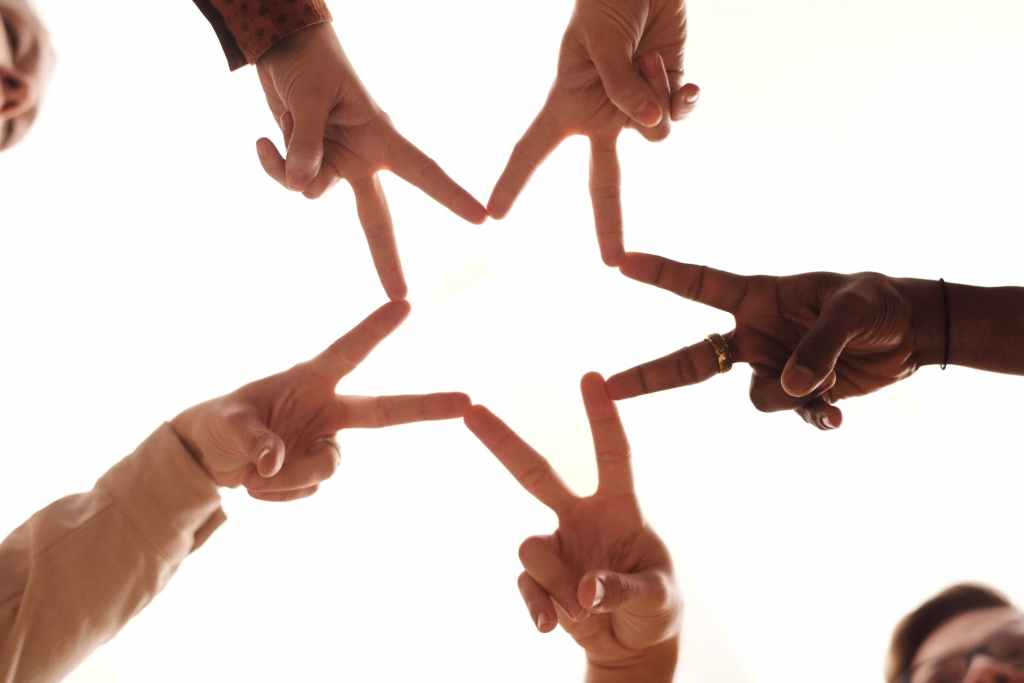
Photo by Mikael Blomkvist on Pexels.com

Are you suspicious of praise? Do you wonder what people want from you when they give it?

I have struggled with both sides of judgment all my life. Praise is a form of judgment when someone withholds it. Praise can be judgment when someone gives it.

Many of us seek praise our entire lives, including me. We want our parents to approve of us. We want our teachers and employers to approve of us. We want our peers to approve of us. I work hard to avoid judging others. I had even considered certain forms of praise to be judgmental. However, an event with my writer’s group became a catalyst that sent me down a rabbit hole thinking of all the times I handed out empty praise, all the times I had judged without realizing it.

There is a better way. What if we become mirrors for each other instead. This is what I have learned.

Imagine this. A student sits in front of me offering a precious piece of writing. I silently read it, make a few marks on the paper, and say, “This is very well done,” and then cheerfully stick a star at the top and hand it back to the student.

However, I remember one student in particular to whom I gave stars and stickers because that student gave 120% with every assignment even though the academic excellence was never more than middle-level competence. According to academic standards, that student was earning a solid C grade, which was not a bad thing. The student and the parent had different ideas. They wondered why, when I handed out so many stars and stickers, the student still got C’s instead of A’s for exemplary work. I explained I was giving rewards for effort not for ability. The student’s score was a fair grade of middle-level competence.

I felt guilty when I had the conversation. I felt doubly guilty as I remembered it. This student and parent equated encouraging rewards for effort as indication of expected grade, and I failed to be honest.

For that student I was a lazy teacher. I rarely found work to mirror back to her but she worked so hard. I used stars to encourage her. It was quick, it was easy, it was effective, and teachers, at least in this country, had been doing it as a reward system for generations of students. But was it honest? Was it fair?

Stars rewarded effort, not academic strength. Would it have been kinder to explain honestly that hard work kept the abyss of failure away, but top-level success was not happening? At the very least, I could have looked for something of worth to give back besides stars.

So, imagine that same student sitting in front of me with a precious piece of writing to offer. I look at the piece, and in spite of spelling and grammatical errors, I read it to her with emotion and heartfelt meaning, offering the beauty and strength of her own words as a gift of how powerful in that moment she had been. In essence, I become a mirror. How much more could that student have learned from hearing what she offered, rather than receiving a simple star stuck to the top of the page? 

Stars and stickers are hollow praise when given without mirrored feedback.

I belong to a writers group that meets once per week. We respond to prompts then share what we write. We have written together for eight years, happily congratulating each other on superb writing and generally emoting our appreciation with the intent to support each other to improve our craft. Somewhere in that time, I said to one of the writers, “Oh, that’s a keeper, give it a star.” The idea of gesturing, “Give it a star,” caught on and became a regular feature of responding to each other’s offerings of extemporaneous writing.

Three weeks ago, one of our moderators experimented with the concept of being ‘silent witnesses’ for each other. The intent was to offer a time to listen to each other, and allow a safe space for each writer to sit with her own writing and her own feelings about it.  We all thought it was a great idea so we did it while not fully understanding the need to do so.

For me, it was an unnerving event. The experience of reading my own writing aloud was something I’d never done before joining this group, and the keys to my experience were physical and vocal appreciation.

That night, as fellow writers read their work, I struggled to stay silent, to listen without emotional response and outpour. I had to sit on my hands to avoid giving silent applause or “stars.” I felt…not badly, but certainly that something was missing from my experience of this writers group.

At the end of the meeting, we debriefed. My turmoil began.  

I learned that my need to praise my fellow writers had offended more than one of them. Awarding stars was playful for me but had been a system of judgment for them. They felt that when they received a star it was like getting a grade in school, and if they didn’t get a star they had failed somehow. They also felt compared with other writers because not every person got a star each week. We gave stars for exquisite writing, and it’s impossible to achieve that every time.

Of course, none of us were actually judging writer against writer. The intent was to let an individual know that yes, that piece of writing is worth keeping. Please consider it. However, they forced me to look at stars as rewards that night, and I realized how lazy I had become. Pandora’s Box opened at that Zoom meeting. I felt horror, caught in the act of judging others.

As a teacher, I did give stars, but I also honed my craft of mirroring. I have spent a lifetime honing it, offering a mirror so that others could see the beauty and wonder that I see, and now I am reduced to handing out stars? Oh. I think not.

I thought about the times I refused to read my writing, because I did not want comments about it. Why? Because I didn’t want it judged. Yet, I had been handing out stars and gratefully accepting them when I shared my writing. That’s when I voiced to my fellow writers that, because there were no comments allowed that particular night, I felt comfortable not only writing more completely from my own heart instead of writing something safe and acceptable, but also sharing it afterward.  

I left the meeting that night thinking about how ashamed I was at becoming lazy with praise instead of practicing the mirroring I knew how to do. Most of our group had no idea that some of us felt judged this entire time. We were horrified to discover that simple encouragement could feel like judgment. This exercise of silent witness brought it to light. My solution for the writing group when we finally meet in person again instead of on Zoom, is to suggest a trade. Instead of reading our own work, we pass our writing to another to read for us. In that way, we can be powerful mirrors for one another.  

Both the incident with a student and the incident with the writer’s group were unfortunate because I know that mirroring is the best answer. Reward is compensation for effort, an exchange of energy, but is it a fair exchange? Is it an honest exchange? Is it a heartfelt exchange? Would it be better to take more time to act as compassionate mirrors for each other? I handed out stars to my fellow writers instead of handing them their words. 

Stars are a judgment, more for the ease of the giver than the receiver. They are a simple, uninvolved way to give praise. But praise is hollow and meaningless at the very least and at the worst, a harsh judgment. Is it enough to say, “Job well done?” In my experience, no – no it is not enough. It is better to be a mirror than dole out empty praise. 

I know this works.

When my children were younger, they each had a rabbit project with the local 4-H club. They were normal kids. I had to badger them daily to take care of their responsibilities. However, badgering was not my parenting style. I considered setting up a calendar with stars to commend them for all the times I didn’t have to remind them of daily chores. It was an easy, expedient solution. But it wasn’t my solution.

Instead, I bought my own herd of rabbits, set up my own cages, and started my own business. I mirrored what responsibility for an animal looked like. I mirrored the time it took. I mirrored consistency in care giving. I mirrored filling out records, keeping track of expenses. I never had to say a word to them. They just did what I did. They followed me down to the rabbitry every time I went there and took care of their own rabbits. They each had successful projects that turned into businesses, and I became the parent I wanted to be, one that didn’t have to badger, judge, or give hollow praise. I became a parent who didn’t give stars. I want to be a member of a writer’s group that doesn’t give stars. As a teacher, as a grandparent, as a friend, I won’t give stars again.

What do you think about this idea of stars? Please feel free to comment or to share any experiences you have had with stars given as rewards.