
As a gardener, even a reluctant one, there are some unwanted visitors that show up from time to time. Those are usually the species that attract the most attention from us because they seem to disrupt the equilibrium of the garden. But what if that is not the story? What if I don’t need to spend an inordinate amount of time trying to eradicate them?
Galium aparine, known around here as Sticky Willy, or the Hitchhiker plant has many names: Cleavers, Goosegrass, Catch-weed, or Velcro Plant. Leaves, stems, flower petals and seed pods are covered with tiny, hook-like hairs that cling to plants, animals, clothing, and human skin…literally everything.
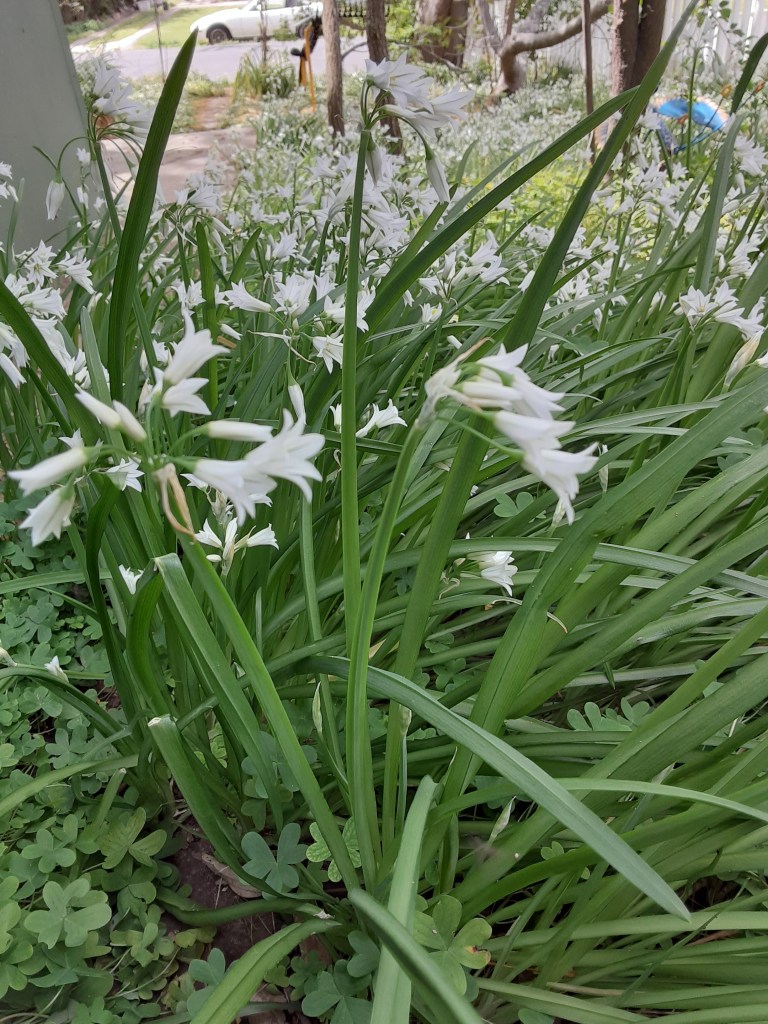
A self-pollinating annual, I never look forward to early spring as its admittedly beautifully fanned leaf whorls begin to rise through the oxalis, prairie grasses, and three-cornered leeks. I can’t walk my sidewalks without this hitchhiker grabbing my pant legs. And of course when it does, it hangs on for dear life. In doing so, its stem breaks. Such a weakling. However, the roots stay embedded and the little suckers come right back up.
Until this year, I was successful removing them in a timely manner. I never had a chance to see their display of delicate and beautiful light green and white flowers. I did not witness the seed pods, their means of propagation, so I don’t know how they proliferated throughout my property, but here they are.
Here is the magic of this plant. It prefers to grow in shade, dappled shade or full sun…truth. It likes clay, sand, or loam. It grows in coastal areas, mountainous terrain or on the plains. It tolerates everything and grows EVERYWHERE. Though botanists think it is indigenous to North America, it is found in many other countries. It probably hitchhiked there. (Perhaps in some unwitting person’s pocket).
It’s useful. Seriously. According to my research it has a purpose. In fact it has many uses. Flowers curdle milk for cheese making. It’s used for stuffing mattresses. It’s edible.
“Wait. It is edible? What?”
That’s right. People can eat Sticky Willy. The stems and leaves can be cooked with other greens. They are used for tea. The fruit can be dried and used as a coffee substitute. It actually has caffeine.
(Why am I trying to get rid of this????)
It’s an herbal medicine. An infusion can help reduce swelling, treat infections, or boost energy. There are topical uses as well: ease psoriasis, eczema, and acne. It supports the immune system, and can help support the liver when detoxifying the body. It isn’t reactive with other herbal treatments nor does it affect medications. Sticky Willy is more effective used fresh and not dried, but it grows throughout the spring and summer here.
(Note: always test a plant on your skin before you try to eat it. Then try a tiny amount, to see how your tongue reacts. Spit out if your body reacts negatively to it.)
My body did not react negatively to this plant. I might have to create zones for this plant because I think I am going to have to learn to love this plant and look forward to its appearance every year instead of dreading it.
This leads me to my next tale, also about Sticky Will(ie). On April 12th, 2025 family and friends gathered for my son’s birthday. It’s important to remember that my son seems to be coexisting just fine with the plant called Sticky Will(y). I sat on a bench at his party to admire a flower bed, and there it grew galium aparine, with sparkling fans shining in the string of lights lit for the party.
Go figure.
The love of his life, his wife, invited a ‘bug lady’ to come to the party to share exotic and interesting insects. My son is a biologist with a love of all things that have multiple legs and sometimes wings.
The first insect she shared with all the party goers was a monstrous looking thing called extatosoma tiaratum, otherwise known as Giant Prickly Stick Insect.
I have held stick insects and at the party held another species that looked exactly how you would imagine an insect that imitates a stick should look. Extatosoma tiaratum like its name is GIANT and covered with spiky armor that reminded me of rose thorns. When alarmed, which they all were, they looked like ferocious scorpions of some kind. I did not want to hold this one and didn’t even pet it. It was interesting to “look at.”
I was glad when they all went back into their travel carrier.
She loved them though and told us all about it. Native to Australia, they live in trees, usually eucalyptus trees. Herbivorous, they eat the leaves. The insect isn’t harmful, but it does kick when it is angry or scared.
Then, she gleefully showed us the poop as compared to the eggs that were dropped on the paper towel substrate she was using to transport them. The poop was long and rectangular, the eggs were round. This particular colony was parthenogenetic.
My listening became more focused. Parthenogenesis, all female colonies – not needing males to breed: I have written about other insects that have this trait.
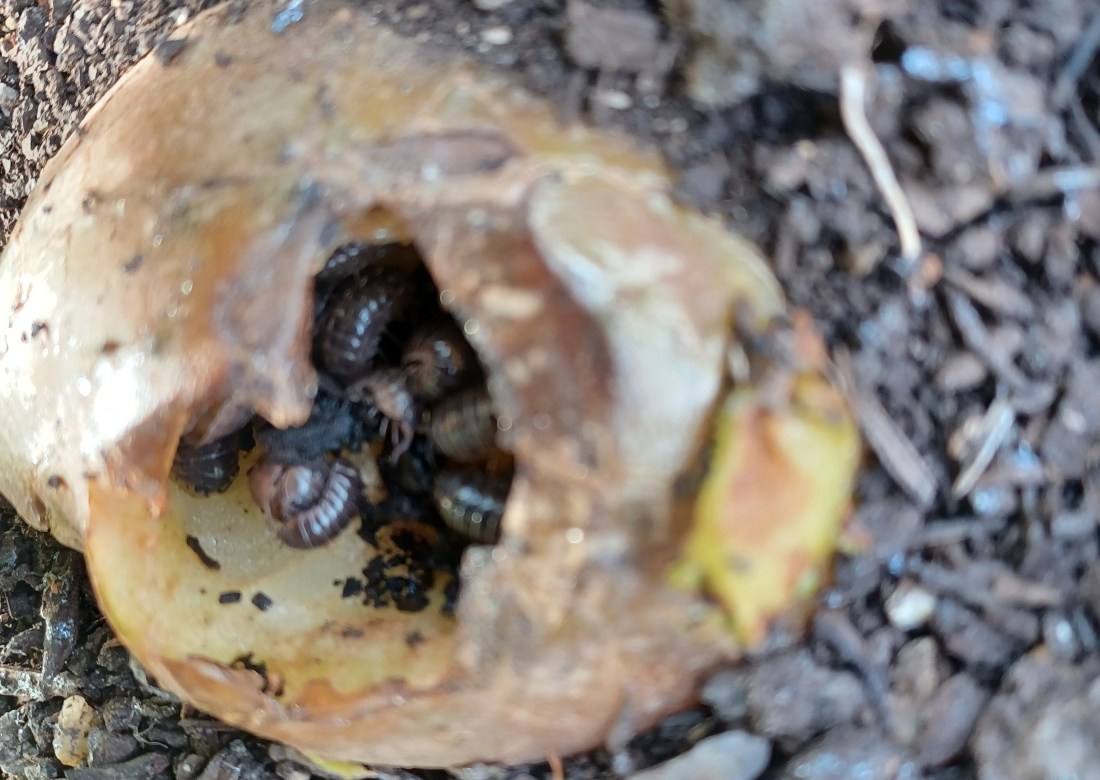
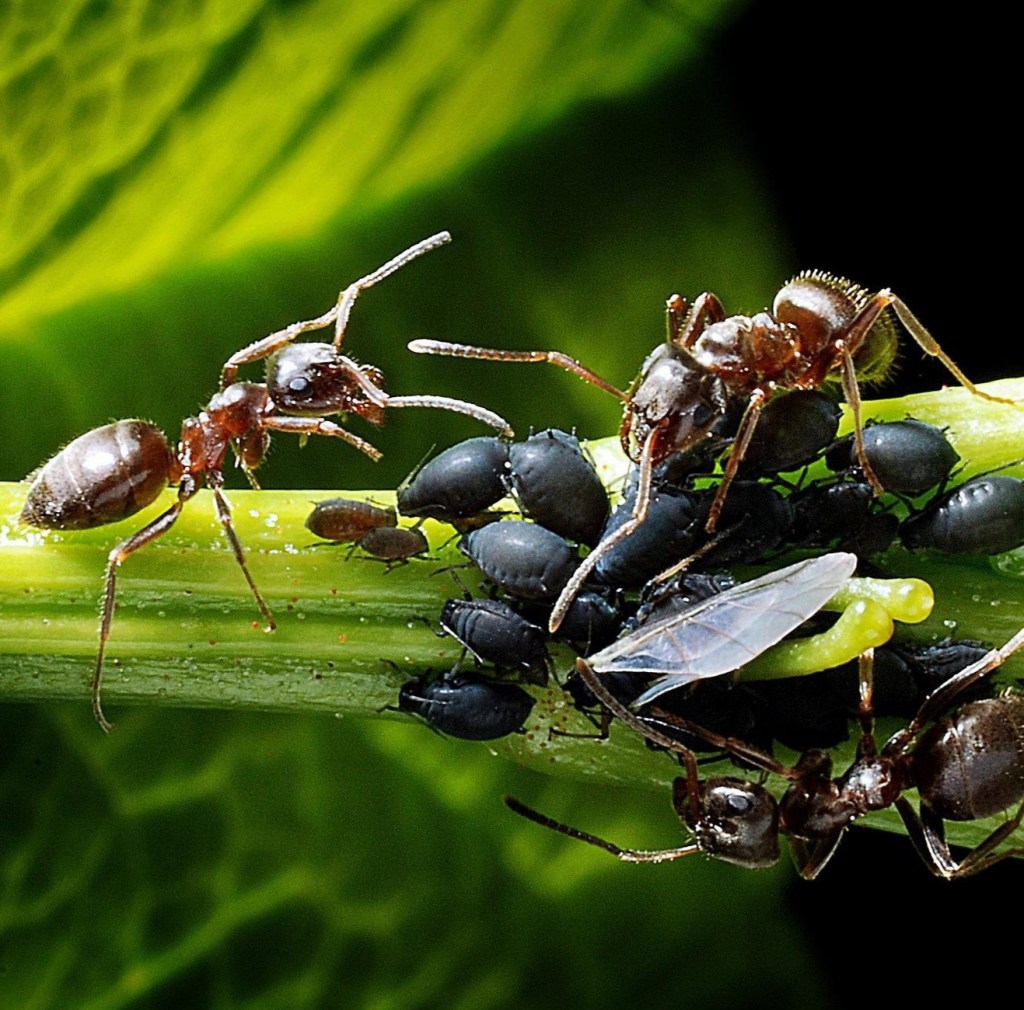
She explained that the eggs are dropped to the ground, because the insects don’t come out of the trees willingly. The eggs are coated with a sugary substance that attracts ants. The ants gather them to take them home to feast upon. After eating the sugary shell, they cannot eat through the hard layer underneath so they discard them in their compost piles. (I am interested enough to do some research on ant composting practices in a later blog post.) The babies incubate in the heat of the compost, then hatch, resembling baby ants with black bodies and red heads.
(Okay, at this point, you have to understand, I was maternally and intellectually interested. The fact that they were born as redheads intrigued me, since my own children are genetically redheads, and my daughter had vivid red hair when she was born.)
From egg to hatchling takes nine months to 400 days. Wow. That’s a long time. By six molts they look like tiny versions of their mothers. They are quite literally clones of her, since this is a parthenogenetic colony, but there are colonies with both male and female insects. They tend to live longer, and the reproduction cycle may be faster. Each female that is born of a parthenogenetic colony is capable of producing approximately 800 eggs per year, but they only live about eighteen months.
She continued for at least an hour and a half, perhaps two, sharing many different species with the party crowd which was as intellectually curious as I was. We held and played with many other insects, amphibians, snakes, and even an Amblypygi, the arachnid of Harry Potter fame. I spent a lot of time with a lovely creature that I fell in love with, a small Crested Gecko.
As she packed up, all of us went to eat food, use the facilities, sit in the living room or around the outside firepit to talk. My daughter and I stayed for about another hour, later than we usually do because this was the best party ever.
When we got into the car, we fastened our seatbelts for the thirty minute drive to her house. I planned to tank up on coffee for the next leg of my own journey, another forty minutes to my front door. I used the facilities again, made some coffee, and sat down in a chair to review the party. I got up to clean my coffee cup, and pulled a handkerchief from my pocket, which I had done repeatedly during the party to wipe my nose, because it was irritated by the fire pit smoke and my clothes reeked of it.
I felt something prickly in my pocket. Sticky Willy. I didn’t realize I had sat next to some of it, while playing with the animals. Ugh. The tiny green hitchhiker was stuck in my pocket.
I pulled out the prickliness. It felt like velcro, just like it always did. I felt a pang of disgust because I had not yet come to terms with this plant. (This was pre-research.)
Instead, I pulled out something brown that clung to my fingers for dear life. I held it up to my daughter. She slowly backed down the hallway away from my outstretched hand, shaking her head. I said, “This isn’t what I think it is, is it?”
She nodded her head, “Yes.”
A Giant Prickly Stick Insect had hitch hiked home with me. What are the chances that a native tree dweller from Australia, in a yard full of people and TREES would choose my pocket to hide in?
WHAT ARE THE CHANCES????
My daughter quickly found a jar. We called her brother, and said, “Happy Birthday. You have a new insect,” to which he replied, “No. I am leaving for Ireland tomorrow. You have a new insect.”
My daughter shook her head, vehemently. “I don’t a don’t have a new insect,” she informed me.
I got home around midnight. I sat in my car, staring at the pint canning jar I had nestled in my cup holder. I sighed, picked it up and trudged into the house.
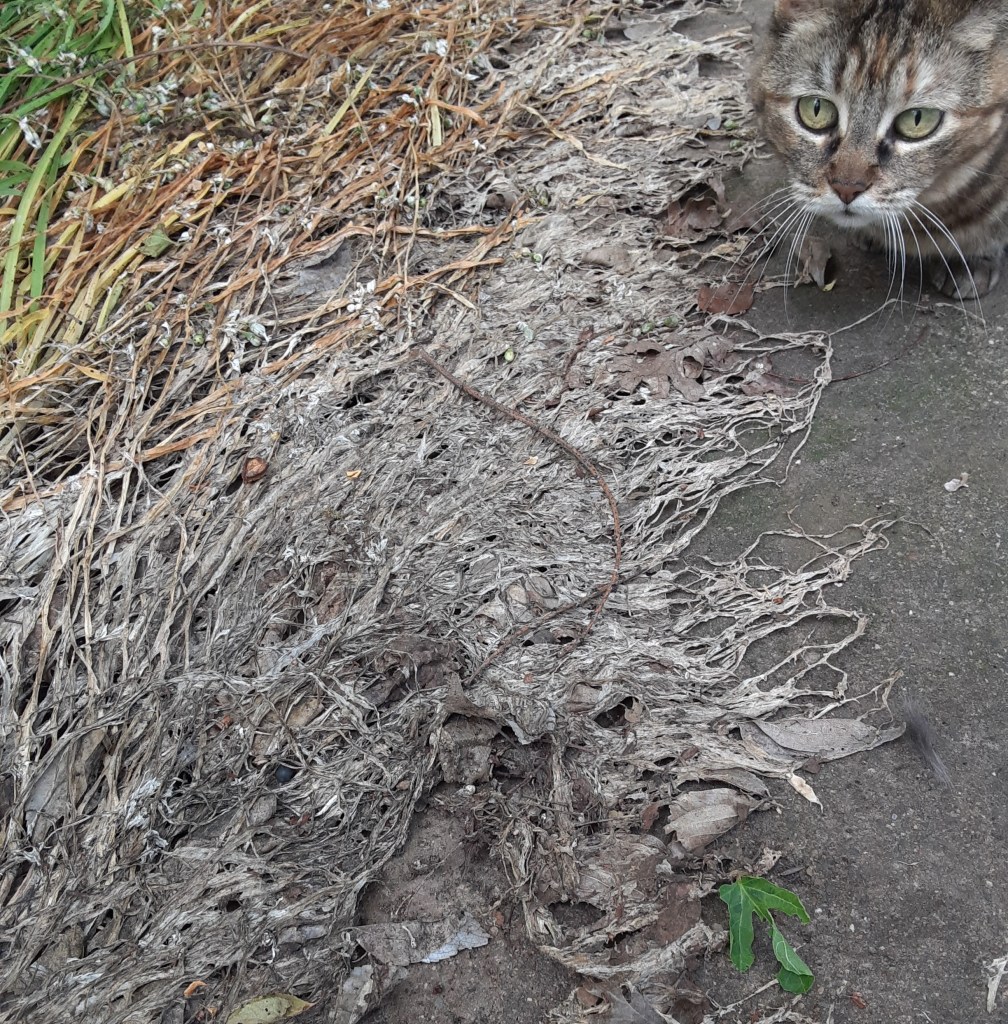
My cat greeted me, and I fed her again. I stared at the pint jar on my dining table. “What am I going to do with you?” The tiaratum stayed hidden under the leaves we’d thrown at her from my daughter’s backyard.
Finally, I threw my hands up into the air and said to the powers of the universe, “Well, I guess I am going to learn how to love an insect.”
As I write this, she is in a two gallon canning jar, with a makeshift screen lid made for screening I’d bought to repair a door. She is happily munching on oak and rose leaves, while laying eggs.
Oh goody for me.
She has huge but peaceful energy, and I am starting to like her. I bought some supplies to make her a better house. I hope she lives the whole eighteen months so I can get to know her better.
It’s amazing what one can learn and who one can find common ground with when one decides to love, whether that new love is a plant, an animal or another human.
Works Cited






 Connection