Bridges

(Author’s Note: I originally wrote this piece in first person based on a dream I had in 2009. Published as a flash fiction called “Stop for Repair,” it appeared in an anthology called Wild Edges, edited by Monika Rose and F. Ted Laskin; Manzanita Writers Press, volume 6, 2010, pages 124-25. It is a story that is appropriate for the task before all of us today. I decided to rewrite it. As a writer, I wanted to practice writing in a gender-neutral point of view. As a blogger, I feel we must all be building and repairing bridges between each other. Let’s repair the bridges that span between us. Now is the time.)

Bridges

Early afternoon rain tamped down any dust the wheels could have kicked up. Oak trees painted shadows that swayed across the road, which was more wagon trail than safe passage for a car. In front of Charlie and Sam, a rickety wooden bridge stretched across a bubbling stream.

Charlie stopped the car and stared at it.

Sam looked at Charlie; Charlie looked at Sam and shrugged.

“Well,” Sam said. “Do we turn around?” It was not the first time they had impulsively followed a rainbow through these hills, been stopped by some obstacle or another, to then retreat.

Charlie’s left eyebrow rose and a little smile wrinkled the corner of their mouth as they cut the engine. As Charlie slipped out to look at the bridge, the familiar twinkle of their eyes sparked just a little more. They scratched their head.

Sam watched warily as Charlie turned. When they caught each other’s eyes, Charlie’s expression did not give away any plan, though Sam knew the twinkle that resided there.

Charlie sauntered to the back of the car and opened the trunk. What were they up to?

They closed the trunk gently and stepped up to the passenger window.

Sam rolled it down.

Charlie said, “Come on. We have work.”

Work? What did they mean? That’s when Sam noticed Charlie held two hammers in their hand.

Sam glanced at the bridge. Hammers in the trunk – a coincidence? No way.

Charlie pushed the larger hammer toward Sam, who grabbed it, then fumbled and dropped it onto their hipbone. “Ouch.” 

When Sam looked up, Charlie was walking toward the bridge.

Suspicious, they got out and followed them.

Charlie ambled across it, testing their weight here and there while Sam stood watching; waiting. The bridge rang an old song with each of Charlie’s steps. Charlie bent over and slammed the head of their hammer onto a board.

Sam jumped.

“Come on,” Charlie said, and began to pound nails.

Sam stepped onto the bridge and squatted to look for nails. The hammer dangled in their hand as they glared at Charlie. Would the car tires have fallen through the decking? The two of them could have chosen to walk across with no danger. Why did they stop to repair it?

Sam whacked the head of a nail below them. They heard a voice in their head ask, “When did these nails start loosening?” They hit another nail. Protest rose up in them. Sam wanted to argue…but words, suddenly erased from their mind, left them wondering. They looked at the brook dancing beneath the bridge. Was this bridge so old and tattered, it was wearing out? Was it dangerous?

Sam smacked another nail into place. Did Charlie see this bridge as their relationship: old, comfortable, and worn? Was it wearing out?

Was this relationship in danger?

Sam attacked loose nails in earnest.

The two worked together, pounding nails into an old bridge that needed tending.

The sun gently warmed their backs as they hammered, repairing that old bridge nail by nail.

As Charlie stopped to wipe sweat from their brow and lashes, a scrub jay swooped, surprising the two bridge tenders, scolding their noisy adventure.

They both jumped and then, laughed.

Each subsequent strike of a hammer pulled them closer, mending something indefinable. They tapped each board into place until the bridge, safe and sound, spanned comfortable between them.

As Charlie pounded the last nail into a weathered plank, Sam smiled.

Charlie smiled back.

Together they sat side by side in the middle of the bridge, dangling their feet over the edge, admiring their handiwork.

The sky blushed in rich golden reds. A silky evening breeze clattered through the leaves in the oak trees on the other bank. They stood and walked back to their vehicle.

Before settling in, Sam caught Charlie’s eye across the top of the car and smiled. Today was a good day.

Charlie nodded affirmation, and then threw Sam the keys.

Another bridge spanned between them.
Stars

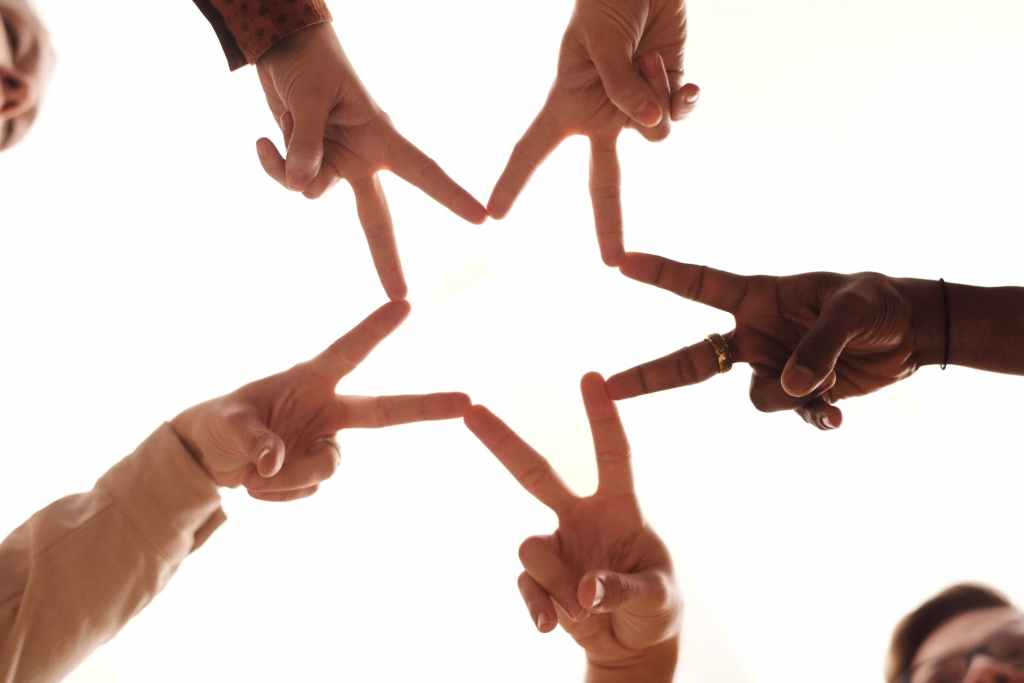
Photo by Mikael Blomkvist on Pexels.com

Are you suspicious of praise? Do you wonder what people want from you when they give it?

I have struggled with both sides of judgment all my life. Praise is a form of judgment when someone withholds it. Praise can be judgment when someone gives it.

Many of us seek praise our entire lives, including me. We want our parents to approve of us. We want our teachers and employers to approve of us. We want our peers to approve of us. I work hard to avoid judging others. I had even considered certain forms of praise to be judgmental. However, an event with my writer’s group became a catalyst that sent me down a rabbit hole thinking of all the times I handed out empty praise, all the times I had judged without realizing it.

There is a better way. What if we become mirrors for each other instead. This is what I have learned.

Imagine this. A student sits in front of me offering a precious piece of writing. I silently read it, make a few marks on the paper, and say, “This is very well done,” and then cheerfully stick a star at the top and hand it back to the student.

However, I remember one student in particular to whom I gave stars and stickers because that student gave 120% with every assignment even though the academic excellence was never more than middle-level competence. According to academic standards, that student was earning a solid C grade, which was not a bad thing. The student and the parent had different ideas. They wondered why, when I handed out so many stars and stickers, the student still got C’s instead of A’s for exemplary work. I explained I was giving rewards for effort not for ability. The student’s score was a fair grade of middle-level competence.

I felt guilty when I had the conversation. I felt doubly guilty as I remembered it. This student and parent equated encouraging rewards for effort as indication of expected grade, and I failed to be honest.

For that student I was a lazy teacher. I rarely found work to mirror back to her but she worked so hard. I used stars to encourage her. It was quick, it was easy, it was effective, and teachers, at least in this country, had been doing it as a reward system for generations of students. But was it honest? Was it fair?

Stars rewarded effort, not academic strength. Would it have been kinder to explain honestly that hard work kept the abyss of failure away, but top-level success was not happening? At the very least, I could have looked for something of worth to give back besides stars.

So, imagine that same student sitting in front of me with a precious piece of writing to offer. I look at the piece, and in spite of spelling and grammatical errors, I read it to her with emotion and heartfelt meaning, offering the beauty and strength of her own words as a gift of how powerful in that moment she had been. In essence, I become a mirror. How much more could that student have learned from hearing what she offered, rather than receiving a simple star stuck to the top of the page? 

Stars and stickers are hollow praise when given without mirrored feedback.

I belong to a writers group that meets once per week. We respond to prompts then share what we write. We have written together for eight years, happily congratulating each other on superb writing and generally emoting our appreciation with the intent to support each other to improve our craft. Somewhere in that time, I said to one of the writers, “Oh, that’s a keeper, give it a star.” The idea of gesturing, “Give it a star,” caught on and became a regular feature of responding to each other’s offerings of extemporaneous writing.

Three weeks ago, one of our moderators experimented with the concept of being ‘silent witnesses’ for each other. The intent was to offer a time to listen to each other, and allow a safe space for each writer to sit with her own writing and her own feelings about it.  We all thought it was a great idea so we did it while not fully understanding the need to do so.

For me, it was an unnerving event. The experience of reading my own writing aloud was something I’d never done before joining this group, and the keys to my experience were physical and vocal appreciation.

That night, as fellow writers read their work, I struggled to stay silent, to listen without emotional response and outpour. I had to sit on my hands to avoid giving silent applause or “stars.” I felt…not badly, but certainly that something was missing from my experience of this writers group.

At the end of the meeting, we debriefed. My turmoil began.  

I learned that my need to praise my fellow writers had offended more than one of them. Awarding stars was playful for me but had been a system of judgment for them. They felt that when they received a star it was like getting a grade in school, and if they didn’t get a star they had failed somehow. They also felt compared with other writers because not every person got a star each week. We gave stars for exquisite writing, and it’s impossible to achieve that every time.

Of course, none of us were actually judging writer against writer. The intent was to let an individual know that yes, that piece of writing is worth keeping. Please consider it. However, they forced me to look at stars as rewards that night, and I realized how lazy I had become. Pandora’s Box opened at that Zoom meeting. I felt horror, caught in the act of judging others.

As a teacher, I did give stars, but I also honed my craft of mirroring. I have spent a lifetime honing it, offering a mirror so that others could see the beauty and wonder that I see, and now I am reduced to handing out stars? Oh. I think not.

I thought about the times I refused to read my writing, because I did not want comments about it. Why? Because I didn’t want it judged. Yet, I had been handing out stars and gratefully accepting them when I shared my writing. That’s when I voiced to my fellow writers that, because there were no comments allowed that particular night, I felt comfortable not only writing more completely from my own heart instead of writing something safe and acceptable, but also sharing it afterward.  

I left the meeting that night thinking about how ashamed I was at becoming lazy with praise instead of practicing the mirroring I knew how to do. Most of our group had no idea that some of us felt judged this entire time. We were horrified to discover that simple encouragement could feel like judgment. This exercise of silent witness brought it to light. My solution for the writing group when we finally meet in person again instead of on Zoom, is to suggest a trade. Instead of reading our own work, we pass our writing to another to read for us. In that way, we can be powerful mirrors for one another.  

Both the incident with a student and the incident with the writer’s group were unfortunate because I know that mirroring is the best answer. Reward is compensation for effort, an exchange of energy, but is it a fair exchange? Is it an honest exchange? Is it a heartfelt exchange? Would it be better to take more time to act as compassionate mirrors for each other? I handed out stars to my fellow writers instead of handing them their words. 

Stars are a judgment, more for the ease of the giver than the receiver. They are a simple, uninvolved way to give praise. But praise is hollow and meaningless at the very least and at the worst, a harsh judgment. Is it enough to say, “Job well done?” In my experience, no – no it is not enough. It is better to be a mirror than dole out empty praise. 

I know this works.

When my children were younger, they each had a rabbit project with the local 4-H club. They were normal kids. I had to badger them daily to take care of their responsibilities. However, badgering was not my parenting style. I considered setting up a calendar with stars to commend them for all the times I didn’t have to remind them of daily chores. It was an easy, expedient solution. But it wasn’t my solution.

Instead, I bought my own herd of rabbits, set up my own cages, and started my own business. I mirrored what responsibility for an animal looked like. I mirrored the time it took. I mirrored consistency in care giving. I mirrored filling out records, keeping track of expenses. I never had to say a word to them. They just did what I did. They followed me down to the rabbitry every time I went there and took care of their own rabbits. They each had successful projects that turned into businesses, and I became the parent I wanted to be, one that didn’t have to badger, judge, or give hollow praise. I became a parent who didn’t give stars. I want to be a member of a writer’s group that doesn’t give stars. As a teacher, as a grandparent, as a friend, I won’t give stars again.

What do you think about this idea of stars? Please feel free to comment or to share any experiences you have had with stars given as rewards. 

Post #2 Reluctant Gardener

Works Cited

Flint, Mary Louise, Docent; Galls on the Valley Oaks of Effie Yeaw; October 11, 2018     https://sacnaturecenter.net/visit-us/nature-blog/news.html?NewsID=56742

Sousa, Marcy; What are Oak Galls? Here’s what you need to know about these insect breeding grounds; Home and Garden September 16, 2021,

https://www.recordnet.com/story/lifestyle/home-garden/2021/09/16/what-oak-galls-what-know-these-insect-breeding-grounds/8368800002/

Because You Asked….

You asked me what it feels like to connect with the imaginal realm, a place where trees and plants speak with scent and with flavor, animals speak with images, angels with colors and ideas, and where humans speak with emotion rather than voice. In this liminal place, the geometry of serenity is a rosy quartz-colored sphere, joy is a sturdy rectangular plane upon which to stand, knowledge is fleeting ether that passes by unless witnessed. The imaginal realm seems utterly empty, profoundly silent until observed; then, it springs to life with all there is.

Those that honor it feel completely bonkers, but only because those cemented in matter cannot smell what they smell, taste what they taste, see what they see, hear what they hear, or feel what they feel, though it is possible for them. It isn’t a matter of a sixth sense. It does not take anything extra. It is a matter of heightened senses, using what is human and extending it to include other dimensions.

Connected as you are, what you really ask is, how does one observe this imaginal space?

Considering you are standing in the middle of it, all it takes is a willingness to believe that what you sense is actually happening. The energy of potential can seem like a mere wish, a daydream or a passing thought. Dismissed as such, it is fleeting and not noticeable…until it is too loud to ignore.

Humans speak in emotion. They can say whatever they want to, but their real language is emotion. Humans are shouting right now. Floods, fires, global warming, pestilence, earthquakes, volcanoes, unrest within and between countries…it’s nuts. Emotions are running at an all-time high.

 I find myself cautioning those around me lately, “Slow down, examine what you feel. Is what you are feeling right now your own emotion? There is a possibility that you are picking up on the emotions swirling around us.” The liminal world is knocking at the door.

What is happening in your life? Where are you this very second? Stop right now, and assess.

Assessing…assessing…assessing.

Is something happening that is truly yours to be sad, angry, or frightened about? Then, by all means, you should be sad, angry, or frightened. Those emotions will help you discern what to do next, but for the rest of us, we need to get out of your way to send you support and strength. The only way to do that is to be in our own space, claim our own emotion, and not add to the fervor of whatever emotion is swirling about.

Stop.

Ask.

Is this my emotion?

If not, instead, breathe. Take into account what is really happening around you. What is the appropriate emotion for that?

Emotional ownership is a thing.

It’s important to know if you want to extend your senses into the imaginal world, because that world is EVERYTHING, with no judgment of right, wrong – good, bad – happy, sad. It is there waiting to be witnessed by YOU. You will witness that which you look for.

This is the first step to observing the imaginal realm. Own your emotions. You are an emotional being. You speak with emotions. Trust me on this. Words have secondary, and sometimes false, meaning. Emotions tell truth. It is hard to believe I am saying this as a writer, but I am and I don’t think I can say this or write it often enough. Emotions are a human’s primary language. Use them appropriately.

Think of it as a mindfulness practice. Pay attention to your first emotion of the morning. Observe emotions that follow. Do you see a pattern? Stop and ask, “Is this really me? Do I really have reason to feel this way?” Watch for stray emotions that don’t match your life, especially loud ones.

There are moments when I burst into tears, or laughter, or quake in sudden fear…for no apparent reason. Extreme emotion is easy to observe. It’s a perfect time to practice. I always ask, “Is this mine?”

For instance, yesterday I was singing Both Sides Now by Joni Mitchell, recorded by Josh Groban and Sara Bareilles. I had already listened to the song once and thought, “Gee. I can’t remember these lyrics.” So, I looked them up to sing harmony with Josh and Sara. Totally engulfed within the music, I suddenly choked on tears at the line, “I’ve looked at life from both sides now.” Ugh. Tears streamed down my face. Just like a wave, despair washed over me.

Since I have been doing a lot of negative pattern clearing, I first looked at that. I didn’t have any emotions swirling around me from those experiences. I don’t watch the news, I feel safe and happy in a quarantine situation, my friends and family are all well.

Living in California, it’s probable that it came from outside me. I was singing, which is my primary go-to for connecting to liminal space. I live in a fire zone. People have lost everything they have. I live in a high Covid-19 zone. There are people dying from this dreadfulness.

This wasn’t my emotion to own.

I stood tall, and strong. I took a deep breath. The waved washed back over me and disappeared into source. I finished the song. It was, literally, that fast. There was no need to hang onto it.

I have been practicing letting go of that which isn’t mine. You can too. The first step is asking, “Is this my emotion?” Be aware of that which is and that which isn’t. The emotional response won’t stop, but if it isn’t yours, it will pass within 90 seconds for most of us. All you have to do is acknowledge it, and let it move on through you. Simple, huh?

Good luck this week. May Peace find you wherever you are.

AV

P.S. Here is a poem for those on or curious about the Twin Flame path, and a tiny glimpse into my life and the imaginal realm.

You asked me what it feels like to connect.

Your first touch

awakens my body

with a lover’s song.

I gasp and whisper,

I feel you.

I seek liminal space:

silent, luminous, black velvet.

There is only

one question in my heart.

Will you stay?

Between breaths I hover still as stone,

Listening, waiting…waiting.

Eyes closed, I see nothing, but I hear

the world around me.

For each tick, whoosh, and shudder,

I linger breathless,

poised to find quiet that matches the emptiness

in which I sit.

Indigo flashes interrupt

the blackness of inner vision.

A small flare to the right, a color we share,

grows bolder.

I trust you are here.

In my mind,

Your gentle fingers find their way.

Your palm, light and warm,

settles over my heart.

As you move close

you tug the chord between us.

My heartbeat jumps once, twice –

as if to free itself from  

the constraint of flesh and bone.

I gasp again.

Soft twin pulses drum deep within me;

Our hearts, beating side by side.

How did I live without this?

How can I

ever again live

without this?

Cricket’s Lesson

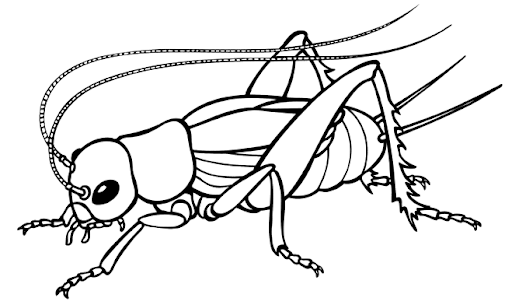
What is the difference between being and non-being? Is it possible not to be? Virginia Woolf once described ‘non-being’ as unconscious living. For her it was “the cotton wool of daily life” that became unconscious living. Since daily living is mundane, I can see how it feels like cotton wool that shrouds one moment to the next, unmemorable, unnoticed, forever passed, never to be regained. What happens to us when we are conscious every minute? Is it even possible to hold onto conscious consideration every minute? Perhaps it is in paying attention to those moments that are magical that we find consciousness, or being, the easiest.

 Virginia Woolf’s first memory of ‘being’ was as a child looking at a flower. As she studied it, the flower seemed to her more than flower, it was Earth as well and by looking at the flower she was also looking at all of the Earth and feeling her place as part of it all.

Could I pinpoint a definitive time when I realized the difference between “being” and “non-being?” Was there a first moment when life opened and I felt complete, part of the whole?

As a child, there are two possibilities; times I remember well enough to create a blog post. The first is a day when I was nine, and I put on prescription glasses for the first time.  Trees were suddenly more than two-dimensional, giant green shadows. They had leaves, which intellectually I knew of course, but I didn’t see well enough to count their separateness until I saw individual leaves on individual branches as we drove past them on the way home from the optometrist. My mother graciously stopped the car so I could focus completely upon them. I saw separate lines of shadow, pulling each graceful branch into three-dimensional existence. I saw birds. I saw the movement of the wind as it rustled past all that was within a tree. Each tree was different, unique. Trees were amazing and everywhere. Life was miraculous!

The second time that I remember was the day I truly understood “being.” I had an encounter with a cricket….

My maternal grandmother’s yard was an adventure. It encircled her home, a reclaimed chicken coop rebuilt into a house by my grandfather’s love. Nestled in the middle of a quarter of an acre within the city limits of Stockton, California, it seemed to go on forever.

Innately aware of feng shui, my grandmother created room after outdoor room with unique fencing, hedges, gates and trellises, or simply turns of the building. The result was living art, and dreamlike. At fourteen, and labeled a magical thinker, I spent a lot of time outdoors appreciating her creation. Her yard was Wonderland within which a imaginative child could find freedom and peace.

One day, as I was sitting on the back steps leading to the innermost courtyard, I saw a cricket. To look at him, I may not have recognized him as such, but he scratched his wing with a back leg and created that familiar chirp that comforted me to sleep every night.

As I watched him chirp, and wave his antennae, I swear to you, he spoke to me. “Admire the geranium next to you.”

What? The geranium?

I looked to my left at a few squatty, plain green bushes. To my right, beyond him, was a leafy plant with a brilliant red-orange blossom reaching out of its foliage on a long straight stalk. What a pretty color, I thought. I didn’t know what a geranium was at the time, but the flower was beautiful and it was nearest the cricket, so I admired it.

At my side, the cricket chirped, his beautiful bell tone adding magic. Suddenly the slightest of vibrations frizzled around the edges of each blossom, a glow of dark that seemed to soften the solidness of each petal in the stark contrast. It was as if the petals were only a vibration of possible structure rather than coherently in this world. This caused the petals themselves to glow even more brightly as they seemingly strove to hold my attention.

Riveted, I no longer heard the cricket, or any other sound for that matter. I was totally absorbed as the geranium vibrated with red, with life, signaling a magnificence I could not at that time fully understand, except I knew a moment had opened a window onto life, how it manifests and comes into being. I sat in wonder at how beautiful it all was and how grateful I was to be witnessing it.

My grandmother knocked on the door before she opened it gently. I jumped when I felt it lightly touch my back.

“Time for lunch,” she said, quietly. Then she shut the door.

I didn’t look at her, though I could imagine her smiling at me as she shut it. Instead, I looked for my cricket friend to exclaim my discovery and to thank him.  To my dismay, he had crawled into silent invisibility.

But that flower!

I didn’t forget that experience, even when adulting took me away from observing the world with such an open eye. Like all of us, the hustle of living during this time in the United States, and perhaps anywhere, stuffed cotton wool into my brain.

Later, when life slowed as it does as one ages, I began to see those vibrating edges again. I pointed them out to my art students, my math students, really, any student that took to staring at the geranium blossoms next to the entrance to the school for which I worked. Some of them claimed to see it, others didn’t. I hope someday they do.

I hope someday they can see the shadow where a fig tree plans to set fruit, or the joy that glitters around their dog, or the insect that lights up when a bird spots it. I hope they see the light around the people they meet, and smile because it is so beautiful. I hope they understand how beautiful they are.

This world is amazing. I hope each one of us takes a moment when a cricket insists we admire a geranium to watch as life vibrates around each petal’s edges where it meets the whole of Creation and says, “I am.” That is a moment of “being.”

Caretaker

Caring For Others – May 31, 2021 Women Writers of the Well

The week prior to May 31st was rough for most of us in the writers group. I was in the middle of a course called Healing the Mother Wound, an exploration of shadows held within me, some created by myself, some by my own mother in our dance together, some passed down to the two of us from the women who came before us. I was in a fragile spot. A tiny shimmer of compassion for all involved slowly blossomed and I wanted to care for it.

Another woman had an awakening encounter with a homeless man, and realized her first reaction was fear, fear of him simply because he was a man and then because he lived wild, and looked it. It was the learned behavior of a woman growing up in the United States of America, most probably the reaction of any woman meeting a man in an unpredictable situation anywhere in the world. In the end, this one experience was positive, opening a door for both of them, but it left her in a fragile space wondering how, as women, we had come to fear men so.

A third woman in our group was caring for a devastatingly ill family member. She was inexorably disappearing as the ‘caretaker’ role took over. Alone with the task and afraid of losing herself, she was extremely fragile. Because many of us in the group have grappled with the same situation, her story, along with the meditative prompt, sent us over an emotional edge, which became public to each other when we read our pieces aloud.

This was mine:

“As a woman, caring for others is easier than caring for self. Caring for self requires looking too closely at who we are, what we are, how we define ourselves. Healing ancestral mother wounds has opened my eyes to how much my personal definition has been shaped by patriarchal conditioning handed down, not by the men in our lives, but the women.”

While reading, I looked up at the screen. Heads were nodding, eyes filled with tears. I thought, Oh dear, how will I read the rest of this to them?

I took a breath, and continued, “All of us define our worth according to how we care for others, whether on the job, in the home or within our communities. We ignore Self because we are valued only as Helper. We keep the machinery of life running.

“As I breathe in, I realize how much I don’t know about the “who” of me. I know what I am, I know what I do, I know about the people I tend. As I breathe out, do I freely let go, giving to others, or is there a part that I zealously hold onto, knowing there is not enough, not enough – not enough. Who am I? How do I define myself? What information could I give so that you could decide whether or not we would trust each other? If I don’t have full Self on board, I don’t have full Self to give and right now, in today’s world, it is paramount we offer full Self.”

Some of the comments to this piece were:

We are sic not whole if not perfect.

You can murder a woman without taking her life.

We are always whole, but it’s hard to see it if we tired, distracted, or sick.

How do we fill empty moments, spaces of silence?

How do we choose to fill them? Who are we in those empty moments not spent tending others? Recently, my Guides advised me to sit at the base of one of my trees to ground myself. It was less a suggestion and more an imperative. I was to sit and let the tree do the work. This is not easy for me, to sit and let others do…even trees. The Guides advised me that if I wanted to continue journaling, I should do it grounded at the base of a tree. After these past three weeks of doing so, I finally started asking, Who am I? – not my placement in the world as daughter, wife, mother, ex-wife, teacher, retiree – not that which I do to fill the empty moments and spaces of silence: writer, artist, singer, gardener, housekeeper, reader, student, dreamer, (well, maybe dreamer).

Who.

Am.

I?

What snippet of information could I come up with to give you a hint of who I am? What bits do you need to decide whether or not we will enjoy each other’s company, work well as a team, or just simply “be” together. What do you need to know to decide a friend stands before you?

Who am I?

I calculate risks before I take them,

Then jump in with my whole, tenacious heart.

Extreme imagination

Informs me of past, present, and future

I dream in color

A seamless wave

Of knowledge.

I see the path before me

Before I take a single step.

I fly on wings of music.

Therefore, sound distracts me because

Music is EVERYWHERE.

Profound quiet

Creates a space to regroup

But then,

I want to fly again,

Let the beats of a song

Erase my stasis.

I am an empath.

Your pain,

Your joy,

Your fear, your sorrow

I feel it; I feel you.

Sometimes I cannot tell

The difference between us.

Oh yeah.

You wear that separate meat suit.

Intuition guides me

To recognize and honor authenticity

But, I have no time for masks

Or deceit.

Once I see your true self

Shining from your eyes

I will love and honor you

And steadfastly

Hold space for you.

I soften with sensuality

Drawn by sound, texture,

Color, smell and taste.

I lose myself

With a single touch.

In the trappings of sensation

I have to work to stay present.

Therefore,

I am grateful for trees.

 …so very grateful for trees. I am learning a lot from them. I plan to make sitting under trees a regular part of my meditation practice. For the first time, I am beginning to feel as if I belong, as if I am a part of Earth, as if I am an amazing contribution to all there is. I am re-establishing who I am.

Who are you?

I would love to know you. Are you a risk taker? Are you someone who will reach out, leave a comment? Have I given you enough information to make such a decision?

Thank you, Dear Reader, for waiting these last three weeks for another post. I appreciate your interest and the time you are willing to spend with me. May you find Peace and a sense of Self as you go about your days.

AV

Music – Soundtrack to Life

Do songs or melodies stick in your head? Like me, and my good friend Danae, do you find comfort or inspiration in them? Danae C. Little, author of Grant Us Mercy, an inspirational tale about survival after an apocalypse, shares my blog space this week. An amazing, empathetic person she is always willing to give any help she can. In our group, Women Writers of the Well, she leads the rest of us towards becoming published authors. As a teacher, she leads softly, but determined that we have success.

She has had several bestseller titles. You can see her collection of work on her Amazon author’s page:

https://www.amazon.com/Danae-C-Little

She wrote this piece during our group meeting last Monday and when I asked her to share it, she agreed. I am elated to share her words with you.

Music – Soundtrack to Life, by Danae C. Little

Music is our soundtrack to life. Oftentimes I wake with a song in my head. The melody strumming forth, the words repeating like a stuck needle. In those moments between sleep and wake, I swear I actually hear the song as if I’m being serenaded until the notes fade out as I open my eyes.

I find that these mornings when I wake with my own soundtrack, my life follows the tune, my perception shifts towards the song’s meaning. 

Music has always been an important part of my life, drawing on emotion, deepening moments, and pushing back depressing thoughts. I used to sing my way through the day as a child, much to my brother’s dismay, who would repeatedly ask my mom to make the tone deaf girl stop. 

I was tone deaf. I’ve had three surgeries on my ears, two of them major leaving me mostly deaf on one side. It never stopped me from enjoying music though.

I spent my childhood, before the self-conscious years of adolescence, performing in church musicals. Then came my years of silence, years of only freeing my voice when I was alone.

When I became a mom, something shifted and released, freeing my voice once more. It started with softly sung lullabies to soothe my infant, turning into silly songs to make my toddler laugh, and now we sing popular songs together while smiling at each other.

I had missed singing, but I’m back, and maybe not even as tone deaf. At least, my son never complains about me being off key. Now, if I’m feeling down, I’ll find my favorite artist on YouTube and belt out the lyrics. It always lifts my spirits.

So, I’ve decided to choose my own soundtrack for life. What will yours be?

Fumble – Part Three

(Author’s Note: I want to start this last installment with the words of two writers I admire. Their words speak to me.). 

David Roddy co-writes the podcast “Worker’s Cauldron” with Mercedas Castillo. He advocates for the marginalized and homeless. The “Worker’s Cauldron” originally called “Sh!t Gets Weird” focuses on “the cultural politics of the paranormal.” Each program is a lesson about history you probably did not learn in school, at least not here in the United States. You can catch the podcast at: https://podcasts.apple.com/gb/podcast/the-workers-cauldron

David states: 

The most dangerous person is one who never questions the efficacy of his or her hard work to overcome adversity, who doesn’t take into account circumstance, outside help, or sheer luck. It is dangerous to disconnect racial disadvantages, disadvantages that are especially hard for those who are single mothers. A person is doomed to callousness and a heartless inconsideration of others as long as they idealize that hard work is the sole cause of success. 

The other is poet Lyla Osmundsen, a member of the Women Writers of the Well. At our Monday evening meeting, she responded to the prompt: “Have I invented the world I see?” Vibrant with emotion, shining Love with the heart of an angel, Lyla wrote from the core of her being, which she does – always. She completed the first two lines during our meeting and read them to us. I was so touched I asked if she could complete it to add to this blog entry. Thankfully, she agreed. Her book is available at: Wa(o)ndering to Poetry (9781717396556): Osmundsen, Lyla Fain: Books 

Have I Invented the World I See? – Lyla Osmundsen, 3/10/21

Does my anger vibrate in unison

with the anger of others,

causing volcanic eruptions of

daily gun violence?

Does my careless waste

of food

constitute a crime

against a starving individual?

Does stuffing my house

with thoughtless trifle

transform into the tragedy

of a child with no home?

Lyla asked the hard questions of herself. Those of us that hear her words, in turn ask them of ourselves. What are the ramifications of our emotions, our patterns, our wants and desires? We all need to ask, “What world have I created?” Is it the one we want to see?

To live, a human needs water, food, and shelter. These are not privileges. These are necessities. According to most articles that I read, the top four reasons for homelessness are: lack of affordable housing, unemployment, poverty, and low wages. Contrary to popular belief, more than one third of people who are homeless are not jobless. They work long hours, sometimes more than one job, even more than two or three jobs at a time. Housing is too expensive and there aren’t enough developments to house all the people that need housing. Even if there were, the average wages for the average worker cannot cover mortgages, or even skyrocketing rental costs.  

The housing problem compounded in California when yearly firestorms became the norm, forcing people to leave established living accommodations. As a teacher, I worked with families displaced by fire. Some lived out of their cars, more fortunate ones found safety with family or friends. Others, unable to find work in California, left the state, abandoning their old lives entirely. These were the lucky people.

The rest careened into homelessness and took to the streets, or the edges of parks, or under overpasses of highways. People of small towns and rural areas, areas with limited job availability especially develop an attitude of looking down on the displaced citizens that hover in their areas. The typical response I heard was that the hardworking taxpayer shouldn’t have to subsidize lazy vagrants.   

Then Covid-19 hit. Stimulus packages were not enough and came too late. Workplaces were shut down, people lost their businesses, mortgage holders weren’t compassionate enough because their own livelihood was compromised. Homelessness was no longer an issue of “you just have to work hard.” I wonder, do those angry people bemoaning their taxes still feel the same? Are some of them now living on the edges of society, possibly still working hard, still paying taxes, living under makeshift tents on the edges of town?

Covid-19 gave most of us time to realize our good fortune is largely due to luck. Having or not having is often a matter of who you know. It’s almost always a matter of what color am I?

As early as the 1970’s Federal investment in housing was threatened. In the 1980’s there was already an unwarranted number of families with children considered homeless. In 2008, financial crises created foreclosures forcing people to give up their homes and take rentals instead. Unfortunately, affordable and safe rental construction could not meet the demand of displaced homeowners. Rents rose, but working class wages did not. By the time Covid-19 was a pandemic, rents were too high for most people working full time year round as minimum wage workers. According to the U.S. Bureau of Labor Statistics in a survey completed in 2019, 82.3 million workers 16 years and older, represent well over half (58.1 percent) of all wage and salary workers in the United States. These are people struggling to maintain shelter. Six percent of white households are extremely low-income renters. (2,3,4)

For people of color, the statistics are bleak. “Twenty percent of Black households, 17 percent of American Indian or Alaska Native households, 15 percent of Hispanic households, and 10 percent of Asian households (compared to the white households), are extremely low-income renters and are often locked out of affordable housing due to systemic and structural racism and decades of racist policies.” (1)

I think about other single mothers like myself. What are those statistics?  Over 85% of homeless families are headed by women, specifically, by single women with children, and domestic violence is a principal cause of homelessness among single mother families. (5) 

Reading a statistic such as this raises the ugly face of my own fear. My fear was real. I was afraid of homelessness, however, that fear was as irrational then as it is now. I always had people who cared for me. I had places I could go. I am white. Job opportunities, even in this rural area, were presented to me, largely because of who my family knew. There was no way I would find myself on the street.

Even now, as a retired person living on barely adequate retirement wages, when the fear stops me in my tracks, the truth is – I remember that money is adequate. I have shelter. I have water. I have food.  

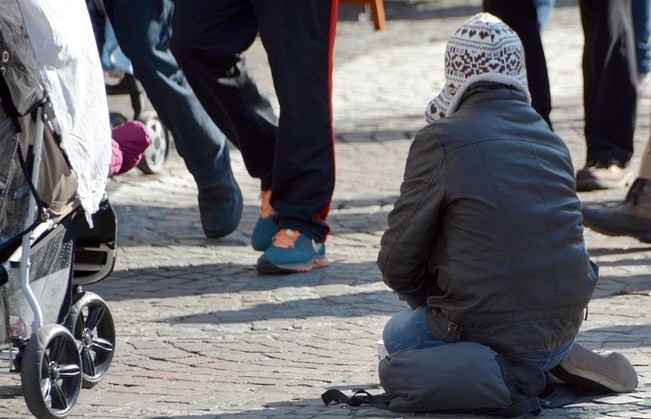
I will never know who that huddled person in front of Starbucks was. I didn’t stop to ask their story. Where was that person’s luck? Did my callousness leak some of it away? Were they as terrified of me, as I was of them? Were they huddled under the mound of clothing in defense and shame? Could I have alleviated part of that shame for one transitory moment if I had stopped to smile, at the very least? Could that one moment have made all the difference in the world for that one person?

December 31, 2019 was a lost opportunity. Today, as I rewrite this article, terror washes over me again as I remember being a single mother of two very young children. My heart crumbles as I remember the person I left behind at Starbucks. Before my fingers touched the keyboard, I sat on my bed sobbing. I lived on the brink of disaster, that person lives the disaster.

I have to own that terror and let it go. I also have to own the pride that covered it up and made me callous. Yes, I worked hard, but I was fortunate. I was presented with opportunities that I was in a position to grab; opportunities that a great many of us don’t have.

In the future, will I find, at the very least, the courage to smile if I have nothing else to give? I need to look behind the pride that covers my near miss and move forward one encounter, one opportunity, one story at a time.

Works Cited

Aurand, Andrew, Dan Emmanuel, Dan Threet, Ikra Rafi, and Diane Yentel. 2020. “The Gap: A Shortage of Affordable Homes,” p.13. Washington, DC: National Low Income Housing Coalition. https://reports.nlihc.org/sites/default/files/gap/Gap-Report_2020.pdf.

 Chetty, Raj, Nathaniel Hendren, and Lawrence Katz. 2016. “The Effects of Exposure to Better Neighborhoods on Children: New Evidence from the Moving to Opportunity Project.” American

Economic Review 106 (4). https://scholar.harvard.edu/hendren/publications/effects-exposure-better-neighborhoods-children-new-evidence-moving-opportunity.

Gowan, Peter and Ryan Cooper. 2017. “Social Housing in the United States,” p.1. Washington, DC: People’s Policy Project. https://www.peoplespolicyproject.org/wp-content/uploads/2018/04/SocialHousing.pdf.

Fumble – Part Two

Pride pushed me to achieve stability for myself and my small family. I took advantage of opportunities available to a white person with education. I bought a house from my parents’ estate, taking advantage of a generous, no interest payment plan. I raised my two children in a safe, small-town homeschooling situation while working as a teacher in the school they attended. All the things one expects out of life came true. I was proud of my achievements, proud of my children, and happy in my situation. 
Ironically, pride is a powerful screen that can hide something as huge as the terror of living through untenable uncertainty. Terror not faced cropped up in a mysterious, inconvenient, and unfortunate way.  
Last year, twenty-four years after becoming a teacher with a steady income. I published an article about my failure to respond to someone in need. It seemed a lifetime had passed since living with the terror of the world falling out from under my feet as a single mother and sole provider for two souls, a lifetime since I had worried about homelessness. I was hard working and successful. I had avoided the calamity of which I was most afraid. People were impressed with my story. I had come far. I believed them when they congratulated my strength and fortitude. I was finally in a league to “pay it forward” by seriously donating to charities and food drives.
Like me, many of us experience the act of “paying it forward” whether in a grocery line, contributing to Food for Families, or donating to local food pantries. Perhaps like me, many purchase a sandwich or a cup of soup for a cleanly dressed person on a street corner who approaches and asks politely. Most of us donate money to organizations like the Red Cross, Habitat for Humanity, or causes for veterans. There is an endless list of worthy causes to make us feel we are doing something to help. Those efforts are safe. They don’t take much time, they don’t require person to person contact. This is all fine, but what happens when one is confronted with an individual buffeted by a pauper’s life on the street? 
On December 31, 2019, the last day of a difficult year that cinched my decision to retire at the end of the second school term, and with no way of knowing that in seven short weeks, 2020 would be a worse year, I pulled into Starbucks. This was my special treat for coping with a drive to Stockton, California. Stockton is a rough town, rated 3 on a scale where 100 is safest.
I went there to see a pain specialist because of injuries sustained while struggling as an apartment manager, exasperated by single motherhood, and a bad fall. Good news or bad news, I always stopped to give myself some sugary, caffeinated love. Even though I did not feel safe in Stockton, the treat had a calming effect that negated my need to race home beyond the posted speed limit like a barn-sour horse. 
I entered Starbucks’ parking lot.
A beggar huddled on the island in the middle of the entrance/exit split off Hwy 88 and Hwy 99. To enter Starbucks, a driver had to pass him (or her) coming and going.
I shut down, as I often do when confronted with this choice. I could not tell if the person was a man or a woman, crouched as the person was under a mountain of clothing. Was he or she young, old, black, white, or any other color in between? Were they on drugs, did they have hidden weapons? He or she held a sign, but the lettering was so faded I could not read it from the car. Did it say, “Out of work,” or “Homeless,” or “Need money,” or “Clothes,” or “Food?” This was Stockton. The unidentifiable person under the mound of clothing was panhandling, either by default or by “choice,” as so many people insist.  
I entered Starbucks wrapped in thought, eager to use a gift card one of my dear students had given me for this treat, but seeing a person huddled and begging for something brought forth a deluge of anxiety I didn’t really define at the time.
When I stepped outside, the person was still there, unmoving. I took a few steps toward him or her and tried to catch their eyes, figuring I might be able to size up the situation if I could see their expression. When I couldn’t, I didn’t look twice. Truth be told, I didn’t try very hard. My heart was pounding with unreasonable fear, and I think pride was blocking my access to the real cause of that fear.
However, I blamed it on the gift card I held in my hand. There was money left on it. I could hand my gift card through the car window, but what if caffeine was detrimental to their mental or physical health? What if Starbucks wouldn’t let them in? Should I step back into the shop and buy a banana?  What if they, like me, reacted poorly to bananas? Did my student have a re-gift in mind when she gave it? For this particular student, her gift had been a tremendous act of generosity. 
From the safety of my car, I regarded the person on the island through my side mirror. My heart was crying for action, but my ego justified not acting. As a young girl, I heard grandfather stories. One story taught me, don’t give money. There was a McDonald’s next door. I didn’t have much cash on me. The amount I had wasn’t enough for a hamburger, which was at best a momentary fix. Would coffee do? What if they needed shoes, or medication? What if, what if, what if?
My anxiety told me – run away. My head argued with my heart, calculating all the ramifications of helping or not helping. Was I prolonging someone’s helplessness, the same helplessness I felt when raising two small children by myself? Was this someone taking advantage of others panhandling like this? The guilt I felt taking advantage of Food Stamps, and payment plans grew like a swarm of locusts as I sat there. People in need taking advantage was another common stereotype and one I had worked hard to get out from under.
A percentage of homeless people lacking jobs and living on the streets have severe anxieties and mental health disorders. They can’t find jobs; or if they do, they can’t keep them. Housing prices in California are astronomical, and housing is generally unavailable. It was a stroke of luck that I found the job I did. Or was it? Had that luck come from white privilege?
The question pummeled my ego which took a different tact. I was older, less equipped to defend myself should the need arise, even though I knew that it was more likely that a homeless person would be attacked rather than perpetuate an attack. Still, my ego told me, don’t get out of the car. For a few moments I sat there in conflict, trying to intuit the right course of action. 
In the end, I ignored the huddled person on the island and drove home. The treat did not slow my flight as it usually did, nor did I enjoy it.
I fumbled.

​What was this huddled person’s story? I will never know. I threw away my chance to ask. It was an opportunity to reach out, to ease a moment, to hear Story and I drove away. There are many reasons for homelessness, seldom is it a choice like some would believe.  I invite you to check out next week, Fumble – Part Three, when I explore some of those reasons.