Remembrance of a Gravestone

With the publication of this short personal essay, Alton Parker, a dear friend of mine, and talented writer presents “Remembrance of a Gravestone,” about a monument he saw while on the road from Flagstaff, Arizona to Los Angeles, California. 

Thank you, Alton, for considering publishing, for the first time, on my blog. I love this story.

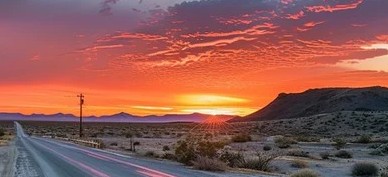
The setting sun gave the distant mountains a glow of flaming amber. Heading to their far off vista was a straight asphalt highway, cracked and pitted with age. On either side of the highway, a plain of gamboge prairie grass stood. It did not complain about being split by the road; it simply was. Utilitarian power lines were strung alongside the highway, periodically interspersed with poles stretching up into the twilight. Upon one of these, a speckled falcon perched, scanning the ground intently for its next unfortunate meal. Vultures circled the violet sky. 

An unusual monument stood at a point between destination and beginning: a gravestone. Long ago, eons for all I knew, a car accident had killed two people here. Artificial flowers had been collected. The roses must have been a striking crimson at some point, but they had long since been sun bleached into a dull depressing grey. 

No one stops to pay their respects. No one cares about the gravestone beside the asphalt highway. The names of those deaths have been lost, the files rotting away in the archives of some forgotten local newspaper. 

I wonder what their names are. 

I feel a burning need to know who they were and  who they left behind. Does anyone remember them? Does anyone care anymore? I continue my journey towards the amber mountains, now disappearing into ink black night. I remember the gravestone beside the asphalt highway. 

I remember.

December 12, 2025

What Does It Mean To Have The RIGHT To Vote?

To have a right to something is a loaded term. What is a right?  

Legally considered a privilege, it is a power given by constitution, statute, regulation, or a judiciary precedent. A right to vote is not a command, rather it is a gift of free speech: a golden opportunity. No one is forced to vote, but we are entitled to the act of sharing our individual voices. As a people, we have fought long and hard to gain this ‘right’ for all of us, no matter the gender, the sexuality, the color of skin, the ethnicity, or the religious or political belief, or the absence thereof. At a certain age, ALL Americans have the right to vote.

Why do so many of us let go of that right? 

I don’t know the answer to this. I don’t believe it is laziness, because Americans are not lazy people. We tend to be fighters, fighting for what we believe to be the correct course of action. So why do we sit out elections? California, as well as some other states, have made it ridiculously easy to vote. You can make your choice in the privacy of your own home sitting in your favorite chair. You can seal an envelope and either mail it in, or deliver it by hand. There are allowances to have help doing this. In California, you can track the receiving of your vote and the counting of your vote: (California BallotTrax <updates@caballottrax.com> ) all while sitting in the privacy of your home. 

I hear some folks say, my voice doesn’t matter anyway, why vote? 

Who said that to you? Your voice counts. Your voice adds strength to others’ voices. It doesn’t matter if you are left or right, blue or red, democrat or republican, or independent, or other. Your single voice adds to the strength of others’ voices in our quest to have a good life, liberty, and the pursuit of happiness, however you see that.

I write today to ask all of you to take back your power. Vote in this upcoming special election. What do you feel is the correct course of action? Do we agree with this temporary mandate or do we not? The more of us that use the privilege (right) to vote, the more authentic our vote will reflect the opinions of those living in California. Your voice will add strength to others that hold your viewpoint, even if you don’t win. Democracy is not a matter of winning, it is a matter of speaking out. It is a matter of communicating with others. It is a matter of using the privileges our fore-parents fought so hard to give us, so that we would be a freer people than they were. 

Take back your power. Vote.

A yes vote on Proposition 50 means the State of California will temporarily redistrict in an attempt to create a more even and fair playing field for the nation.

A no vote means you think the State of California is okay as it is.

It’s as basic as that. 

What is my personal thought? Well, that’s the other beauty of this system as it stands now. Each and every one of us is entitled…that’s right, ENTITLED, to our personal viewpoint and we don’t need to explain ourselves to anyone else. It’s a private vote. So, open up that envelope, read the contents. If you don’t understand the contents, ask someone for help, meet up with like-minded friends and discuss it, or read on as I explain what I found important about this ballot request.

********************************************************************

Proposition 50

For me, the most important wording in this proposition appears on page 18 of our Statewide Special Election Official Voter Guide Information, under Text of Proposed Law. Look at the second column, Sec. 4. (a)

It is the policy of the State of California to support the use of fair, independent, and nonpartisan redistricting commissions nationwide. The people of the State of California call on the Congress of the United States to pass federal legislation and propose an amendment of the United States Constitution to require the use of fair, independent, and nonpartisan redistricting commissions….(author use of bold letters) 

A yes vote says, I want every state to have fair, independent, and nonpartisan redistricting commissions. A no vote says everything is fine the way it is. For me, the idea of calling on the Congress of the United States to create a fair system for everyone was more important than choosing temporary districts so I am glad I read the entire booklet otherwise I may not have known this was included within this vote. 

That said, this is how I see the temporary maps at least for my voting area:

We have 58 counties in California. Those counties are grouped and split in an attempt to create equal voting blocs. This has nothing to do with Republican/Democratic/Independent or Other voices. It has to do with the number of actual registered voters in each of the districts despite their political affiliations. Usually this is done every ten years after a national census. 

Where I live, in Northern California, our current maps have 19 of these 52 voices. It often seems in this state that urban areas have more voice than the rural areas, simply because of the numbers of people being represented. We still have 19 out of 52 voices with this temporary redistricting; however, it seems the most extremely rural areas have been given more representation than they had before with this temporary effort. It will be interesting to see if this pans out in the 2030 Census: more people in the extreme rural areas, hence a bigger voice, but independent commissions may not see it that way. I hope voters in extreme rural areas take advantage of this redistricting effort. I know I am taking the time today for my very rural voice to be heard. 

And like I said before, all you have to do is vote in your home and get your ballot to the local post office. You don’t even have to add postage.

Keep your power. Take the time to make your voice heard. That is what democracy is about. 

Works Cited:

Statewide Special Election Official Voter Information Guide

Plea to Voters of California

Proposition 50 has been presented as an act of leveling the playing field so that we can preserve our right to choose how voters are represented.

My writing does not usually seem political, but I do write to fight for my principles. I feel that voting is more than a right; it is a citizen’s responsibility to let their voice be heard. 

Like Governor Newsom, I know that sometimes to fight fire, one has to use fire. 

It’s a common practice here in California. We stop the spread of wildfires with controlled burned defense lines. Ranchers in the northern counties will back-burn safety belts around valuable grazing land. Fighting fire with fire is a proven safety practice.

Controlled fire is good for the land and has been practiced in California for centuries. Some of the cover-crop foliage plants of pastureland need fire to burst seed shells. Grasses need some of the more invasive and noxious plants eradicated to make room for roots that capture the supply of scant rain. Fire has its purpose.

So now I find myself offering information about Prop.50 and the upcoming special election scheduled for November 4, 2025. 

First, a small back-story.

Gerrymandering is like a noxious weed that popped into the political pasturelands of this country in the early 1800’s. It was designed to redistrict voter populations to favor one side or the other, thereby allowing politicians to choose their voters, rather than the voters choosing their politicians. That is the very reason the practice was planted:  Politicians Get to Choose Voters instead of Voters Choosing Politicians.

In 2010, Californians added an independent commission to enact redistricting according to current census population data. This is the best way to make sure elections are fair. However, very few states have independent commissions building districts according to the census data. Texas is one of the many that doesn’t. Without restrictions in place, like the ones California created in 2010, politicians can easily grab elections to meet their own desires and manipulate district maps for their own power. 

Unfortunately, a decision made by a Texan governor to honor a federal executive’s request has changed maps at a time when maps aren’t changed for any reason other than to support politicians’ interests.

This year the executive branch of our federal government asked the governor of the State of Texas to gerry-rig their representational districts so that five more representatives could support and favor the decisions made by the present executive branch of the federal government of the United States of America. These decisions are being made without checks and balances as constitutionally ratified by our Founding Fathers. The Texan executive branch made the changes as requested without consulting the will of the people of Texas. This tipped the scale to favor politician decisions rather than decisions of the people, nationwide. 

Governor Newsom has called upon California to rebalance this decision by creating a special election whereby the people of our state decide whether or not to stand with him as he tries to fight fire with fire. 

In my opinion–we are a United States, a united people, not the minions of the federal executives nor the minions of the Texan executive branch. I am terrified of the authoritarian firestorm that is quickly raging across the United States.

I grew up believing the PEOPLE of this country choose their representatives to protect THEIR interests, not the executive branch’s interests. While it is true this government is a republic and not a democracy, we still hold democratic ideals expressed through those representatives. Representation is the will of the people. That means our will, our needs, our wants and wishes. US. The United States electorate. 

Is the will of the people being honored by current requests of our federal executives, or are we being plagued by a wildfire of gerrymandering? And will fighting fire with fire create a defense line?

In California, the will of the people will be heard when we choose whether or not to fight fire with fire on November 4, 2025. Is California’s 2010 enactment of an independent commission for redistricting going to be in the best interests of the people at this time, or can we look away temporarily to back-burn a defense line? Which is the best course of action?

Here is the flame thrower that a yes vote will give us, word for word. (I have taken the liberty to highlight in bold–key words.) 

Proposition 50 August 27, 2025

ACA8 AUTHORIZES TEMPORARY CHANGES TO CONGRESSIONAL DISTRICT MAPS IN RESPONSE TO TEXAS’ PARTISAN REDISTRICTING. LEGISLATIVE CONSTITUTIONAL AMENDMENT. 

• In response to Texas’ mid-decade partisan congressional redistricting, this measure temporarily requires new congressional district maps, as passed by the Legislature in August 2025, to be used in California’s congressional elections through 2030

 • Retains California’s independent Citizens Redistricting Commission and directs the Commission to resume enacting congressional district maps in 2031 after the 2030 census and every ten years thereafter. 

• Establishes state policy supporting use of fair, independent, and nonpartisan redistricting commissions nationwide. 

Summary of Legislative Analyst’s Estimate of Net State and Local Government Fiscal Impact: One-time costs to counties of up to a few million dollars statewide. County costs would be to update election materials to reflect new congressional district maps. 

A few million dollars seems like a lot to each of us as single individuals or even for a single county, but there are 58 counties in the state of California, and California is the 4th biggest economy in the world. Our legislators would not have agreed to this if we couldn’t afford it. The important issue is that we get to see the maps before we vote, and then we get to vote for or against it, unlike Texans who didn’t have that choice. Their legislative and executive branches made their choice for them.  

This is a pivotal moment: My opinion about this is–Please Vote. If this country becomes authoritarian, we will not get that chance again, and I have seen this president say, “Don’t worry. When you elect me, you will never have to go to the trouble of voting again.”

Let that sink in. 

As a voter, election outcomes don’t always match our wishes, but at least right now, for this special election, we still have the right to express our desires. We have that choice. We declare our own needs and wishes, and in doing so create our own destiny. What do you want?

A no vote says you want our independent redistricting to stay as it is.

A yes vote lights a torch to back-burn defense lines for an authoritarian fire that seems to be headed our way. 

It is up to us, each of us, to declare our choice by voting in the November 4, 2025 special election. (@1000 wds) 

One Single Moment of Joy

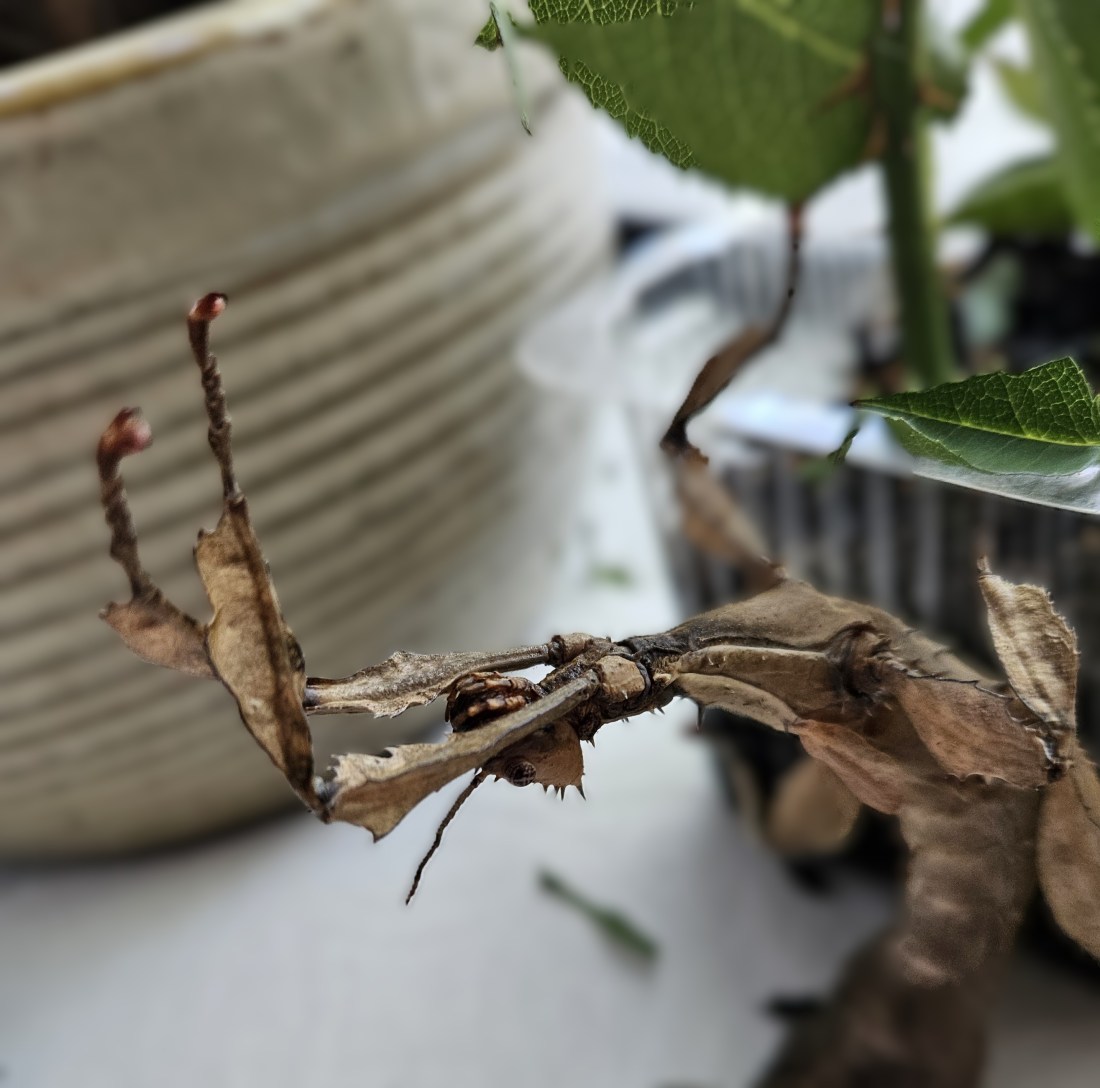
Usually, Sticky Willie, my dear Giant Australian Prickly Stick insect, recoils from my presence, especially if I open her door. She curls, rolls her tail over her back like a scorpion, and rocks frantically, trying to make it known – spikes here – be afraid.

What a poser.

One day, August 6, 2025, to be exact, magic happened: I opened her door. She looked up. Slowly, carefully, one leg at a time, she began creeping toward me. It was as if she were asking, “Who are you?”

Every few steps, she would stop and reach up with one arm as if to explore what was in front of her.

The third time she did this, she was close. Her little face seemed focused on mine. She reached out.

Gently, I touched her tiny claw with the tip of my forefinger.

She patted me.

I stayed there for her, letting her little claw explore my touch.

A sweet moment passed between us, a single moment of joy, shared by two beings of Earth, one homo sapien and one extatosoma tiaratum. 

My heart dances each time I return to that exquisite, wondrous moment.

I can’t help but think how joyful this world would be if we as humans were patient with every living thing, waiting for their energy to come to us rather than us bullying our way into their lives’ plan. What would happen if all of us stopped to learn what trees have to say, what birds are really singing about, what the lady bugs at our feet are doing?

Sticky Willie has her agenda. Her agenda does not alter mine, except with the things she cannot do for herself because I have placed her in an artificial situation. She can’t keep her cage clean, nor can she leave her cage to hunt for her own rose leaves. She cannot squirt herself with water to simulate rain. She may no longer be in her native habitat, but she chose to come here, to trust that I will take care of those things she cannot do for herself. 

I am rewarded with the chance to learn more about my world by watching her. And every once in a while we have a moment. It’s worth slowing down to wait for that one single moment of joy.

Reluctant Gardener – Tale of Two Species

As a gardener, even a reluctant one, there are some unwanted visitors that show up from time to time. Those are usually the species that attract the most attention from us because they seem to disrupt the equilibrium of the garden. But what if that is not the story? What if I don’t need to spend an inordinate amount of time trying to eradicate them?

Galium aparine, known around here as Sticky Willy, or the Hitchhiker plant has many names: Cleavers, Goosegrass, Catch-weed, or Velcro Plant. Leaves, stems, flower petals and seed pods are covered with tiny, hook-like hairs that cling to plants, animals, clothing, and human skin…literally everything.

A self-pollinating annual, I never look forward to early spring as its admittedly beautifully fanned leaf whorls begin to rise through the oxalis, prairie grasses, and three-cornered leeks. I can’t walk my sidewalks without this hitchhiker grabbing my pant legs. And of course when it does, it hangs on for dear life. In doing so, its stem breaks. Such a weakling. However, the roots stay embedded and the little suckers come right back up. 

Until this year, I was successful removing them in a timely manner. I never had a chance to see their display of delicate and beautiful light green and white flowers. I did not witness the seed pods, their means of propagation, so I don’t know how they proliferated throughout my property, but here they are. 

Here is the magic of this plant. It prefers to grow in shade, dappled shade or full sun…truth. It likes clay, sand, or loam. It grows in coastal areas, mountainous terrain or on the plains. It tolerates everything and grows EVERYWHERE. Though botanists think it is indigenous to North America, it is found in many other countries. It probably hitchhiked there. (Perhaps in some unwitting person’s pocket).

It’s useful. Seriously. According to my research it has a purpose. In fact it has many uses. Flowers curdle milk for cheese making. It’s used for stuffing mattresses. It’s edible.

“Wait. It is edible? What?”  

That’s right. People can eat Sticky Willy. The stems and leaves can be cooked with other greens. They are used for tea. The fruit can be dried and used as a coffee substitute. It actually has caffeine. 

(Why am I trying to get rid of this????)

It’s an herbal medicine. An infusion can help reduce swelling, treat infections, or boost energy. There are topical uses as well: ease psoriasis, eczema, and acne. It supports the immune system, and can help support the liver when detoxifying the body. It isn’t reactive with other herbal treatments nor does it affect medications. Sticky Willy is more effective used fresh and not dried, but it grows throughout the spring and summer here. 

(Note: always test a plant on your skin before you try to eat it. Then try a tiny amount, to see how your tongue reacts. Spit out if your body reacts negatively to it.) 

My body did not react negatively to this plant. I might have to create zones for this plant because I think I am going to have to learn to love this plant and look forward to its appearance every year instead of dreading it. 

This leads me to my next tale, also about Sticky Will(ie). On April 12th, 2025 family and friends gathered for my son’s birthday. It’s important to remember that my son seems to be coexisting just fine with the plant called Sticky Will(y). I sat on a bench at his party to admire a flower bed, and there it grew galium aparine, with sparkling fans shining in the string of lights lit for the party.

Go figure. 

The love of his life, his wife, invited a ‘bug lady’ to come to the party to share exotic and interesting insects. My son is a biologist with a love of all things that have multiple legs and sometimes wings. 

The first insect she shared with all the party goers was a monstrous looking thing called extatosoma tiaratum, otherwise known as Giant Prickly Stick Insect. 

I have held stick insects and at the party held another species that looked exactly how you would imagine an insect that imitates a stick should look. Extatosoma tiaratum like its name is GIANT and covered with spiky armor that reminded me of rose thorns. When alarmed, which they all were, they looked like ferocious scorpions of some kind. I did not want to hold this one and didn’t even pet it. It was interesting to “look at.” 

 I was glad when they all went back into their travel carrier.

She loved them though and told us all about it. Native to Australia, they live in trees, usually eucalyptus trees. Herbivorous, they eat the leaves. The insect isn’t harmful, but it does kick when it is angry or scared. 

Then, she gleefully showed us the poop as compared to the eggs that were dropped on the paper towel substrate she was using to transport them. The poop was long and rectangular, the eggs were round. This particular colony was parthenogenetic. 

My listening became more focused. Parthenogenesis, all female colonies – not needing males to breed: I have written about other insects that have this trait. 

She explained that the eggs are dropped to the ground, because the insects don’t come out of the trees willingly. The eggs are coated with a sugary substance that attracts ants. The ants gather them to take them home to feast upon. After eating the sugary shell, they cannot eat through the hard layer underneath so they discard them in their compost piles. (I am interested enough to do some research on ant composting practices in a later blog post.) The babies incubate in the heat of the compost, then hatch, resembling baby ants with black bodies and red heads. 

(Okay, at this point, you have to understand, I was maternally and intellectually interested. The fact that they were born as redheads intrigued me, since my own children are genetically redheads, and my daughter had vivid red hair when she was born.) 

From egg to hatchling takes nine months to 400 days. Wow. That’s a long time. By six molts they look like tiny versions of their mothers. They are quite literally clones of her, since this is a parthenogenetic colony, but there are colonies with both male and female insects. They tend to live longer, and the reproduction cycle may be faster. Each female that is born of a parthenogenetic colony is capable of producing approximately 800 eggs per year, but they only live about eighteen months.  

She continued for at least an hour and a half, perhaps two, sharing many different species with the party crowd which was as intellectually curious as I was. We held and played with many other insects, amphibians, snakes, and even an Amblypygi, the arachnid of Harry Potter fame. I spent a lot of time with a lovely creature that I fell in love with, a small Crested Gecko. 

As she packed up, all of us went to eat food, use the facilities, sit in the living room or around the outside firepit to talk. My daughter and I stayed for about another hour, later than we usually do because this was the best party ever. 

When we got into the car, we fastened our seatbelts for the thirty minute drive to her house. I planned to tank up on coffee for the next leg of my own journey, another forty minutes to my front door. I used the facilities again, made some coffee, and sat down in a chair to review the party. I got up to clean my coffee cup, and pulled a handkerchief from my pocket, which I had done repeatedly during the party to wipe my nose, because it was irritated by the fire pit smoke and my clothes reeked of it.

I felt something prickly in my pocket. Sticky Willy. I didn’t realize I had sat next to some of it, while playing with the animals. Ugh. The tiny green hitchhiker was stuck in my pocket. 

I pulled out the prickliness. It felt like velcro, just like it always did. I felt a pang of disgust because I had not yet come to terms with this plant. (This was pre-research.) 

Instead, I pulled out something brown that clung to my fingers for dear life. I held it up to my daughter. She slowly backed down the hallway away from my outstretched hand, shaking her head. I said, “This isn’t what I think it is, is it?”

She nodded her head, “Yes.” 

A Giant Prickly Stick Insect had hitch hiked home with me. What are the chances that a native tree dweller from Australia, in a yard full of people and TREES would choose my pocket to hide in? 

WHAT ARE THE CHANCES????

My daughter quickly found a jar. We called her brother, and said, “Happy Birthday. You have a new insect,” to which he replied, “No. I am leaving for Ireland tomorrow. You have a new insect.” 

My daughter shook her head, vehemently. “I don’t a don’t have a new insect,” she informed me.

I got home around midnight. I sat in my car, staring at the pint canning jar I had nestled in my cup holder. I sighed, picked it up and trudged into the house. 

My cat greeted me, and I fed her again. I stared at the pint jar on my dining table. “What am I going to do with you?” The tiaratum stayed hidden under the leaves we’d thrown at her from my daughter’s backyard. 

Finally, I threw my hands up into the air and said to the powers of the universe, “Well, I guess I am going to learn how to love an insect.”  

As I write this, she is in a two gallon canning jar, with a makeshift screen lid made for screening I’d bought to repair a door. She is happily munching on oak and rose leaves, while laying eggs. 

Oh goody for me. 

She has huge but peaceful energy, and I am starting to like her. I bought some supplies to make her a better house. I hope she lives the whole eighteen months so I can get to know her better. 

It’s amazing what one can learn and who one can find common ground with when one decides to love, whether that new love is a plant, an animal or another human. 

Works Cited

  1. https://plants.ces.ncsu.edu/plants/galium-aparine/#:~:text=Phonetic%20Spelling%20GAL%2Dee%2Dum,flowering%20and%20seed%20production%20commences
  2. https://www.verywellhealth.com/cleavers-health-benefits-5084341 
  3. https://www.inaturalist.org/taxa/141860-Extatosoma-tiaratum 
Neighbors

Strength wanes

long tenticles of grasses strangle

roses 

bridges between total death

and life

simplicity in purpose

if not grace

grasses

cover earth

otherwise scorched

by relentless sun.       

I am left with the question, what should I annihilate: my desire to destroy the strangling grasses that cling to my roses, or the plants themselves. These unwanted neighbors take nutrients and sunlight from my precious plants. They resist all attempts to eradicate them year after year after year. Where did these insidious creepers come from? What is the reason for their existence? Why can’t they go back where they came from?

As a tree lover, there are only small patches of land in which to grow sun loving plants. As a reluctant gardener, I am tired of fighting. Do I have resources for both?  

Bermuda grass is a sought-after perennial that is lush to walk upon and stays green all season. Intolerant of shade, it is drought tolerant, preferring at least seven hours of sun daily, which is why it is growing where my roses love to be. Bermuda belongs to the family Poaceae. Its official name is Cynodon dactylon. The name sounds like a creature from a monster movie and perhaps it is. Native to the Mediterranean, not Bermuda as its name suggests, people most likely brought it to this continent during the slave trade where it hid in contaminated hay used as bedding. Later, during the 1930’s it was used as a turf grass for golf courses, and in California’s early agriculture days, especially in the Central Valley, it thrived even when irrigated with salinated water. It is tough enough to withstand the trampling of grazing cattle with tenacious root systems. The roots I dig up are bright orange, and can dive as deep as six feet underground. Needless to say, at age seventy, I am not digging holes deep enough to eradicate it.

There is a close look-alike to Bermuda that also plagues my roses. 

Crabgrass. 

Native to Eurasia, it was accepted by the U.S. in 1849, an oddly specific date. The Patent Office named it a “potential forage crop.” Now it is EVERYWHERE. I have even found it growing up the walls of my basement. The most common species in Central California is Digitalis ischaemum. It spreads by scattering seeds, which unfortunately I have facilitated by ripping out the whorls it makes from the ground. Considered a tiller grass, new shoots develop on the crown of a parent plant and while they send down seminal root systems, they still depend upon the parent. And finding that parent can be a scavenger hunt. The good news: Crabgrass actually happily crowds out Bermuda. The bad news….

While researching I discovered there is another invasive pest in my yard that I have actually encouraged and now grows at the base of my roses…Quackgrass. 

Elymus repens, i.e. Quackgrass arrived on this continent sometime during the 16th century. My own ancestors were probably responsible for carrying what is now considered an invasive species over the Atlantic when they escaped…uhh…immigrated, from persecution in Europe. This plant from Eurasia and North Africa, commonly known as Common Couch or Creeping Wild Rye, spreads really fast. Sometimes the rhizomes grow an inch per day. The offspring can be found as far as ten feet from the parent plant. Unwittingly, I find the seed heads to be quite beautiful. It is one of the few grasses I don’t physically react to so naturally, I invited it to stay.

A quick dive through the internet taught me that Quackgrass, of the three of them, probably has a place in this yard as it is nutritious as forage, and good for humans. In early spring, the young shoots are tasty in salads. As well as providing healthy fiber, they are sweet and crunchy. Rhizomes can be dried, ground, and used as flour or as a coffee substitute. Even the sweet, fibrous roots can be eaten. Unfortunately, this plant is allelopathic, which means it uses chemical warfare to repel other plants. My poor roses. 

I probably introduced it into my yard in the bales of straw used to feed and bed my children’s 4-H rabbit projects. However, after learning about this plant, I may take it off my pest list, providing I can move the roses out of its reach. 

I have come to the conclusion that it may be easier to learn to live with these plants than try to fight them. This plant war has been fought on one of the steepest grades in my yard. It would be a thousand times easier to deal with the grasses without the roses getting in the way. The only way to save the roses is to move them to the other side of the house. That’s doable. There’s enough room for everyone here.

Citations

Kaffka, Stephen (2009) – “Can feedstock production for biofuels be sustainable in California?” Original printed in California Agriculture 63 (4): 202-207, 2013

Kaffka, Grattan, Corwi, Alonso, Brown Jr. “Bermuda Grass Yield and Quality in Response to Salinity and N, Se, Mo, and B Rates in West San Joaquin Valley.” UC Center for Water Resources, September 27, 2015.

https://ag.umass.edu/turf/fact-sheets/biology-management-of-crabgrass

https://forages.oregonstate.edu/regrowth/how-does-grass-grow/developmental-phases/vegetative-phase/tillering

https://www.canr.msu.edu/news/pain-in-the-grass-bermudagrass

https://thenatureofhome.com/bermuda-grass-vs-crabgrass/

https://www.thespruce.com/all-about-bermuda-grass-7151762

https://turf.arizona.edu/tips103.htm

Still Point

Bin took three steps into the clearing and froze. In the back of her mind she heard her instructor’s words, “Find the still point.”

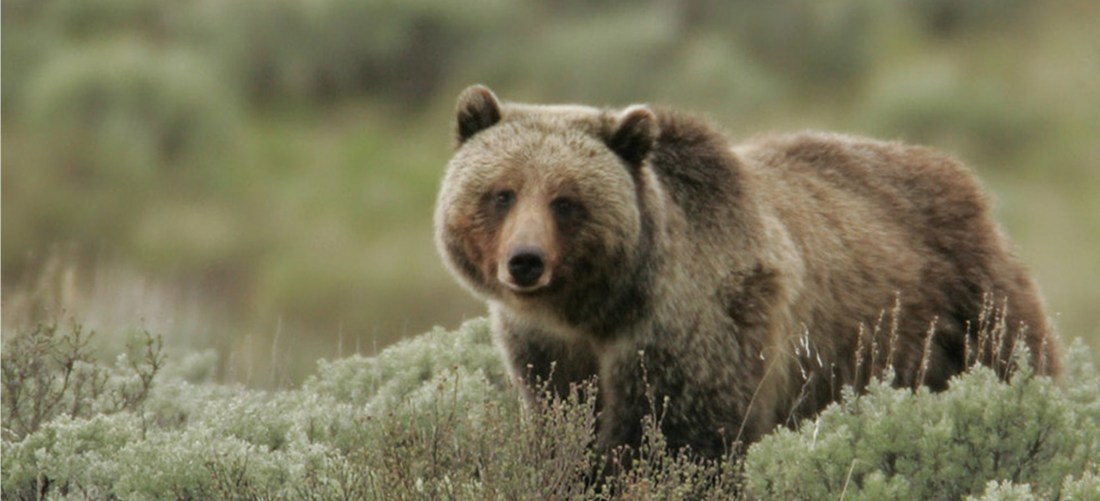
It was hard to do when facing a brown bear which huffed at her, frozen in its own position across the short expanse of cleared forest.

“Find the still point.” She let her mind take it over as a mantra. Find the still point.

Slowly, her breath regulated. Her heart in turn, quit stuttering. As it settled into a steady rhythm, her limbs loosened. Her eyes focused. Her energy bound itself with Mother Earth.

Find the still point.

The bear swung its massive head to focus its glare on her. 

Find the still point.

It roared. Shockwaves rent her body.

Find the still point.

It shuffled backwards two steps.

Find the still point.

Then it turned on its haunches and lumbered back into the forest on the other side of the small clearing.

As if the sun suddenly came out and bathed her in light, she realized the threat was gone. She didn’t need to continue going this direction. She turned, and retraced her steps away from the encounter.

She’d found her still point.

The Reluctant Gardener

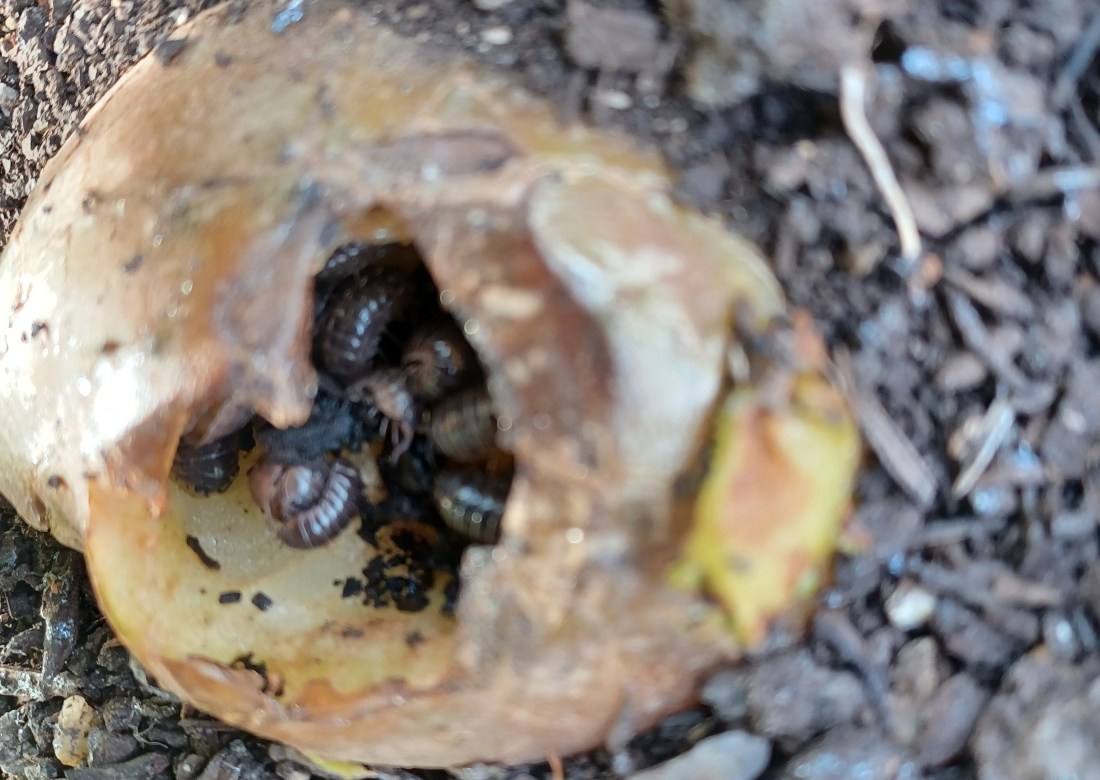
Armadillidiidae (photo by Lisa DeRosa)

Wee boy
Flipped a rock
Found a crawly
Picked it up
Watched it curl
Perfect ball
Rolling on his palm.
What a wonder.
Did you pop it
Into your nose
To keep it safe
To keep it close?

While I discourage this behavior, especially after a trip to the doctor to remove the little beastie, it did prove that Armadillidium vulgare, a terrestrial crustacean, can live quite happily in a dark, moist environment. (Yes, it was still alive when the doctor removed it.)

It was difficult to research A. vulgare. They are not considered agricultural pests. They are so common in our country that people take them for granted and mostly ignore them. They did not originate here though. Possibly as early as two-hundred million years ago,
sometime after the end of the Triassic period, tiny, gill-breathing crustaceans
crawled onto what would now be considered European shores and adapted to stay
land-bound. The species found in California, Armadillidium vulgare, is usually
bluish gray with plates that allow them to conglobate, or curl into a ball,
which they do for protection and water conservation. This species was
introduced to New England from mediterranean regions sometime during the
1800’s. I could not find any documentation about how they arrived in California.
Maybe they came during the Gold Rush.

Here's what we do know about them. They are nocturnal, and like dark moist places. They breathe with a gill system. Apparently, the hind-most set of their seven pairs of legs adapted to become air tubes that feed into a gill system on the underside of their body. They
roll into a ball to conserve moisture, because gills need wet surfaces to stay
healthy. One usually finds them under rocks, or leaf litter on moist ground, but
if you are a pet-keeper, it is a good idea to create some dry, warm places as
well, because they need an outside source of heat to regulate body temperature.
 

Pill bugs, or as they are commonly known in my area, roly-polies, are detritivores, consuming decomposing plants and animals. In terrarium conditions, they are helpful as they will also clean-up their own shed exoskeletons and any mold or fungus that grows in an enclosed, moist habitat.

Though not a pest, they will consume young plants. I learned the hard way that using leaf litter as a mulch only attracts them…By. The. Thousands. (Okay, maybe hundreds.) My point is nothing has a chance to grow with a large population of hungry decomposers who eat seedlings as dessert.

There have been some recent studies that claim that because they also eat fungi they help with global warming. Fungi release CO2 into the atmosphere as they perform decomposition
tasks. Armadillidiidae keep fungi populations in check, mitigating CO2 production.
Every little bit helps.

Another fun fact is that when they are cleaning up, they eat trace amounts of heavy metals, thereby preventing food plants from absorbing them. The more I learn about these little treasures, the more I am tempted to create attractions for them in my garden on purpose
instead of by accident.

Roly-polies are hatched about a week after fertilization into a brood sack on the underside of an adult female. Yes, they are marsupials. I was so thrilled to learn that. I now know that I have mammalian and crustaceous marsupials in my backyard. Yay!

The babies stay in the marsupial pouch for about two weeks. Upon exiting the pouch, these young ones molt every two weeks for about four and a half months, at which point they are considered adults. (I think. No source actually said that.) Females can store deposited sperm
for up to a year, picking the prime time for survival. This may be why some
sites claim the females can reproduce asexually. However, in my opinion, the
male courting dance seems quite elaborate: males wave their antennae at the
females to get their attention. Once they get it, they choose a mate. They then
lick and tap her to convey intention. In my mind, that refutes the notion that
females can reproduce asexually. It just seems that the male roly-poly uses a
lot of energy to get the female to like him. Why would she put up with that if she
could do it without him?

Even though I could not find much scientific research about them, because roly-polies are not agricultural pests, I had a great time researching pet sites on YouTube. Did you know they live three to five years? That’s plenty of time to form relationships with these
tiny creatures.

If you want to attract roly-polies, pile up some fallen leaves, or place a corn cob, half of a cantaloupe, or even a rotting potato outside in the shade. Leave whatever you have chosen in place for a few days, then move the waste along with scores of attracted pill bugs. I
have included links to videos that show how to set up a house for your newly
adopted pets.

Or, you can just let them mind your garden, knowing that this gift from the sea is protecting your land.

Sources Cited
https://entnemdept.ufl.edu/creatures/MISC/Armadillidium_vulgare.htm
https://www.pbs.org/newshour/science/pill-bugs-emerged-sea-conquer-earth
https://www.treehugger.com/roly-poly-pill-bug-facts-important-environment-4864410
https://en.wikipedia.org/wiki/Armadillidiidae
https://en.wikipedia.org/wiki/Armadillidium_vulgare

Videos
https://www.youtube.com/watch?v=Ij7VDu6iWCg
https://www.youtube.com/watch?v=9oUkDOI_QmI
https://www.youtube.com/watch?v=p-dTokDjn14   
(This is about A. vulgare in particular)

Everyday Things

The prompt for May 6th of this year was based on a reading from a book titled The Beauty of Everyday Things by Soetsu Yanagi. In it he discusses mingei, literally a word that means crafts of the masses. He talks about how art, a visual appreciation driven by aristocratic tastes, opposes everyday use, but he asks the question, why? Why should everyday use be merely functional and not also beautiful? 

Then he makes the argument that beauty is not just visual, beauty is also defined by function. 

Everyday Things – AV Singer 5/6/2024

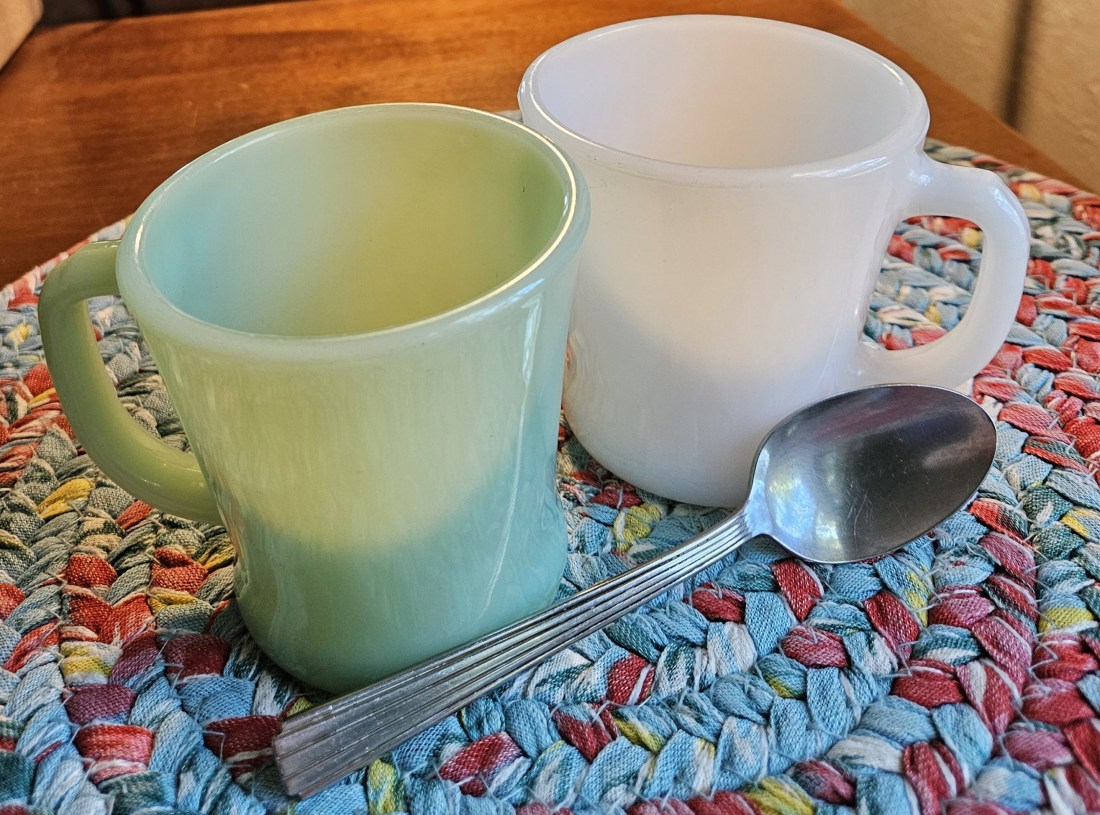
I wonder if concepts of beauty are universal or if economic status plays a central role in how relationships with everyday things develop. Yes, I have fine china, gorgeous crystal, beautiful linens, but I don’t use them much. I use the hand-me-downs: family objects that have endured time, that are easy to store, easy to wash. I hunt thrift shops for balanced, well-crafted beauty. If a spoon is balanced and well-bowled, I am inclined to use it everyday with appreciation though it is mass-produced from simple stainless steel. I prefer stainless steel to silver. Stainless does not contribute an extra taste to the food the way sterling does and it’s easier to clean, and easier to store. Although I have both, I use the mundane everytime, but I chose it with the eye of someone who appreciates beauty.

I have nice mugs, but the ones I use everyday are green-stamp cups from the 1950’s: one green, one white molded translucent glass. The heft is comfortable even when filled with liquid. The handle is balanced perfectly on the vessel, and because it’s mass produced, both are exactly alike except for color. They are easily cleaned. My finger joints don’t hurt after nursing a cup of coffee.

Utility.

They are like friends. The favorite spoon, the favorite mugs, ones I have lost in the past – mourned like family members. I hunt for new pieces to fill the empty space. I learn to love another chosen piece, cherishing time spent together. This is beauty to me. The fine china, the crystal, and the silver sit in my cupboard, occasionally used for special occasions. I no longer have the linen, which was so hard to care for. 

I reach for my shimmering, translucent cup of coffee, take a sip, appreciate the warmth and the comfort of a treasured object. I wonder if my grandmother felt the same about it when she used it. What does that say about me?

My writing sisters understood his words with their own experiences. For the first time I was asked, “Will you share this on your blog?” lI felt so honored.

Betsy Rich Gilon – Clay Bowl

I have a bowl, a simple bowl

Its clay body textured

With undulations of the fingers

That caressed bowl into life.

I hold a bowl between my hands

Bowl beckons for me to touch

As it pleases my heart, bowl lies cupped.

I have a bowl, a simple bowl

Beauty awakens

Shari Anderson – Appreciating Beauty

Appreciating the beauty of everyday things requires time. It requires allowing a spacious

moment in which to notice the weight of a cup in your hand, its shape and texture.

Time – to feel the heat radiating from the luscious Chai within, the steam caressing your chin

and cheek. Time – to smell the cloves, the cinnamon, and sigh with pleasure.

True enjoyment is just that, bringing joy to the moment. With attention, involvement, and

gratitude, our physical, emotional and ethereal senses take in what each moment offers us.

We then experience the blessing.

Dianne Chapman McCleery – The throw away society that we live in.

When did possessions take the place of safety and security? You can buy t-shirts at big box stores for $2.95. How long do they last? Not long, I imagine. I’ve never been a fan of the latest fashions. If I buy something, and it takes on the value of “I really like this” after I wear it several times, I wear it until it falls apart.

A problem would often pop up when I would buy new clothes from stores. After washing, often their shape would change (or mine would). When my kids were little and money was tight, I discovered resale stores. Shirts for $2, pants for $3. And they were already washed and often worn into comfortableness. The major downside was that oh-so-comfortable pair of jeans would wear out sooner than a new pair would, but that was the price I was willing to pay. After all, there were always more at the resale shop.

Lynnea Paxton-Honn – Seeing (experiencing) beauty is not the same as being attached to that which is being seen as beautiful.

I have built my nest slowly through the years, learning what gives me comfort, what fulfills my idea of beauty. In the process of my nest building I have found beauty in the creating. Seeing the beauty in work that others perform with materials: smelting, molding, painting, weaving, the growing of the basics from which the materials are birthed. Scores of farmers, harvesters and craftspeople go into the creating of my home. Because of thrift stores and yard sales I can gather a quality that gives aesthetic comfort. I have my mother’s silverware. It is not super high-end but sweet and special. My house is old, well used, just the right size and shape.

“Just the right size and shape.” We end with Lynnea’s words about aesthetic comfort. Those items we use everyday mean something to us, and therein lies the reason to find those things to use everyday that give us not only pleasure when we use them, but also a sense of beauty, a sense that using them makes our lives richer.

Playful Writing

I can’t remember the exact date I joined the writer’s group I belong to, but I am very grateful to belong to this collective. For those of you readers serious about writing, it is infinitely more fun to find support among like minded people who encourage, lovingly critique, and celebrate each others’ writing efforts. Because we meet weekly, I had binders full of not only ideas, some of which have bloomed into full stories, and even novels which I have published, but there were many that seemed complete just as they were. So many of my blog ideas come from these writings. I lost insight of that with the past crowding me. Now that it has been dealt with, I hope to share some of those overlooked pieces.

This bloomed a couple of years ago on 9/19/2022. For those of you who like numbers, 919 seen often can signify a change coming. Hopefully, the change for me is being able to write more often. 

Meditation Writing – Playful

What is it like to be in the center of a creative moment? Is it a swirling tornado careening across a plain, or a capricious dust dervish hopping over the sands of a desert?

Is it a roller coaster with screaming kids or a quiet walk in the forest? Did it toss you off a cliff, pound you under the surf, or did you float in a deep lake, sparkling with pricks of sunlight?

What is it like, the center of a creative moment?

Does time stop?

Does the world…disappear?

Does darkness creep around the perimeter of your head wondering,”What’s going on in there?”

Do you connect with More Than Self, or do you find connection with Self? Does it fill you with bubbling laughter, or crushing pathos? What is it? What is that center, the very center of a creative moment?

Does self bow to not-self as some mysterious impulse takes over to write itself?

What is it like…what IS it like…to be…in the center…of a creative…moment?

The second prompt of that night was “Lost in Passing Seasons.” Sometimes, the first few minutes are spent uselessly, as in this first attempt:

“Pass the seasons, please.”

“What? You don’t like the weather?”

“Huh? What’s that got to do with anything?”

“You just said, ‘Pass the seasons.’”

“Yes. Please.”

The best course of action is to scratch it out, or if you are typing into a computerized program, hit delete. Fortunately for us today, I always write by hand at these meetings, even when they are online. It gave me a chance to reject what I consider…c^@p! 

In and out of the garbage pail worked better that night:

Passing seasons.

Pass the seasoning.

Did you season the sauce?

She’s a seasoned warrior.

‘Tis the season to be jolly,

Have a holly, jolly Christmas

Pass the Christmas cheer

Pass on Christmas.

Happy New Year!

Finally:

A lion and a bear pass seasons differently.

It’s amazing what can be written in ten minutes, even if it never sees any life beyond the notebook you put it into. If you want to be a writer, just write. The more the merrier. Mary had a little lamb. Lamb chops, chopsticks, stick in the mud, or in your eye, or better yet: Stick to it. Just write.